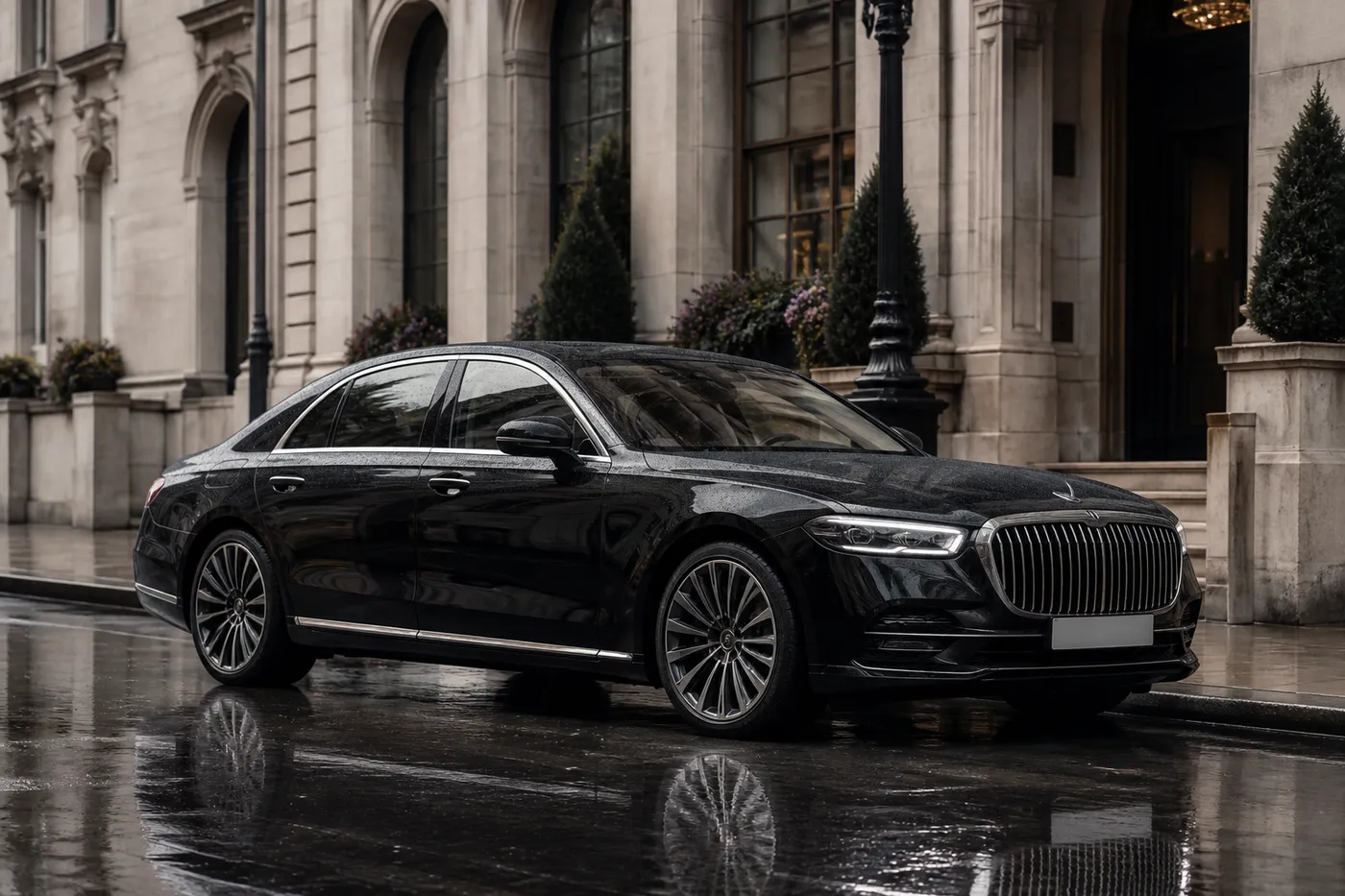






If airside is the half of the airport most travellers think about, landside is the half that decides how the beginning and the end of a journey actually feel. It is the area where cars are permitted, where waiting is regulated, and where the difference between a smooth collection and a frustrating one is settled.
What follows defines the term, describes what happens in the space, and explains the rules that shape a chauffeur pickup there. Those rules are set by each airport rather than nationally, which is why an arrangement that works at one terminal is not necessarily the arrangement at the next.
The public side of the airport
Landside includes the check-in concourse, the arrivals hall, the shops and cafes before the search, the forecourts, the multi-storey and long-stay car parks, the bus and coach stands, and the roads approaching all of it. No screening is required to be there, which is precisely what defines the area.
It is also where the airport does most of its commercial and traffic management. Set-down and pickup are controlled, waiting is restricted to defined places, and access to the forecourt is often limited or charged. None of that applies airside, where movement is governed by security and operational rules instead.
Why the rules bite here
Airports have limited kerb and every arriving vehicle wants the same few metres of it. The response has been to separate functions: brief set-down close to the doors, longer waiting pushed to car parks, and private hire vehicles directed to designated areas rather than left to circulate. These arrangements differ by airport and by terminal.
For a chauffeur booking the consequence is straightforward but easy to underestimate. Where the car can legally be, and for how long, determines whether you are met inside the hall or walk out to a bay. It is the reason a good confirmation names the meeting point precisely rather than simply naming the airport.

What happens landside on your booking
Almost the entire chauffeur experience at an airport sits within this area, and it is worth knowing what each element involves before you land tired and start improvising. Our confirmations set the arrangement out in writing so that the plan is agreed before the flight rather than discussed after it.
- The chauffeur parks in a short-stay car park before your arrival
- The name board is held in the public arrivals hall
- Luggage is taken over once you clear customs with it
- The walk to the car goes through landside corridors and car parks
- Departures are set down at the terminal doors, briefly
- Any airport access charge that applies is inside your quoted figure
The line between the two
The boundary is one-directional in practice. Departing passengers cross from landside to airside at the security search and do not come back. Arriving passengers cross the other way at customs, which is why the arrivals hall, though it sits at the end of the airside journey, is landside and open to anybody.
There is a third term worth knowing: airport staff refer to the critical part of the security restricted area for the most tightly controlled zones within airside. It has no bearing on passenger travel, but it explains why staff sometimes describe access in more gradations than the simple two-word split suggests.