




London's luxury retail is not in one place. It sits in four or five distinct districts separated by short distances that are quick on foot and slow by car, and a day that moves between them badly spends more time in traffic than in shops. The first thing worth planning is therefore the order, and the second is what happens to everything you buy.
This guide covers the geography, the way appointments behave in practice, and why a car parked somewhere is far less useful than a car that comes when called. It is written for a day of several stops rather than a single errand, and it applies as much to a fitting and a jeweller as to an afternoon spent on Bond Street.
The London map, district by district
Mayfair carries Bond Street, Mount Street and the blocks around them, and it is the densest concentration of the lot. Knightsbridge and Sloane Street sit south-west of the park and function as a separate afternoon. Regent Street and the top of Piccadilly are broader and busier. Chelsea runs west along the King's Road, and Marylebone High Street sits north of Oxford Street with a quite different character.
The distances between them look small on a map and behave badly in a car during the afternoon. Mayfair to Knightsbridge crosses Hyde Park Corner, which is not a place to be at half past four. Planning the day so that you cross the park once rather than three times is worth more than any amount of clever routing on the day itself.
- Mayfair, for Bond Street, Mount Street and the surrounding blocks
- Knightsbridge and Sloane Street, best treated as one stop
- Regent Street and Piccadilly, broader, busier and slower
- Chelsea and the King's Road, running west
- Marylebone, quieter and north of the main flow
- Savile Row and Jermyn Street for tailoring and shirts
Ordering the day sensibly
Build the day around whatever is fixed. An appointment at a particular hour anchors everything else, and the browsing fits around it rather than the reverse. Where there are two appointments in different districts, the order is decided by the times you are given rather than by preference, and the gap between them tells you how much else is realistic.
A morning start is worth a great deal. Shops are quieter, staff have more time, and the roads are markedly better before the middle of the day. Lunch is best placed near wherever you will be at the time rather than somewhere you have to travel for, since a cross-town journey for a table takes an hour out of the afternoon and gives nothing back.

Appointments run long
Personal shopping appointments, fittings and jewellery viewings all take longer than they are scheduled to, and the better the service the more likely that is. An hour becomes ninety minutes because something else is brought out, or because an alteration is discussed properly rather than briefly. Planning three appointments in three districts in one afternoon is planning to be late for the third.
Two anchored appointments and some flexible time around them is a realistic day. Three is optimistic. If the day genuinely has to hold more, the transport should be held for the whole of it rather than booked as separate journeys, so that overrunning costs you nothing beyond the time itself.
Why parking defeats the object
Parking in the districts that matter is scarce, restricted and rarely near the thing you came for. A car left in a garage is a car you have to walk back to, carrying whatever you have bought, and then move again for the next stop. That is the opposite of what the day is supposed to feel like, and it gets worse as the bags accumulate.
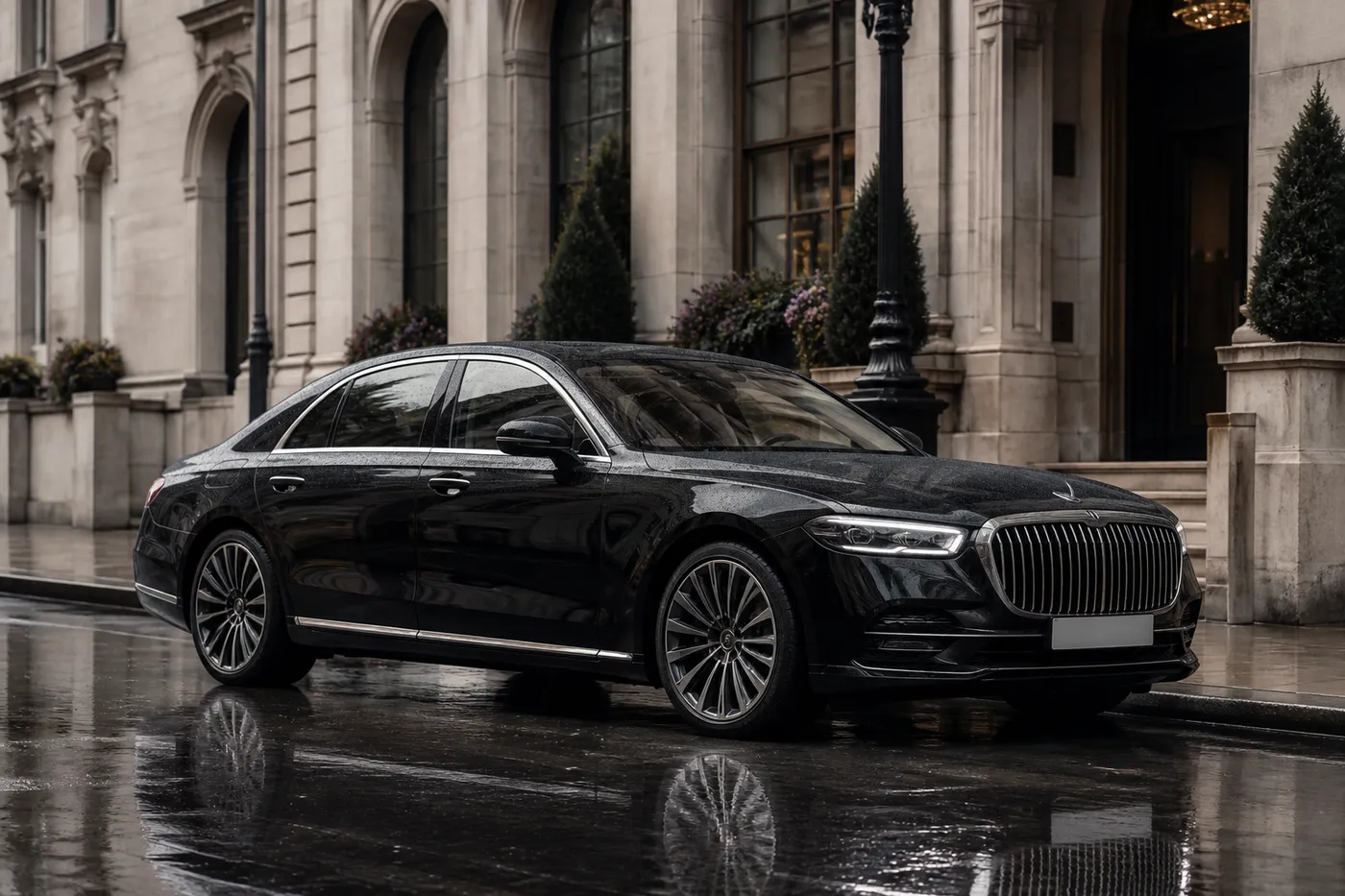
It also removes the ability to change plans. A parked car fixes you to a district until you retrieve it. A held car with a chauffeur can meet you outside the last shop you happened to walk into, which is a different proposition entirely and the reason most people who try both do not go back.
The car between stops
Between shops the vehicle does two useful things. It carries what you have already bought, so you are not walking into a fitting holding four bags, and it gives you somewhere to sit for ten minutes with a coffee and a telephone. Neither is glamorous and both change the day considerably.
Set-down and collection in these districts are a matter of corners rather than doors. Bond Street and Sloane Street carry restrictions and a great deal of traffic, and stopping outside a shop for more than a moment is not usually possible. Your chauffeur suggests the point that works, generally a few yards round the corner where the car can also get away again.
Message when you are ready rather than agreeing times. That is the whole basis of a day like this: the car is somewhere close, it comes when called, and nothing in the schedule has to be defended. One person holding the arrangement keeps it simple where several people are shopping together and drifting apart.
Beyond London, and the outlet run
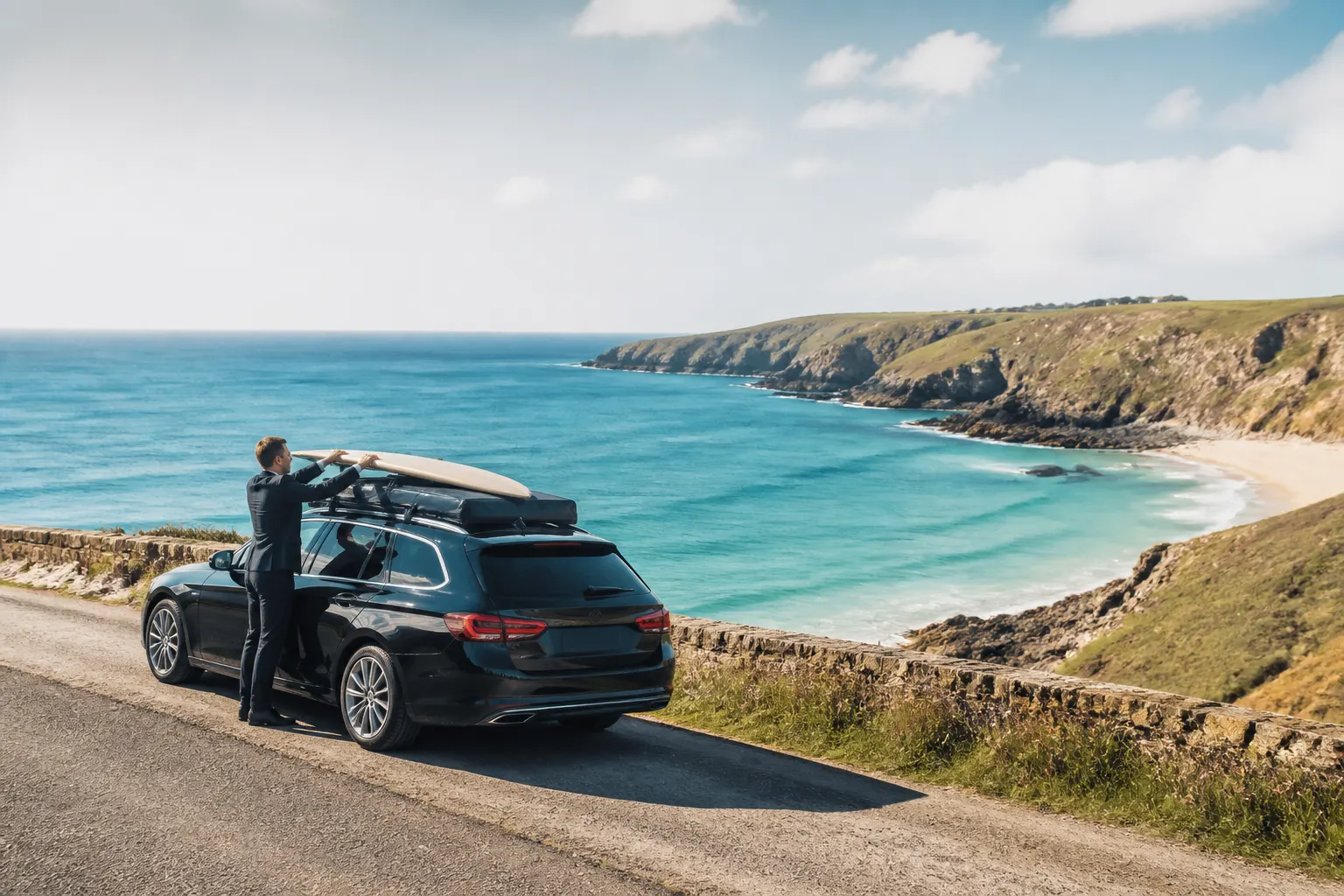
A designer outlet village an hour or so outside London is a different kind of day and a different kind of load. The driving is straightforward, the parking is plentiful, and the volume of bags at the end is substantially greater than a West End afternoon produces. That is a boot problem rather than a traffic problem, and it is solved when you book rather than at the kerb.
Where a day combines both, put the out-of-town part first and the city part second, so that the heavier load goes into the car early and the return happens after the worst of the traffic. Everything is arranged over WhatsApp or email, and a written quotation covering the held hours reaches you before anything is confirmed.