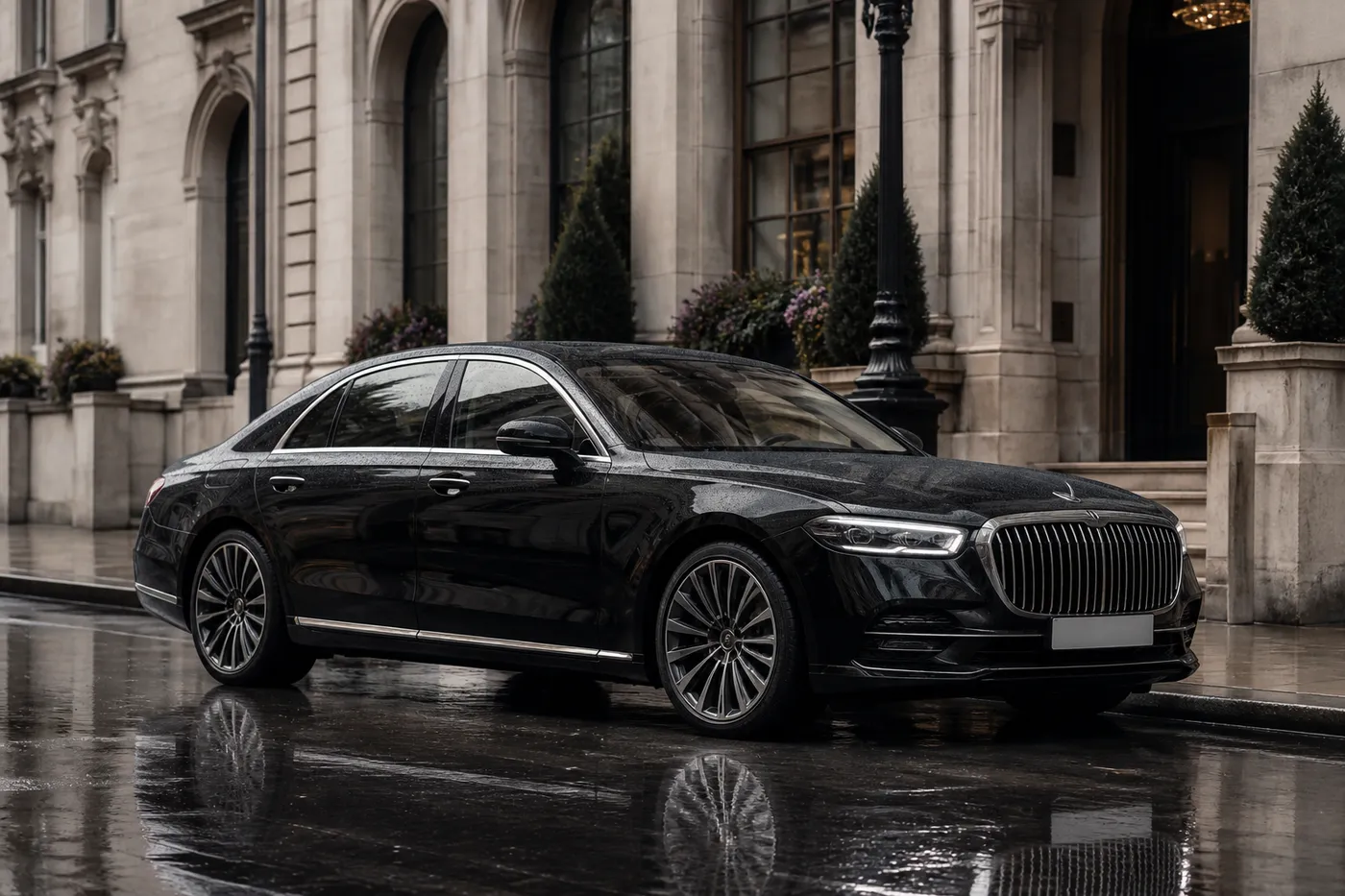






The phrase sounds oddly formal because it was originally an instruction rather than a product. On a driver's job sheet, the destination field simply read as directed, meaning the passenger would say where on the day. Operators kept the wording and it became the name of the arrangement.
This entry explains how the hire works in practice, what you should tell an operator when arranging one, and how to judge whether it is the right choice against a set of separate transfers. The arithmetic is usually clearer than people expect once the waiting time is counted honestly.
How the arrangement works
You agree a start time, a start address and a duration. From that point the car is yours: it takes you where you ask, waits while you are inside, and is at the door when you come out. The chauffeur handles parking, holding areas and re-positioning between stops, which is the part that costs a self-driving passenger the most time.
Because the vehicle is held for you alone, nothing is dispatched elsewhere between your stops. That is the whole value of the arrangement. The alternative, calling a fresh car at each address, means waiting for allocation, waiting for arrival, and explaining the next destination from scratch every time.
What to tell us when booking
An hourly booking is easier to arrange than a fixed itinerary, but a few details still shape the quotation and the vehicle choice. The more of these we know at the outset, the less the day requires improvising, and the more accurately the chauffeur can plan parking and routing between the stops you already know about.
- The start time and the address the car should be waiting at
- The number of hours you expect to need, honestly estimated
- The rough geography of the day, even if the stops are not fixed
- Passenger and luggage numbers, which decide the vehicle
- Any appointment that genuinely cannot move
- Whether the day ends where it started or somewhere else entirely

Judging it against separate transfers
Count the gaps rather than the journeys. Three appointments in a morning look like three short transfers, but the hour spent waiting between the first and the second is the part that decides which arrangement wins. If the total idle time approaches the driving time, hourly hire is almost always the better structure and usually the calmer one.
The other consideration is certainty. A set of separate transfers assumes you will finish when you said you would. As directed hire assumes you will not, and absorbs it. For anyone whose day tends to run over, that difference is worth more than any comparison of individual legs suggests.
Related terms and boundaries
At disposal is the same thing in different words, common in hotel concierge and international usage. Hourly hire is the plainest version and the one most quotations use. A roadshow is a specific kind of as directed day built around a fixed schedule of meetings, usually across several days and sometimes several cities.
There are limits worth knowing. An hourly booking is not unlimited mileage, and a day that unexpectedly turns into a long run out of the region will be discussed with you rather than absorbed silently. Chauffeurs also work to driving hours and rest requirements, so very long days may need a second chauffeur arranged in advance.