




Bristol is the airport where the building is the easy part and the road is not. One terminal, one arrivals hall and a compact site mean the meeting itself is about as simple as an airport collection gets. Everything that requires thought here happens on the A38 before your chauffeur arrives, or on the way out afterwards with your luggage aboard.
It is also the highest of the airports we cover regularly, which is not a piece of trivia. Ground that sits well above the surrounding country attracts weather that the city below is not having, and low cloud on the high ground can change an afternoon's plans. This guide covers both the ordinary case and the awkward one.
The terminal and the hall
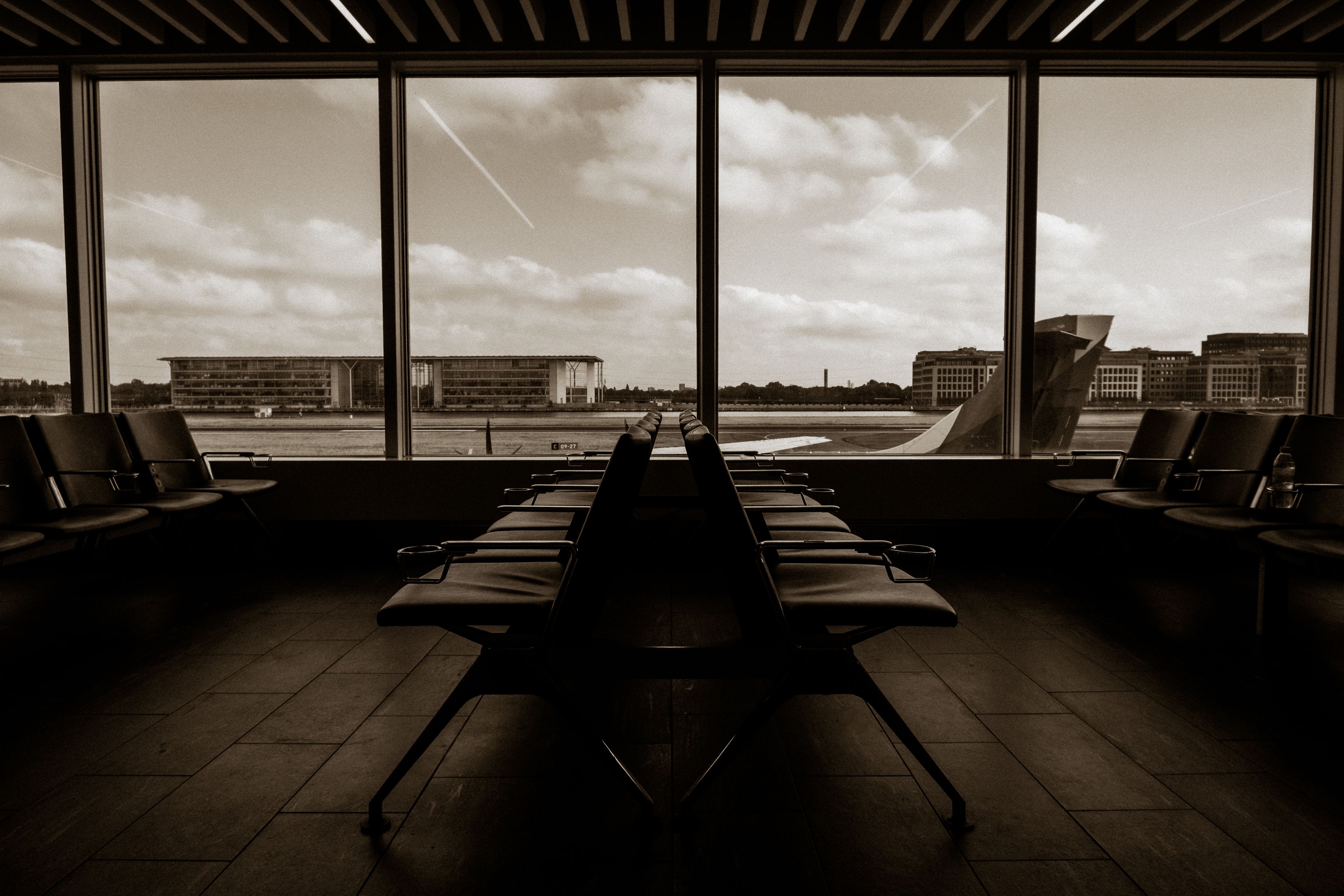
All flights use the same terminal, and arrivals emerges into a single public concourse close to the front of the building. The scale is domestic rather than international in feel, and a person holding a board is easy to see from the doors. There is no shuttle, no second building and nothing to check on your boarding pass. For a tired passenger at the end of a late flight, that counts for a good deal.
The airport handles a heavy leisure programme to Spain, Portugal and the islands alongside a European business schedule, so the concourse swings between quiet and full depending on the hour. Late evening returns in the summer are the busiest moments, and they are also when families arrive carrying the most luggage. Your chauffeur is there through all of it.
Clearing the airport
For a European flight with cabin bags only, thirty minutes from touchdown to the concourse is a reasonable expectation on a quiet day. Hold luggage extends it, and the reclaim belts here can be slow when several flights land together, which happens rather more often in the summer schedule than in the winter one.
Late evening charter returns are the point at which the whole process runs longest. Several aircraft arriving inside a short window put a great deal of pressure on border control and reclaim at once, and forty-five minutes to an hour would not be surprising on such a night. It is not a fault in the airport; it is simply arithmetic.
Your chauffeur is in position from the time the flight is expected on stand and stays until you appear. Sharing the flight number lets us plan around the published schedule and the clearance times we would ordinarily allow at this airport. It is planning rather than live tracking, and the distinction is worth being honest about.
The A38 and why it shapes everything
There is no motorway to Bristol Airport. The A38 carries the traffic up from the city through Barrow Gurney and Backwell, and although the mileage is modest the road is slower than a map suggests. It has single-carriageway sections, junctions that queue, and no parallel route worth taking if something blocks it. From the M5 the last stretch is that same road.
From Bath the approach comes across on the A368 and takes considerably longer than most people assume, generally around an hour. From Wells and the Mendips the roads are pleasant and slow. From Cardiff the crossing adds its own variability at peak times. Whichever direction you are heading afterwards, the first part of the drive is the unhurried part.
- A single terminal, with arrivals opening near the front of the building
- The A38 is the main approach, and there is no motorway alternative
- Bath is roughly an hour away across the A368
- Summer evening returns are the busiest arrivals of the week
- Your chauffeur waits inside with a name board and takes the cases
- The site sits high enough to have its own weather
Weather on high ground
Because the airport stands well above the surrounding levels, low cloud and fog can sit on it when the city a few miles away is clear. It is not a frequent event, but it is a real one, and in the winter months it occasionally affects arrivals in ways that a look out of the window in Clifton would never predict.
For a collection it changes very little, since your chauffeur waits regardless of when the aircraft actually lands. What it changes is the drive afterwards, because the same conditions that trouble the airfield make the A38 slower and darker than usual. A collection on a foggy January evening is simply a slower journey than the same one in June.
Where the car sits, and what to send us
The short stay parking is close to the terminal and the walk out with luggage is brief. Forecourt drop-off and pickup arrangements are set by the airport and are chargeable; we handle whatever applies and include it in the written quotation, so there is nothing to work out at a barrier with a trolley in front of you.
Before you fly, the useful details are the flight number and date, the number of large cases and cabin bags, the passenger count including children, any child seat requirement with age and weight, a mobile number that works on landing and the full onward address. Holiday luggage in particular tends to be underestimated by roughly one case per family.
- Flight number and date rather than only the landing time
- Total large cases, including the one nobody mentions
- Passengers, with ages for any child seats required
- A mobile number reachable the moment you land
- The onward address in full, with a postcode
- Whether the journey continues to Bath, Devon or Wales
Onward journeys from here
A good share of what we run through Bristol does not stop in the city. Bath is the most requested onward destination, and arriving there by car after a flight is a considerably more civilised end to a journey than a train and a taxi with a fortnight of luggage. Wells, the Mendips and the Somerset villages follow behind it.
Further out, the M5 makes Exeter and the south Devon coast straightforward, and Cornwall is a long but comfortable run. Over the crossing, Cardiff and south Wales are close. If your journey continues beyond the airport, tell us at booking so the vehicle is chosen for the distance and the load rather than for the headcount alone.