



London City has one terminal, one arrivals route and almost no distance between the aircraft door and the pavement. For a chauffeur collection that is close to ideal. You can be walking towards a name board within minutes of leaving the aircraft, which is not something any other London airport can claim.
The catch is on the road rather than in the building. The airport sits in the Royal Docks, east of the City, and the approaches through Silvertown and Canning Town are narrow, busy and prone to sudden congestion. This guide covers both halves: the very simple meeting and the less simple journey that follows it.
One terminal, and what that changes
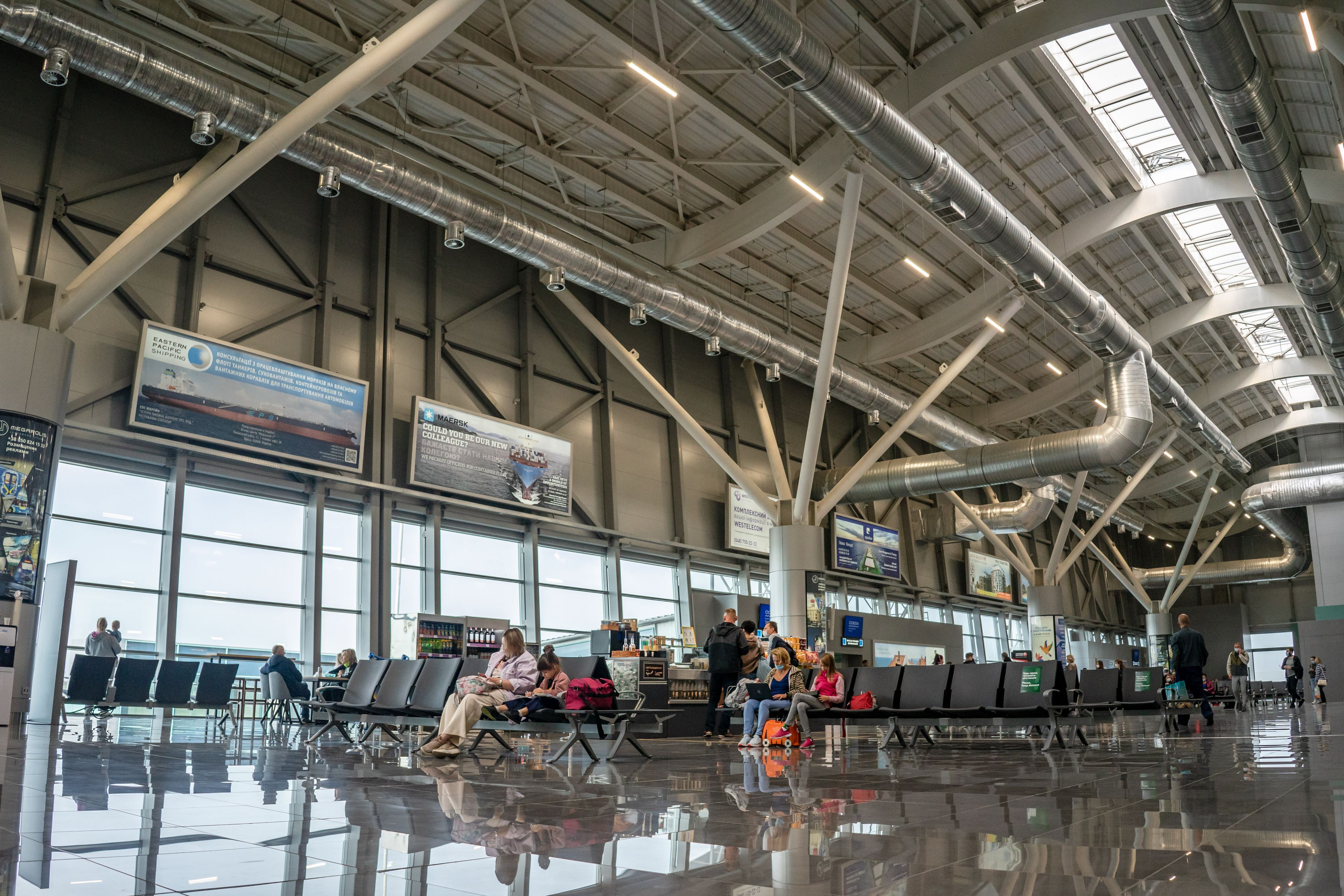
The whole airport is served by a single terminal building on the north side of the Royal Albert Dock, with the DLR station immediately alongside. You can cross the public areas in a couple of minutes. There are no satellite piers to walk to, no inter-terminal transit and no possibility of arriving somewhere other than where you expected.
For a chauffeur, that compactness removes most of the usual difficulty. There is one arrivals area, one set of doors and one obvious place to stand. Your chauffeur is inside with a name board a few paces from where passengers emerge, takes the cases and walks you to the car. It is the least walking of any London airport, by a clear margin.
How quickly the airport clears
Short-haul arrivals with cabin baggage often reach the concourse in fifteen to twenty-five minutes from landing, which is unusually quick and is the main reason business travellers choose the airport. With hold luggage, add whatever the belt takes, typically another ten to twenty minutes. Both figures move with the hour and with how many aircraft have landed together.
Because clearance is so fast here, the meeting arrangement matters more than at slower airports. If your chauffeur is not already inside the building when you come through, you will be standing about waiting, which rather defeats the purpose. We plan around the published schedule for the flight number you give us and the clearance patterns we would ordinarily expect here, and the chauffeur is in position early.
We do not track aircraft in real time and would not claim to. What the flight number gives us is a reliable planning anchor that survives a retiming, which a bare arrival time does not.
Where the car waits
Short stay parking sits close to the terminal, so the walk out with luggage is brief. If you would prefer to be collected from a specific point rather than met inside, that is straightforward here in a way it is not at larger airports, because the forecourt is small enough to describe precisely. Tell us at booking and we will agree the spot in advance rather than over the telephone on arrival.
Forecourt arrangements are the airport's own and are chargeable. We deal with them and account for them in the written quotation. Nothing is settled at a barrier, and nobody is asked for cash on the pavement.
- A single terminal, so no terminal confusion is possible
- Chauffeur waits inside with a name board, a few paces from the doors
- Short stay parking close by, so the walk out is short
- A named collection point can be agreed in advance if you prefer
- Cases carried from the hall to the car
The roads around the Royal Docks
The airport is reached from Hartmann Road off the Connaught Road corridor, with the A13 and the Lower Lea Crossing feeding traffic in from the west and the A1020 from the north. On a good day, the City is a matter of minutes away and Canary Wharf closer still. On a bad day, an incident in the Blackwall Tunnel or on the Limehouse Link can reshape the whole area in moments.
This is why the onward drive deserves more thought than the meeting does. Your chauffeur will choose the route on the day rather than the one that looked obvious a week earlier, and will say plainly if a normally quick run west is going to take longer than usual. There is no advantage in pretending the road is clear when it is not.
Who uses this airport, and where they go
The passenger mix here is distinctive: short European business trips, financial and legal travellers heading straight into the Square Mile or Canary Wharf, families connecting to private flights elsewhere, and weekend visitors who have worked out that this is the fastest way into east and central London.
From the kerb, the City and Canary Wharf are the shortest runs. Mayfair, Knightsbridge and the West End are further but usually straightforward outside peak hours. Eastwards, the Blackwall Tunnel opens the way towards Kent and the coast. Longer journeys out of London are entirely workable from here too, and the early clearance means you are on the road sooner than you would be elsewhere.