





Silverstone presents an unusual planning problem. The event itself is superbly organised and the circuit handles enormous crowds well once they are inside it. The difficulty is entirely at the perimeter: a rural road network in Northamptonshire absorbing something close to a small city over three days, with almost all of it arriving in the same few hours and leaving in an even narrower window.
That asymmetry shapes everything. This guide covers how early is genuinely early enough, why the exit deserves more thought than the entrance, what wet ground does to your choice of vehicle and footwear, and whether it is better to travel up daily from London or base yourself nearby. Track access, paddock entry and hospitality come from your ticket and your host, not from us.
Three days, three different problems
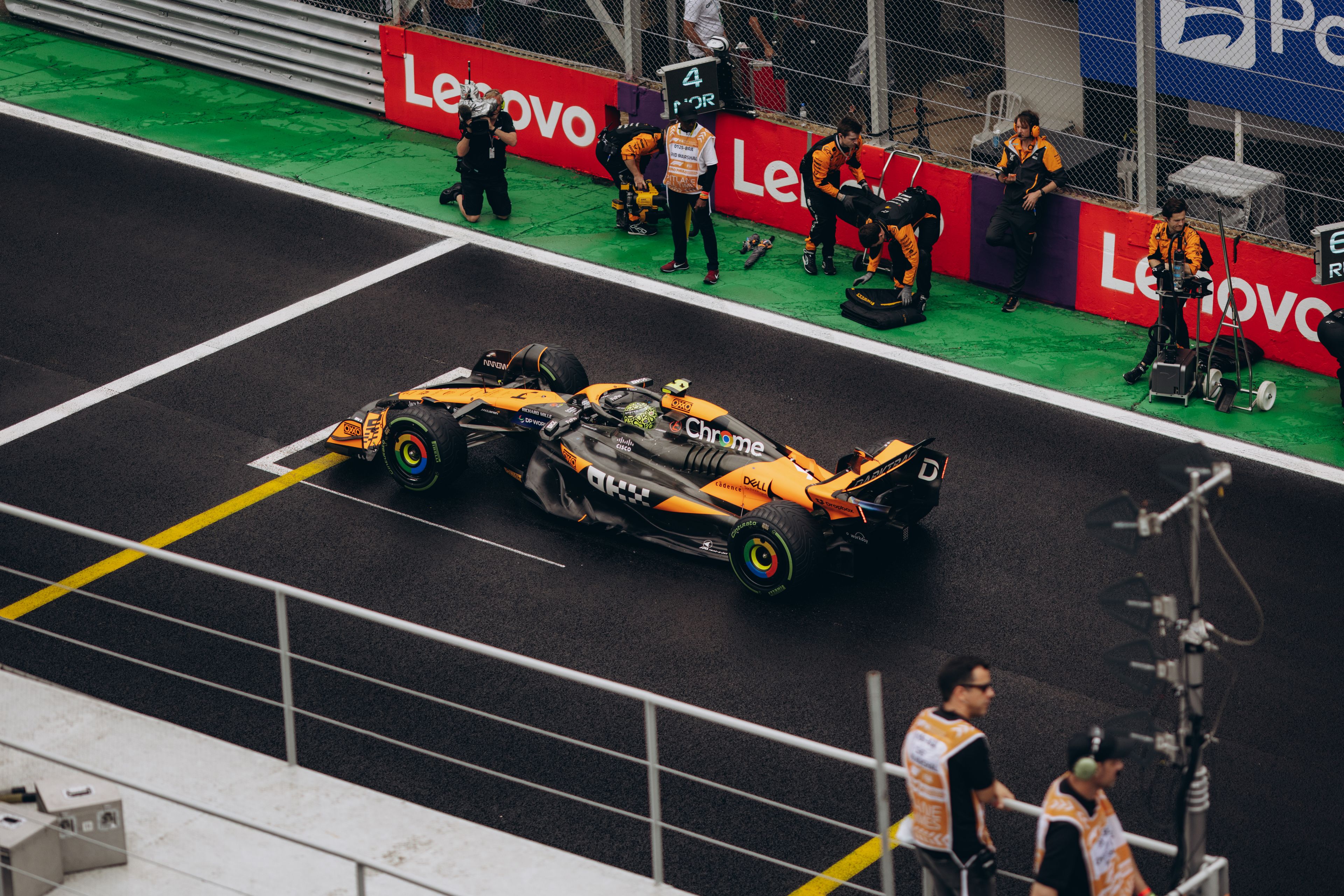
A grand prix weekend runs across three days with quite different characters. The opening day is the calmest, with practice sessions spread across the afternoon and roads that behave more or less normally. The middle day builds towards qualifying and the crowd thickens noticeably. Race day is the one everybody plans badly, because the entire attendance wants to be in place before a single fixed moment in the afternoon.
If you have a choice, attending on the earlier days is materially easier and the driving is unremarkable. If you are going on the Sunday, accept from the outset that the journey will be the least enjoyable part of the weekend and plan accordingly. Trying to have a normal morning and still arrive comfortably on race day is the mistake most first-time attendees make.
Whichever days you attend, plan each one separately rather than assuming Friday's timings will work on Sunday. The gate you use, the time the roads start to slow, and the sensible collection point all differ. Send us the days and the entrance you hold and we will build a separate plan for each rather than repeating one that only suited the quietest morning.
Leaving before it gets light
Clients travelling up from London for a Sunday race routinely leave in the small hours, and it is not theatre. The motorway sections north are usually fine. What fails is the last stretch of A-road and the queue for the circuit entrances, which can absorb hours once it forms. Arriving before it forms is the only reliable strategy, and it means an alarm that will feel absurd the night before.
The compensation is that an early arrival is genuinely pleasant. The circuit is quiet, breakfast is available, and you can walk the site before it fills. Treat the early start as part of the day rather than an imposition on it, and bring something to eat in the car for the people who will not be persuaded to have breakfast at four in the morning.
- Assume the circuit approach, not the motorway, is the bottleneck
- Aim to arrive before the queue forms rather than after
- Plan breakfast into the car or into the circuit, not before leaving
- Confirm your entrance in advance, since they are widely separated
- Allow extra time again if the forecast is poor

Choosing an exit strategy
Leaving is harder than arriving, because everybody does it at once and there is no equivalent of arriving early. There are broadly two workable approaches. The first is to leave before the very end, accepting that you miss the closing laps and the podium, which suits nobody who came for the racing. The second is to wait deliberately, an hour or more, until the worst of it has drained away.
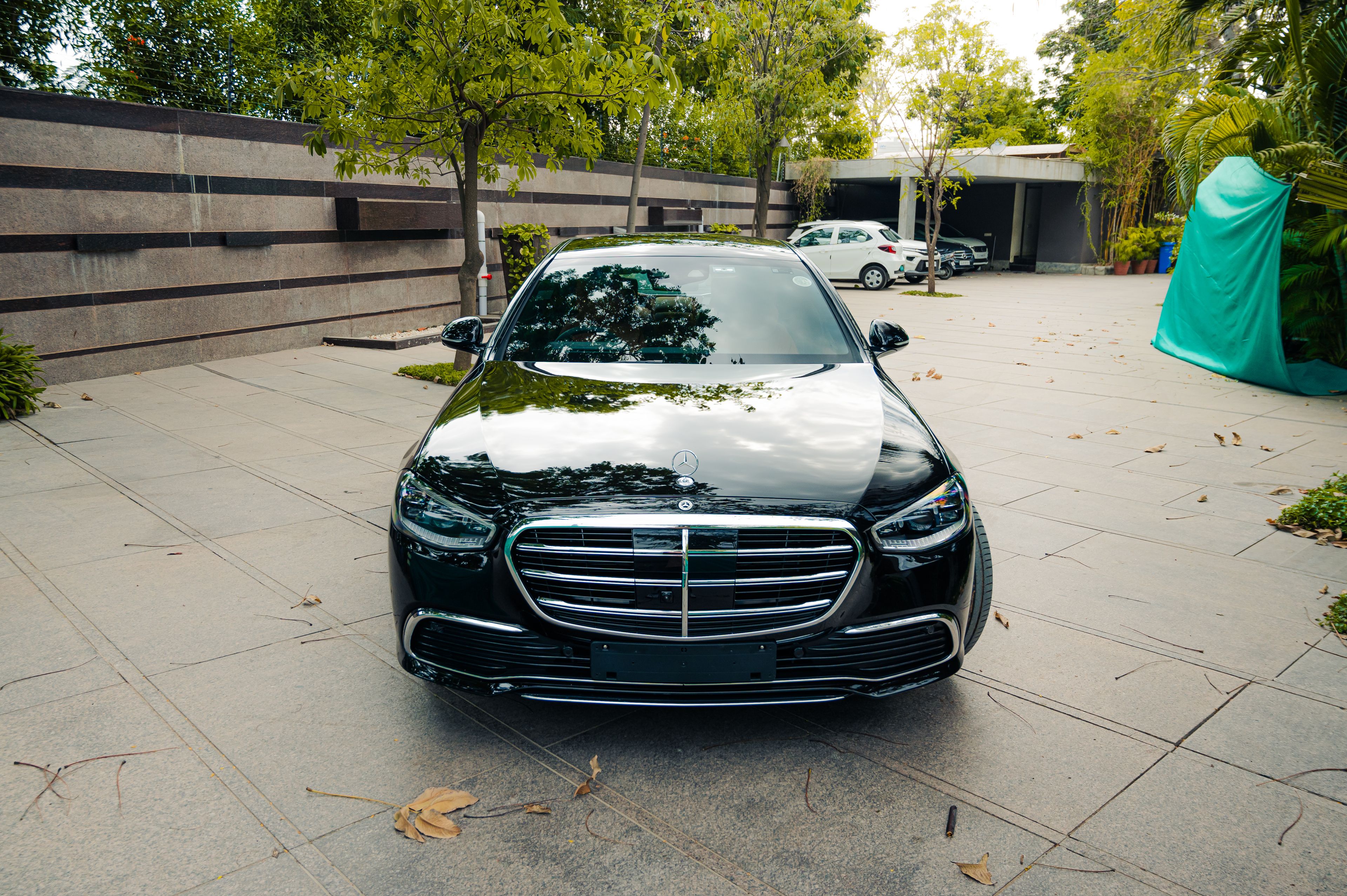
The second is what most of our clients do, and a car makes it comfortable rather than tedious. Your chauffeur agrees a collection point away from the main exit flow, often on a road reached from a different direction entirely, and you walk to it when the crowd has thinned. The decision does not have to be made in advance, but the collection point does.
Ground conditions and footwear
The circuit sits in open countryside and much of the walking is on grass and temporary trackway. In dry weather it is a long but easy walk. After rain it is heavy going, and the last hundred metres to a car parked on a field is where a weekend turns miserable. A set-down on tarmac and a collection from a made road removes that section entirely.
Dress for the field rather than the grandstand. Ear protection, a waterproof layer, and a second pair of shoes to change into for the drive home are all worth the boot space. If the forecast has turned, tell us before the day rather than on the morning, because it may change which vehicle we send and where the collection point can sensibly be.
Staying nearby or travelling daily
For a single day, travelling up and back from London is straightforward if the departure is early enough. For the full weekend it is punishing, and most people who do it once do not do it twice. Basing yourself in Northamptonshire, Buckinghamshire or Oxfordshire for two or three nights turns three long journeys into three short ones and makes the early starts survivable.
If you do stay locally, a vehicle held for the weekend gives you the same chauffeur and the same route each morning, which is worth more than it sounds when the alarm is set for four. Local roads are quiet outside the peak flows, so evenings out to a pub or a restaurant nearby are easy, and the return each night is short.
Accommodation near the circuit is taken up early in the year by people who book it as a matter of routine, so the practical question is usually how far out you are prepared to be. Twenty minutes further away on a road that is not on the main approach is frequently better than ten minutes nearer on one that is, and we are happy to advise on that when you are choosing.
- One day out of London is workable with a genuinely early start
- A full weekend is far easier from a local base
- Pick accommodation off the main approach roads where you can
- Hold the same vehicle across the weekend for consistent timings
- Use the quiet evenings for dinner locally rather than driving far