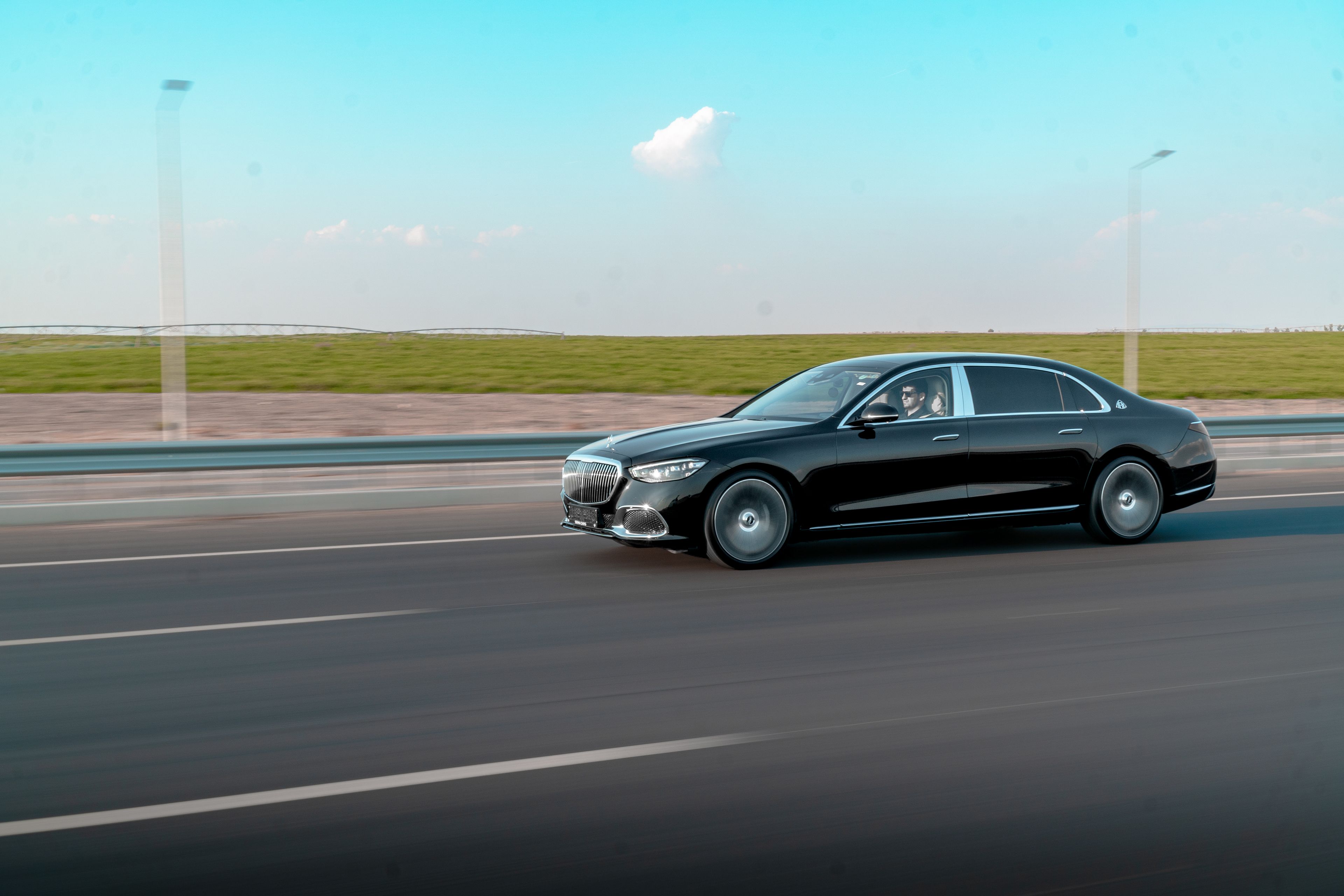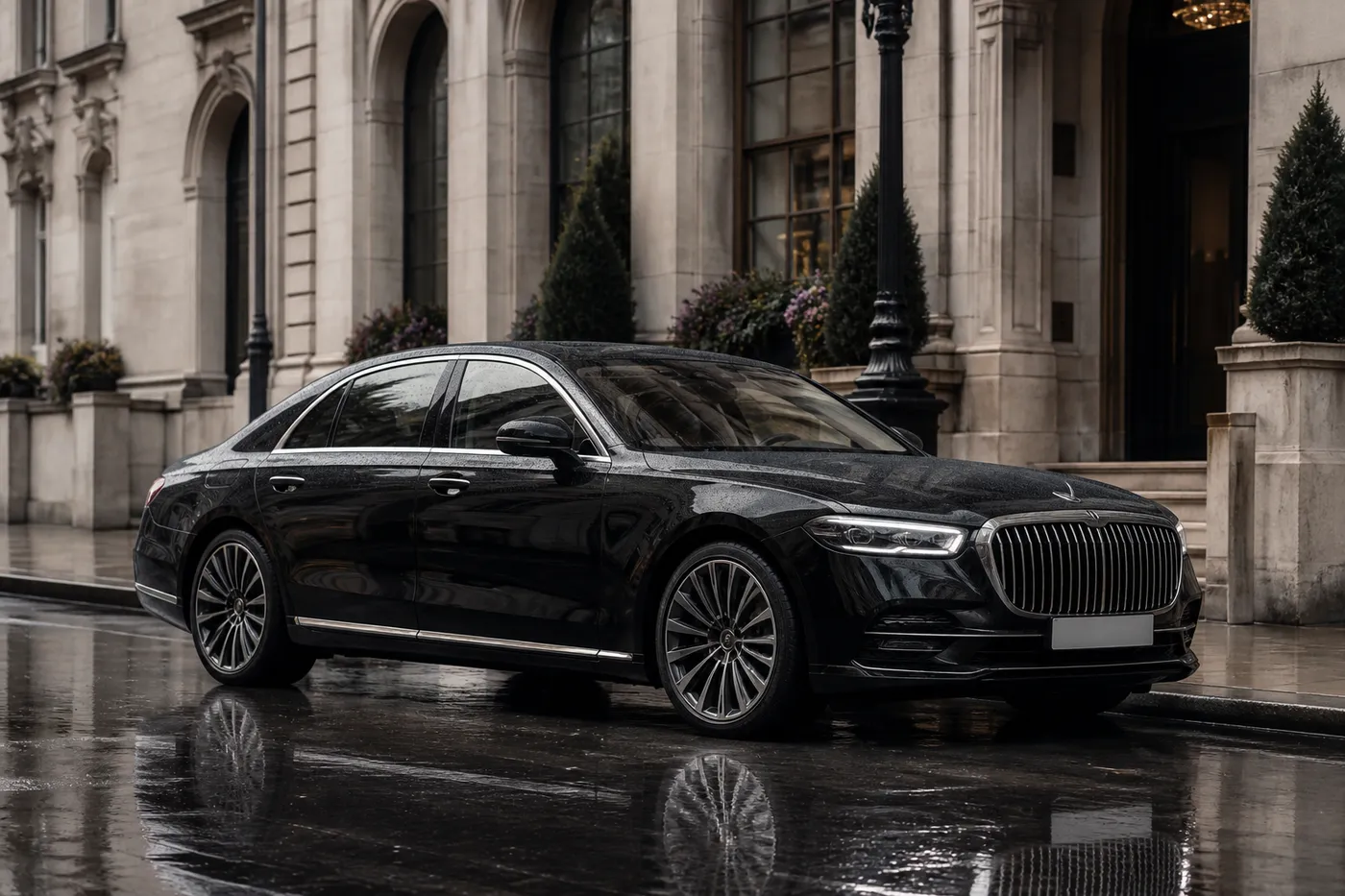




Electric cars have a reputation for either brilliant packaging or baffling packaging, and the truth is that it varies enormously between models. The i7 falls into the conventional camp. Because it shares its body with the combustion 7 Series rather than sitting on a bespoke electric platform, its luggage space behaves much like a large petrol saloon, which is good news if you like predictability.
What it does not have is a front boot, and that catches out passengers who have travelled in other electric cars where the space under the bonnet swallows the cabin bags. Everything goes in the back, and the back is a normal size. This page explains what that means in suitcases, and how to plan a full airport load around it.
The working figure
Two large checked cases and two cabin bags is what we quote, and it is accurate. The floor is wide and flat, the two large cases lie down neatly, and the cabin bags sit in the remaining space towards the back edge. A pair of soft holdalls in place of the cabin cases will always fit more easily than rigid ones.
Three medium cases and a holdall is the other combination that works well, and for two people travelling for a week it is the smarter way to pack. Boots reward several regular shapes far more than they reward one enormous case, and this is true whether the car has an engine or a battery.
Why there is no front boot
Many electric cars offer storage under the bonnet because there is no engine occupying that space. The i7 does not, because the 7 Series body was designed to accommodate combustion engines as well, and the front of the car is filled with cooling, structure and electrical hardware rather than left empty.
It is worth knowing simply so the space is not in your plan. If you have travelled in an electric car that carried the hand luggage up front, do not assume the same here. Everything travels in the rear boot or in the cabin alongside you, which for two passengers with normal bags is entirely sufficient.
What the chauffeur already carries
Every electric chauffeur car travels with charging equipment, and it lives in the boot. It is not large, but it is not nothing either, and on a tightly packed airport run it is the difference between the lid closing easily and the lid closing eventually.
- A rapid-charging cable in a protective bag, kept flat against the boot side
- A domestic or destination cable for overnight and hotel charging
- Umbrellas, which any decent chauffeur keeps within reach
- Bottled water and a small refreshment case in most cars
- A cleaning kit for keeping the car presentable between stops
- Occasionally a folded luggage cover for protecting the boot lining
Loading and the shape of the space
The aperture is wide and the loading height is moderate, so cases go in comfortably without anybody having to lift from the shoulder. Depth is good, height is average, and the parcel shelf sets the practical ceiling. As with any saloon, nothing rigid can stand upright, and the useful strategy is to load the two heaviest cases flat and first.
One small practical point: the boot lid is powered and takes a moment to rise and close. On a wet kerbside in a hurry that is a couple of seconds, not a problem, but it is why chauffeurs open the boot as they approach a set-down bay rather than after stopping. It is the sort of thing you never notice when it is done well.
When to book something bigger
The i7 is a two-passenger car in luggage terms, and the moment a third passenger travels with a third large case, the arithmetic fails. Sports equipment fails immediately: skis, golf bags and anything else long and rigid belong in an MPV or an SUV, and no amount of clever loading changes that.
- Three or more large checked cases with a full rear seat
- Golf clubs, which will not clear the aperture in a saloon
- Skis, snowboards and poles, which need a genuinely long load bay
- A rigid travel system with a carrycot plus a week of holiday luggage
- Exhibition stands, artwork and anything requiring an upright load
- Four passengers on an airport run with checked bags each
Arranging it in advance
Send your luggage list when you enquire rather than your vehicle preference, and let the load choose the car. It takes one line on WhatsApp or in an email, and it prevents the single most common problem in this business. If the load is borderline, we will say which vehicle we would send and why.
Our i7 bookings are covered by our own cars and by a vetted network of professional chauffeur operators, so specification varies a little between vehicles and the exact car is confirmed with your booking rather than promised in advance. Colour and interior trim are likewise subject to availability on the date you need.