


Sports equipment is where luggage advice stops being about capacity and starts being about geometry. A golf bag is not heavy and does not occupy much volume; it is simply too long to lie across a saloon boot, and that single dimension decides the vehicle. The same is true of skis, of a boxed bicycle and of most of the awkward things people carry.
What follows is organised by the equipment rather than by the car, because that is how people arrive at the question. Measure the longest item, count how many there are, then read across to the vehicle. Where the answer is that one car will not do it, that is said plainly here rather than left to be discovered on the morning of departure.
Measure the longest thing first
Every decision here starts with one number: the length of the longest rigid item, in centimetres, measured as it will actually travel. A golf bag with a driver in it is longer than the bag alone. A ski bag is longer than the skis. A boxed bicycle is longer than the bicycle. Guessing that number is what produces the telephone call from the pavement.
The second number is how many of them there are, because two long items rarely stack the way one does, and the third is whether they are rigid or soft. A soft holdall of kit will find a shape; a hard case will not bend at all. Send those three facts and the vehicle recommendation is immediate. There is no guesswork left in it.
- Golf bag with clubs, typically around one hundred and thirty centimetres
- Golf travel case, longer again and rigid at both ends
- Adult skis, commonly between one hundred and fifty and one hundred and ninety centimetres
- Snowboards, shorter than skis but wider and less forgiving
- Bicycle in a hard case or box, long, heavy and awkward to lift
- Fishing rod tubes and shooting slips, long but narrow and light
What a saloon will and will not take
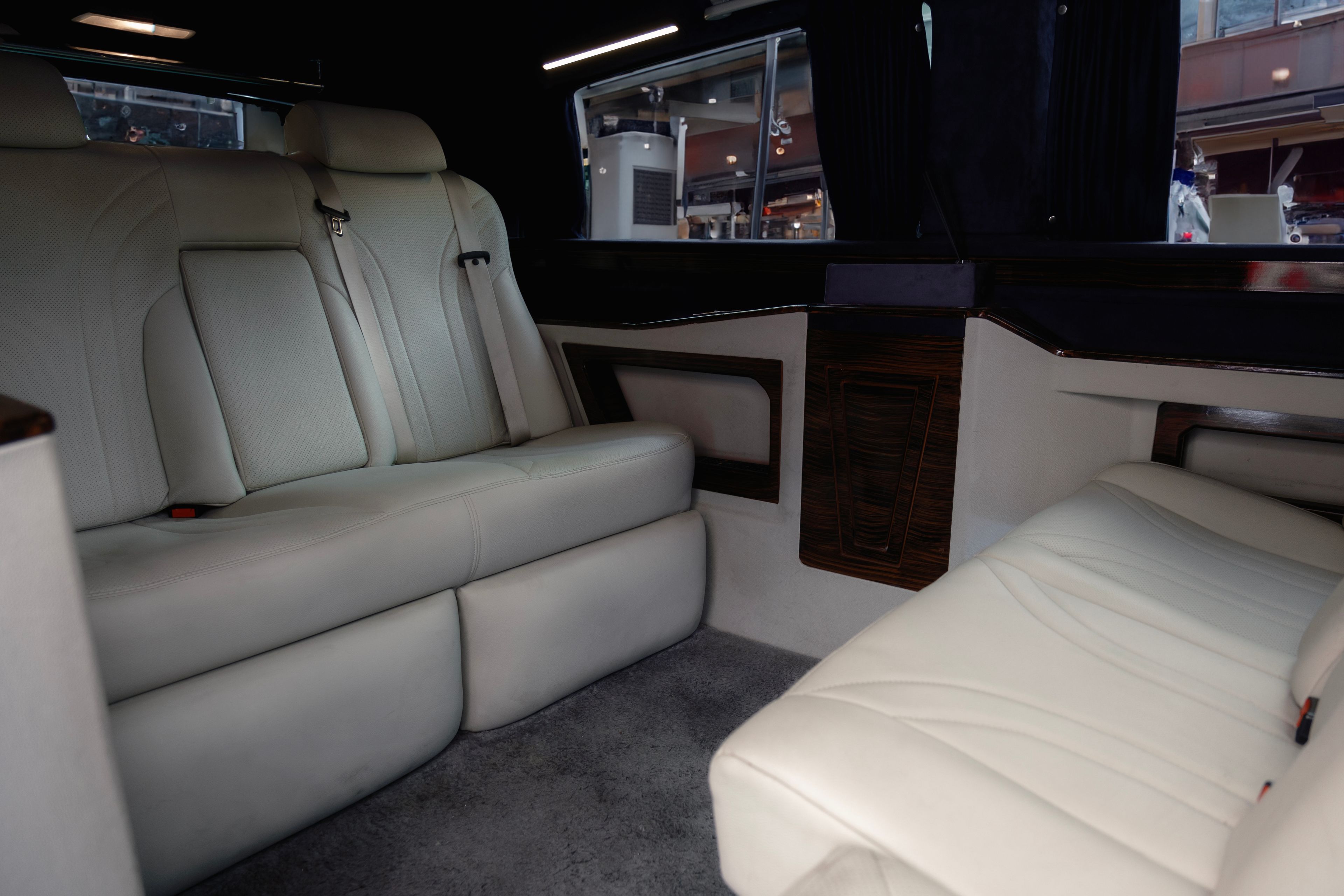
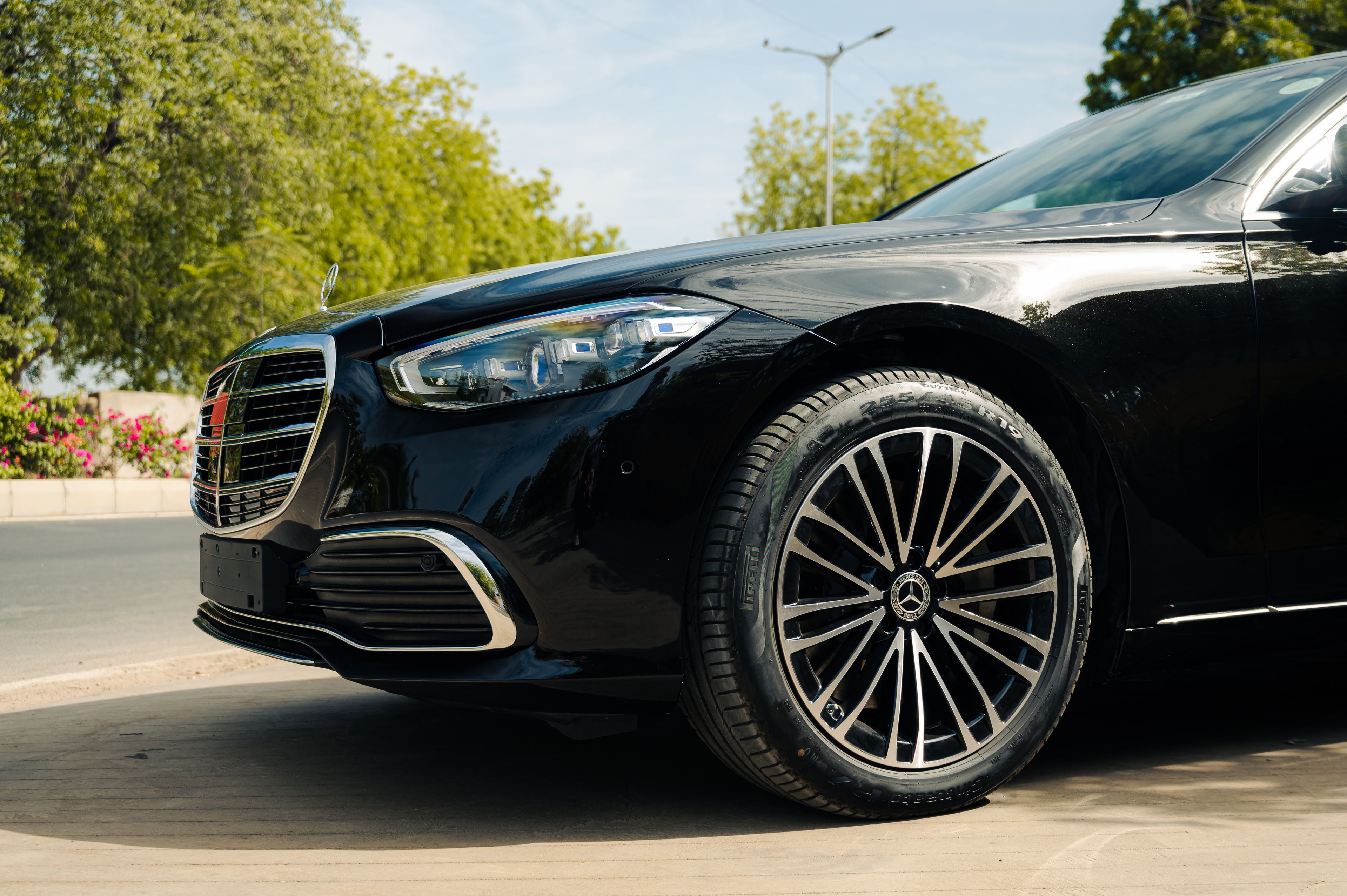
An executive or flagship saloon takes one set of golf clubs only by folding part of the rear seat, which works for a single passenger or a pair travelling light and stops working the moment somebody needs to sit there. Two sets of clubs plus luggage does not happen in a saloon, whatever anybody tells you at the booking stage. It is the most common overestimate we see.
Skis do not go into a saloon at all. There is no angle, no folded seat and no clever arrangement that makes a pair of adult skis fit inside a car of that shape, and threading them through the cabin is neither safe nor comfortable. This is worth being firm about, because it is the request that most often arrives late and hopefully, a day before travel.
SUVs, MPVs and useful load lengths
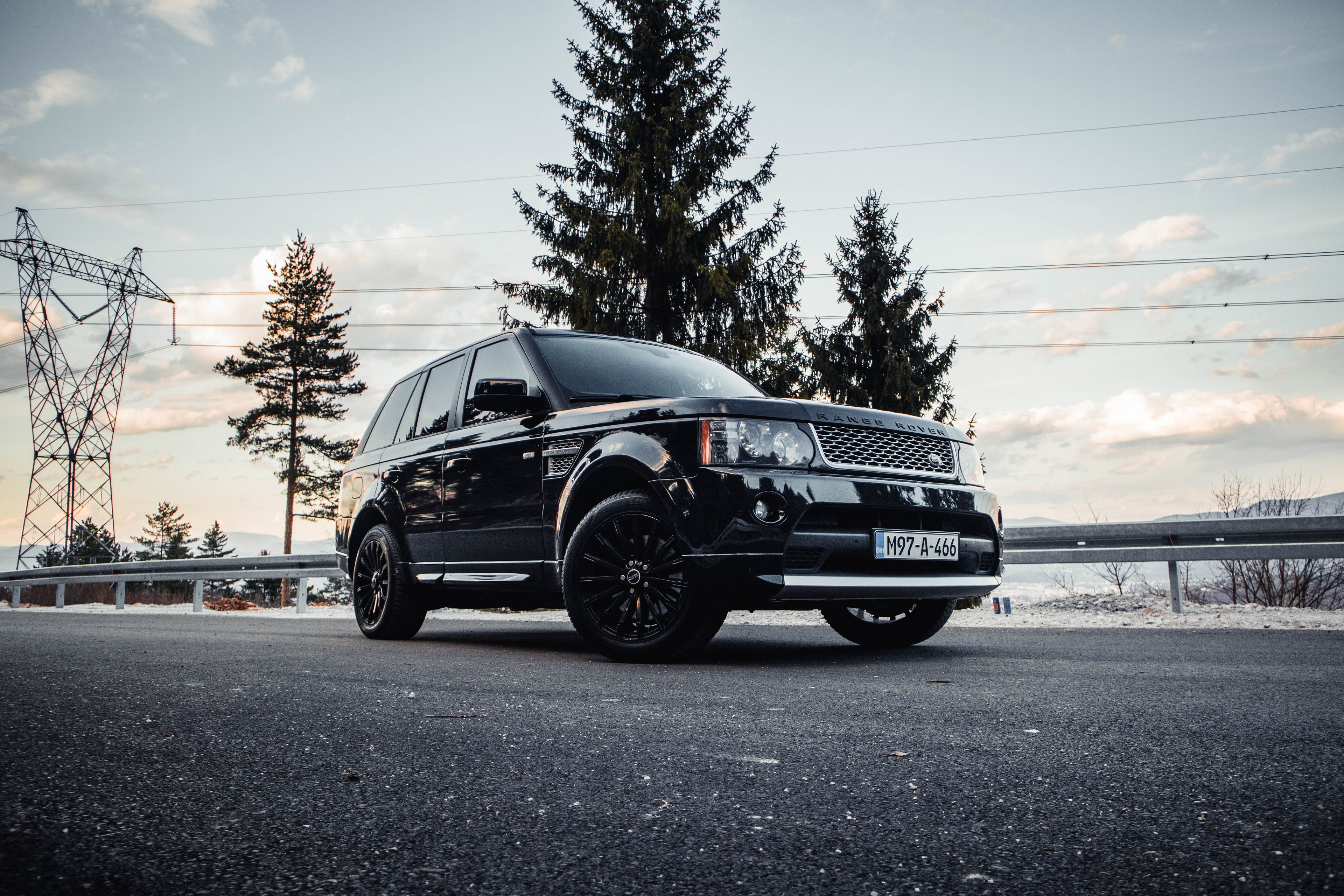
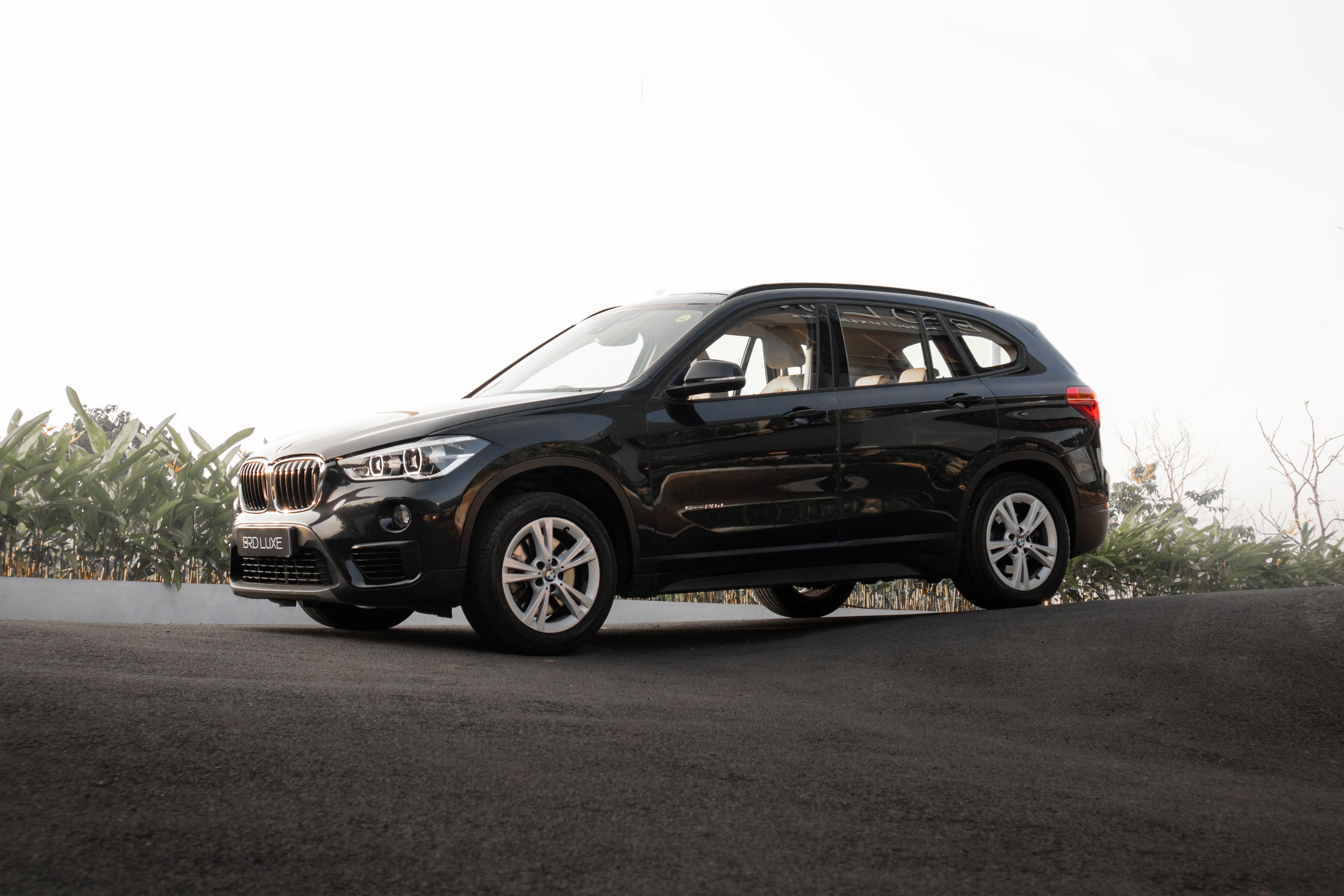
A luxury SUV with the rear bench folded takes skis, clubs and most long items comfortably, and with the bench up it will usually still carry one or two golf bags standing at an angle behind the seats. Some Range Rovers have a load-through hatch behind the centre armrest that swallows skis while four people remain seated, though whether a particular car has one depends on its specification.
The luxury MPV is the most capable of all, because the floor is long and flat and, in some configurations, seats can be moved or taken out to open the space up further. A party of four with skis and cases is an MPV job and always has been. It is also the vehicle that copes best when the equipment count grows between the booking and the day.
Roof boxes, racks and why we avoid them
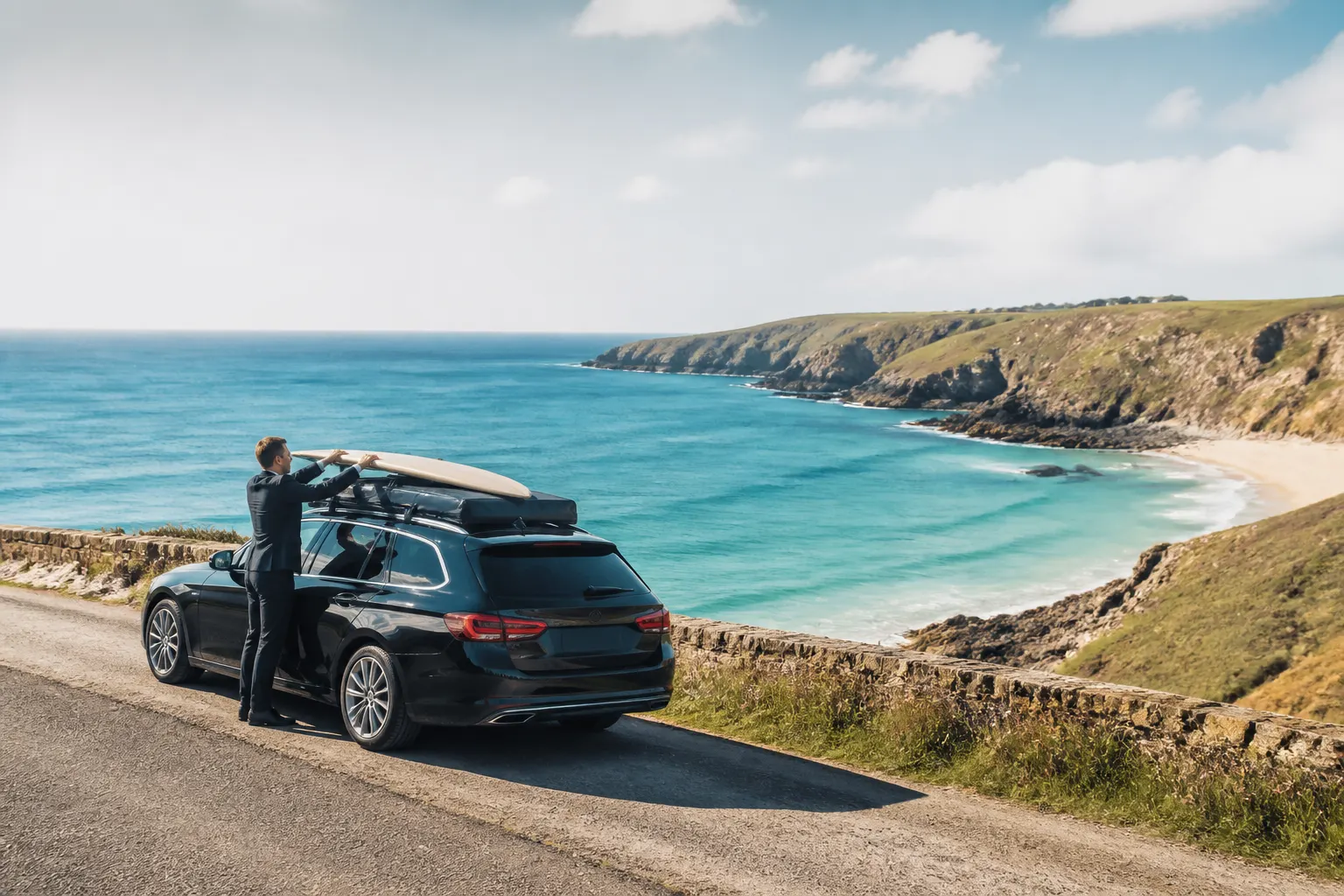
The obvious question is why chauffeur cars do not simply fit a roof box. The answer is that the vehicles are not routinely equipped with roof bars, fitting them marks paintwork and takes time, they alter the height of a car that may need to enter a car park, and a wet roof box being loaded at the kerb is an awkward business outside a hotel entrance.
The practical alternative is choosing a vehicle with the internal space, or running a second one. For a group with a great deal of equipment, two vehicles is often the calmer arrangement anyway, because it separates the people from the kit and means nobody sits with a boot pressing against their seat back for two hours. It is worth asking about both before you decide.
Equipment that needs extra thought
Some items need more than a measurement. Bicycles are heavy as well as long, and a boxed bike may need two people to lift, so it helps to know whether it is boxed, bagged or going in as it is. Shooting equipment in slips must be declared in advance and remains the responsibility of the person licensed to hold it. Anything wet, muddy or sandy needs protection laid first.
Musical instruments and delicate equipment belong in the cabin rather than the load area whenever they will fit, since a boot is where things move about. Say what is fragile and how it should sit, and it will be loaded accordingly. A chauffeur who is told in advance loads in the right order; one who is not has to rearrange everything on a pavement in the dark.
Telling us before you travel
The message that solves all of this is short. Longest item and its length, how many of them, how many passengers, and how many suitcases alongside. That is four facts, and between them they choose the vehicle without any further discussion at all. Anything unusual can be described in a sentence and will be treated as ordinary rather than difficult, because most of it is.
Vehicles come from our own cars and from a vetted network of professional chauffeur operators, and load lengths, seat folding and features such as a load-through hatch vary between individual examples, so all of it is subject to availability and confirmed with your booking rather than assumed at enquiry. Send the details on WhatsApp or by email and you will get a straight answer.
- The longest item, measured as it will actually travel
- How many long items are coming in total
- Passenger count, since seats and load space compete
- Suitcases and cabin bags travelling alongside the equipment
- Anything wet, muddy, fragile or needing to stay upright