



It sounds like the simplest number in chauffeur travel and it causes more difficulty than almost any other. The trouble is that two different figures share the name: what a vehicle is permitted to carry, and what it can carry with everybody's bags and everybody's dignity intact. They are rarely the same number.
Set out below is where the licensed figure comes from, why it cannot be exceeded whatever anybody is willing to put up with, what pulls the practical figure below it, how the number appears when you are arranging a journey, and the confusions that arise because different industries count seats differently.
Where the licensed figure comes from
Every licensed private hire vehicle has a maximum number of passengers recorded against it by the authority that licensed it, based on the seat belts the manufacturer fitted and the vehicle's construction. That figure is fixed, it excludes the driver, and it cannot be exceeded regardless of how willing everybody is to squeeze up.
It appears on the vehicle's licence documentation and is a legal limit rather than a guideline. A chauffeur who declines to take an extra person is not being awkward; carrying more than the licensed number puts the licence and the insurance behind the journey at risk, which is a considerably larger problem than a second car would have been.
Why the practical figure is lower
The licensed maximum assumes a full car of people and says nothing about what they are carrying or how far they are going. Once bags, seasonal clothing and a long journey enter the picture, the number that works in practice falls, sometimes by a whole seat. This is the calculation a chauffeur operator actually makes when recommending a vehicle.
- Luggage that will not fit the boot and must occupy a seat
- Child seats, which take a full seat each and need belt access
- Journey length, since a middle seat is tolerable only briefly
- Formal or bulky clothing, particularly in winter or at events
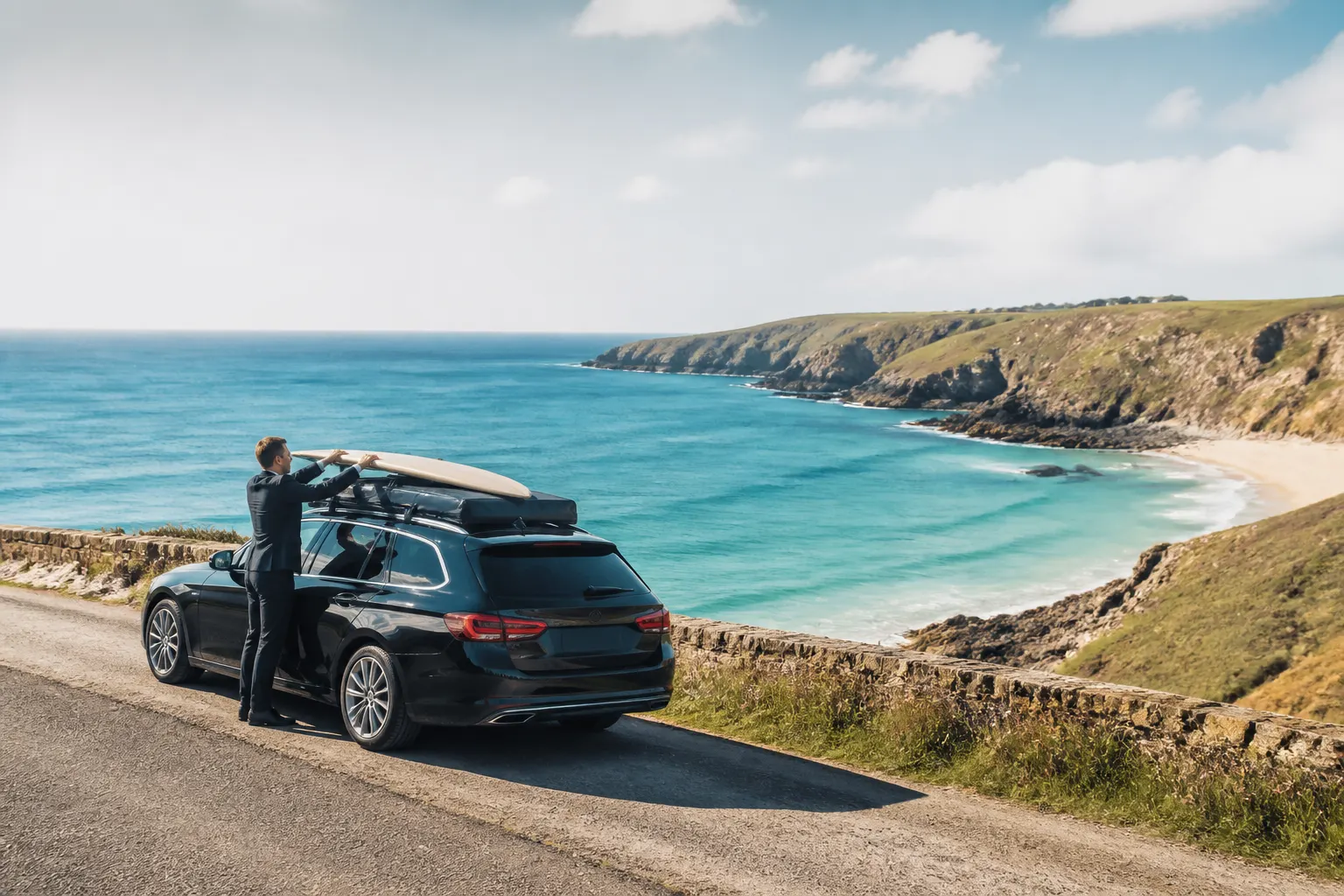
- Equipment, instruments or samples travelling with the party
- A passenger who needs space beside them for mobility reasons

How it appears on your booking
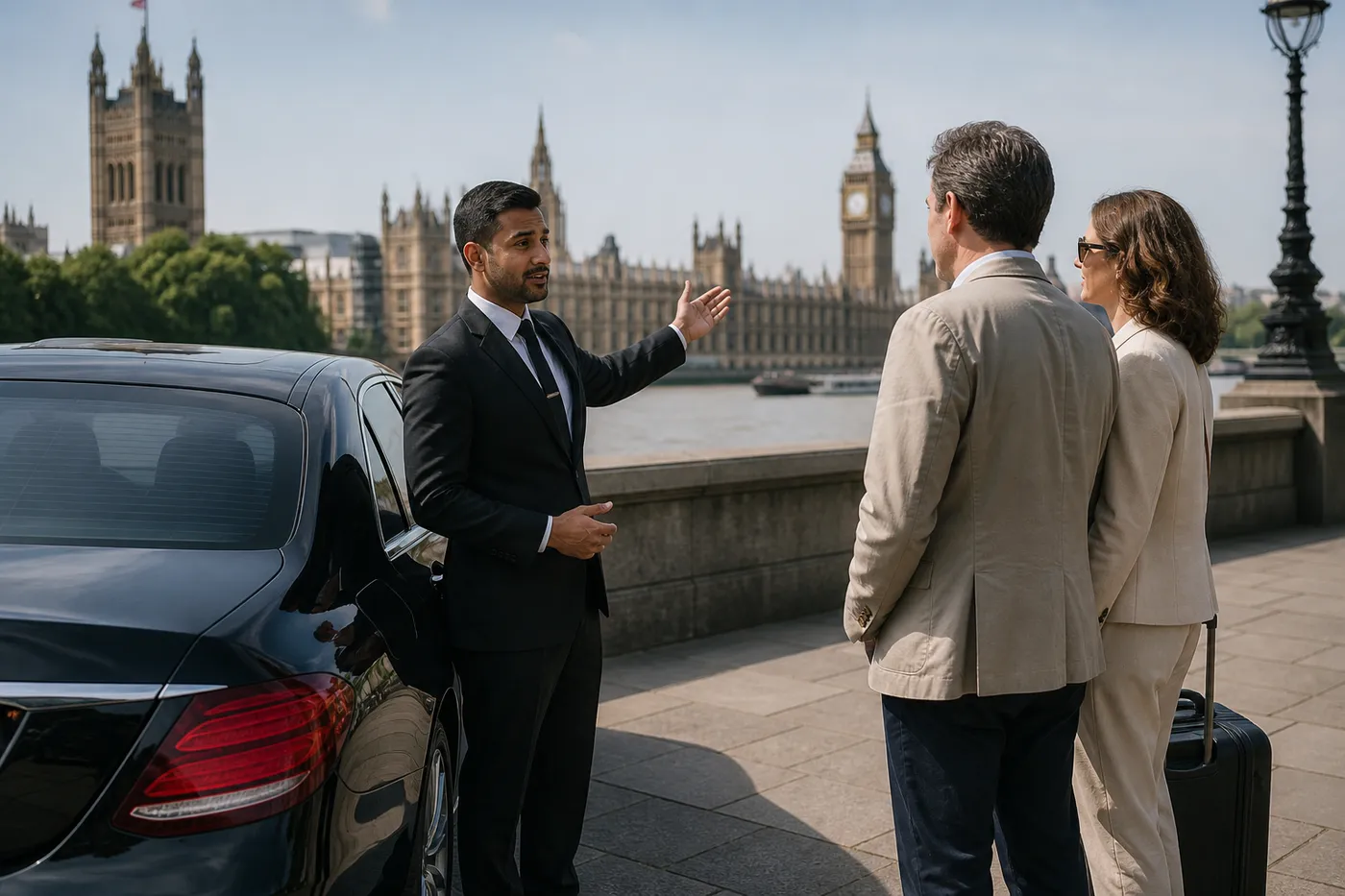
You are asked for a headcount at the enquiry stage, and the vehicle class is recommended from it together with the luggage figure. The confirmation then states the vehicle and the number of passengers it is arranged for, so that both sides are working from the same understanding before anybody arrives at a kerb in the dark.
Numbers change, and that is normal. If the party grows after booking, tell us as soon as you know rather than on the morning; a larger vehicle or a second car is straightforward to arrange with notice and considerably harder to conjure at short notice on a busy weekend. Any change is reconfirmed in writing.
Counted differently elsewhere
Manufacturers quote seats including the driver, which is why a car described as a seven-seater carries six passengers on a chauffeur booking. Coach and minibus operators generally quote excluding the driver, as we do. Neither convention is wrong, but reading one as the other produces exactly the sort of error that leaves somebody standing on the pavement.
Occasional seats add another wrinkle. Folding or jump seats in some large vehicles are counted in the licensed figure but are not places anybody should spend two hours, and the front passenger seat is technically available yet usually left free so the rear cabin can be used properly. Say who is travelling and the arithmetic is done for you.