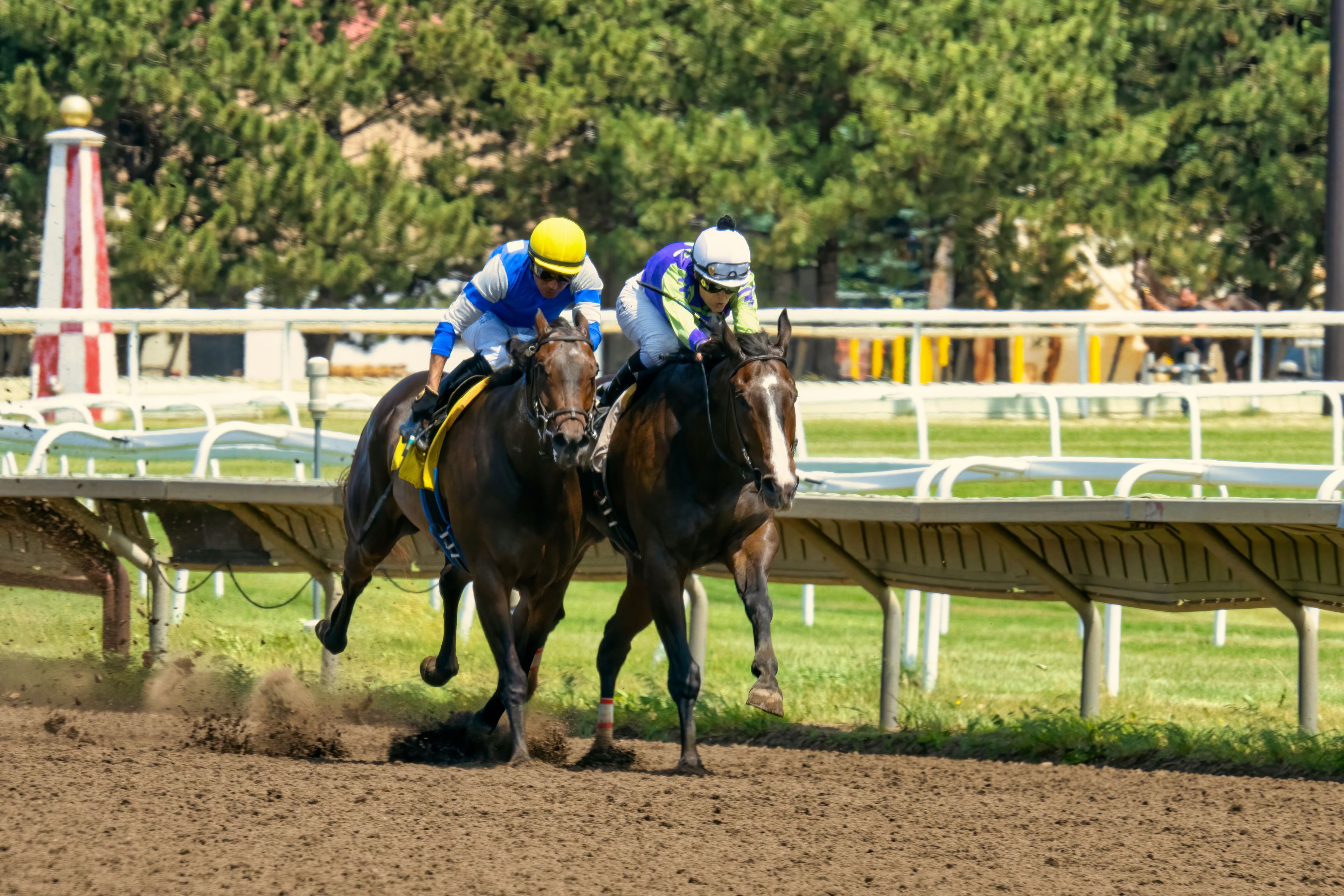





Racing produces three very different logistical problems in this country, and they happen to be attached to three of its best-known meetings. One is a June occasion in Berkshire with a great deal of millinery. One is a cold week in March at the bottom of a Cotswold valley. One is a summer estate high on the South Downs.
Anyone who attends more than one of them notices quickly that the same principles apply and the details never do. This page sets out what a race day demands in general, then what changes between the three, so a plan built for one is not applied unaltered to another. Admission and hospitality are always arranged directly with the racecourse or your host.
What every race day has in common
Whatever the meeting, four things are true. The day is far longer than the racing. The final few miles matter more than everything before them. The crowd leaves at once. And nobody in a party of six agrees on when to go home. Any plan that handles those four works anywhere; any plan that ignores them fails at all three.
The other constant is that the car exists chiefly for the walk. Racecourse parking is generally on grass, allocated in advance, and further from the entrance than it appeared on the map. Being set down near the gates and collected from a point somebody else has chosen is the whole of the practical benefit, and it is larger than it sounds.
Berkshire in June
The Ascot problem is congestion in a prosperous, low-density area with limited road capacity, combined with clothing that does not travel well. Hats with structure, long dresses and morning dress all want headroom and a high door, and the last few miles into the town thicken hours before anything on the card begins.
It is also the meeting most likely to produce a hot afternoon and a cold evening in the same day, so the car is where the coats live. And it is the one where a party scatters most thoroughly, which makes a meeting point outside the course rather than a departure time inside it the single most useful decision anybody makes.

Gloucestershire in March
Cheltenham is a weather problem before it is a traffic problem, although it is comfortably both. The town sits in a bowl, the course occupies its northern edge, and the ground in March is whatever the preceding fortnight decided it should be. Vehicles with height and clearance earn their place in a way they simply do not in June.
The other difference is duration. Where the summer meetings are usually a day, this is a week, and most visitors base themselves out in the Cotswolds and travel in each morning. That converts the planning from a single long journey into a series of short ones, with a different answer for each day of the meeting.
Sussex in summer
Goodwood's difficulty is neither weather nor volume but geography. The estate sits high above Chichester, the approach runs through narrow Downs lanes that block easily, and the site is spread out enough that a day there involves several miles on foot over grass and chalk before anybody has thought about the drive home.
It is also the least uniform of the three, because the estate hosts quite different events across the year and each has its own crowd and its own entrances. A plan that suits one of them is a poor guide to another, which is why the first question is always which event rather than which date.
What you stand on all day
Every racecourse publishes its own guidance for each enclosure and revises it from time to time, so read the current version rather than relying on what somebody remembers from a previous year. From a travel point of view the interesting question is not what is expected indoors but what the ground between the car and the enclosure is made of.
The answer at all three is some combination of tarmac, grass and, in March, mud. Keeping a second pair of shoes in the car and changing at the set-down is entirely normal at every one of these meetings, and it is the difference between an enjoyable afternoon and a stoical one endured for the sake of the photographs.
- Tarmac from the set-down, then grass, then something else
- A second pair of shoes left in the vehicle
- A coat for the evening, whatever the forecast said
- Umbrellas kept in the car rather than carried
- Somewhere flat and separate for a structured hat
- A bag you are content to leave with the vehicle
A method that works at all three
Build the departure around the earliest fixed commitment of your day rather than the first race. Allow generously for the final approach at every one of them. Agree a meeting point outside the course before anybody goes in. Nominate one person to speak for the party. And treat the return as a window rather than a time.
Beyond that, the differences are matters of vehicle and season rather than principle. Send us the meeting, the date, where you are starting and how many are travelling, and we will propose the departure and the vehicle for that particular day. Everything is confirmed in writing over WhatsApp or email before anything is held.
- The earliest fixed thing in your day, whatever it happens to be
- A generous allowance for the last few miles
- A meeting point agreed outside the course
- One nominated contact for the whole party
- A return treated as a window, never a stated time
- A vehicle chosen for the season rather than the photograph