




It is the feature most often asked for by name and least often understood correctly. All-wheel drive does one thing extremely well and several things not at all, and knowing which is which matters more in a British winter than any amount of specification comparison, because the misunderstanding leads directly to overconfidence.
This entry sets out what the system does, where it genuinely earns its place on a journey through this country, what it cannot help with however good it is, why the misunderstanding is dangerous rather than merely academic, and how to raise the subject when booking so that the right vehicle is chosen.
What the system actually does
A two-wheel-drive car puts all its power through one axle, and when that axle loses grip the car goes nowhere. All-wheel drive distributes the effort across four contact patches instead of two, so the amount of grip any single tyre has to provide is halved and the car keeps moving in conditions that would leave the other stuck.
Systems differ in how they do it. Some drive all four wheels permanently, some send power rearwards only when slip is detected, and the more sophisticated arrangements vary the split continuously between axles and sometimes between individual wheels. For a passenger the distinction is academic; for the chauffeur on a wet slip road it is not.
Where it earns its place in Britain
The obvious case is snow, but the frequent case is rain. A heavily laden car pulling out of a junction onto a wet road, an uphill start on a greasy surface, or a motorway slip road in standing water are all everyday situations where the extra traction is doing quiet work that nobody notices, which is exactly how it should be.
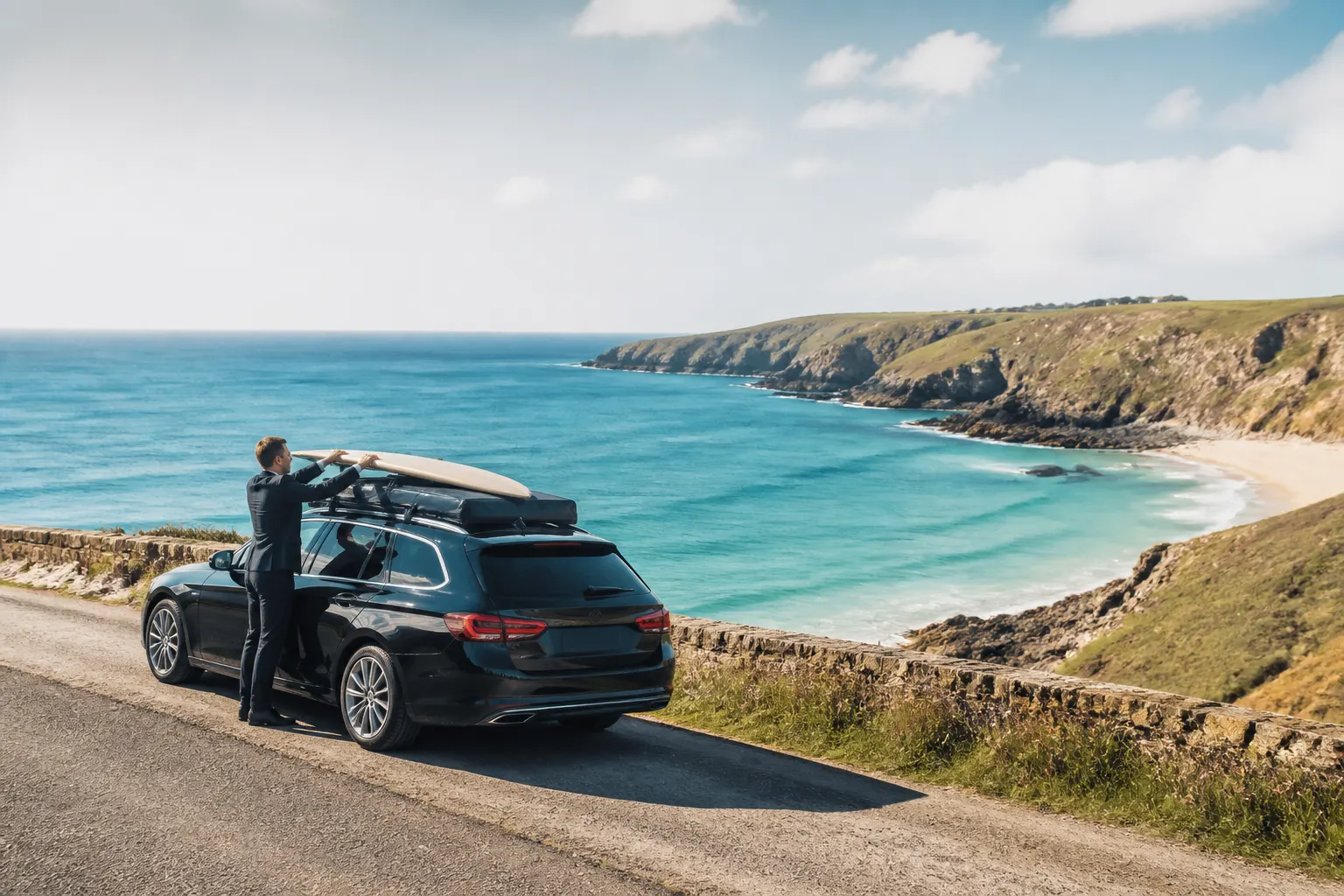
The other case is the last mile. Gravel drives, unmade lanes, event fields and steep private entrances defeat more journeys than motorways ever do, and they tend to appear at the end of a route rather than the start, when there is no opportunity to change vehicle. That is the moment worth planning for.

What it cannot do
This is the important half of the subject. Driving all four wheels helps a car put power down; it has no effect whatever on the physics of slowing down or of changing direction, both of which depend entirely on the tyres and the surface. Confidence that outruns those limits is how winter incidents happen.
- It does not shorten braking distances on any surface
- It does not raise cornering grip in the wet or on ice
- It cannot compensate for worn or unsuitable tyres
- It does not make an untreated snow-covered road safe
- It does not replace a considered decision to delay a journey
- It is not the same as ground clearance on a flooded lane
How to raise it when booking
Describe the destination and the season rather than the drivetrain. A country house up a steep unmade track in January is a clear brief; asking for all-wheel drive without saying why may produce a vehicle that is right in that respect and wrong in several others, such as luggage space or seating.
Where conditions look genuinely poor we would rather have the conversation than send a car and hope. Winter journeys are planned with more margin, alternative routes and honest advice about whether the road out to a remote address is a sensible proposition on the day. Nothing about that changes what has been agreed in writing.