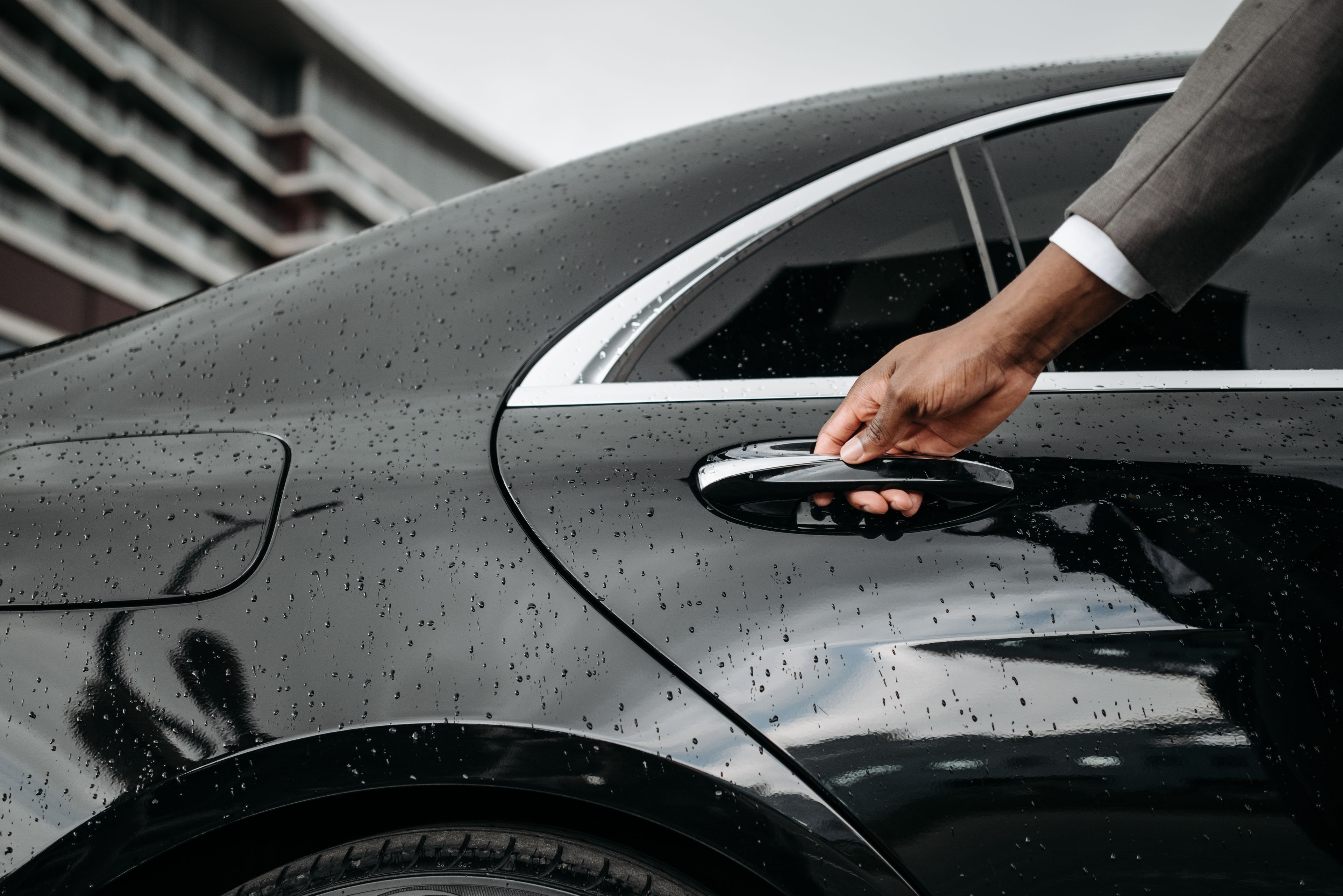



This is the most common question we are asked about vehicles, and it is nearly always framed as whether the upgrade is worth it. That framing is unhelpful, because the two cars are not better and worse versions of one another so much as different sizes of the same idea. One is built to move two people efficiently and quietly; the other is built so that the rear compartment is the best part of the car.
Answering it properly means being specific about what changes when you move between them, and equally specific about when nothing meaningful changes at all. Below is the comparison from the rear seat: space, noise, ride, luggage and the effect of journey length, followed by the situations in which the smaller saloon is not a compromise but simply the correct booking.
The same discipline, a different brief
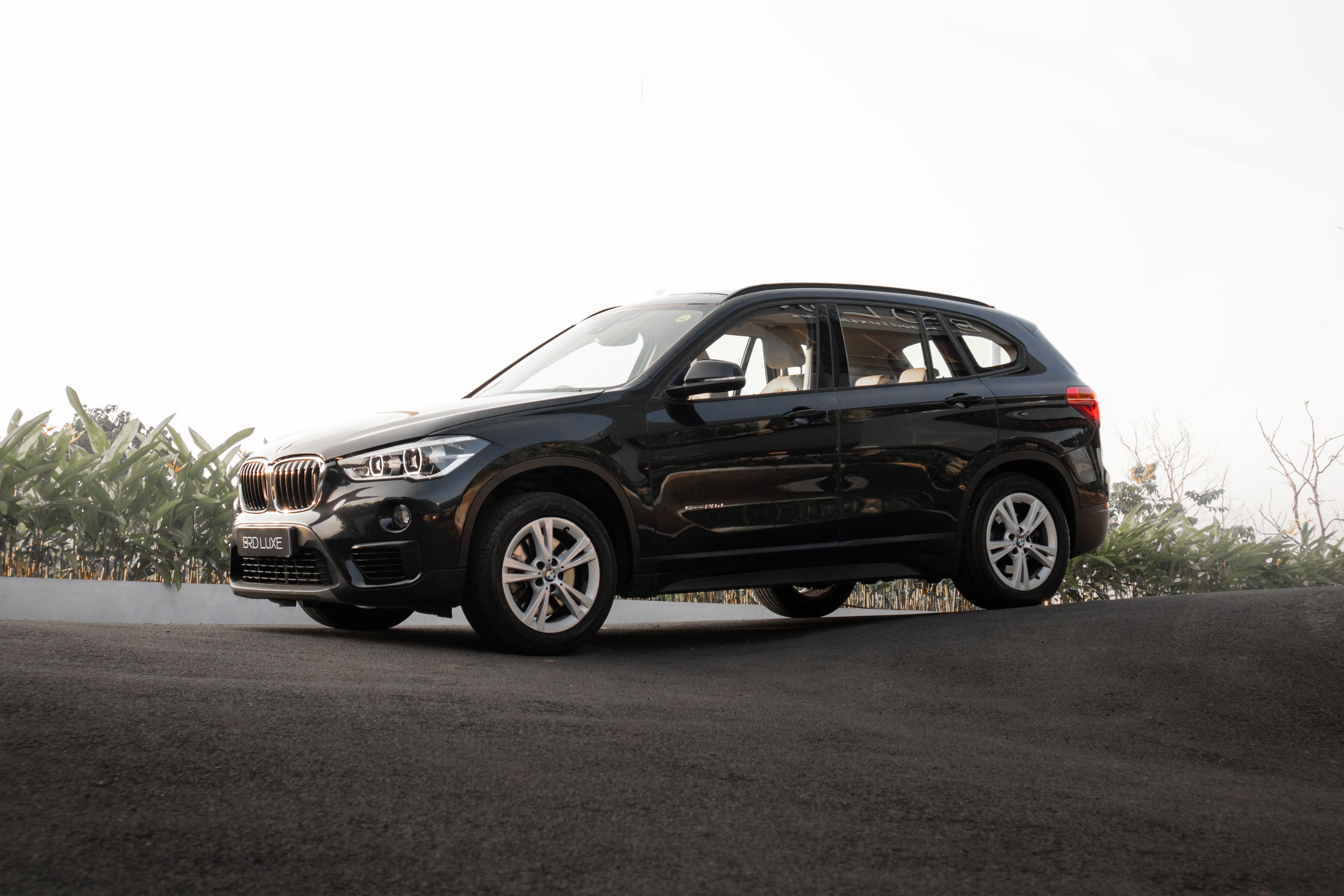
The E-Class is the workhorse of European chauffeur travel and has been for decades, for good reasons. It is quiet, comfortable, unremarkable to look at, easy to place on a city street, and entirely capable of a four-hour motorway run. As a tool for moving one or two people to an airport or across a county, it is very difficult to improve on and impossible to embarrass.
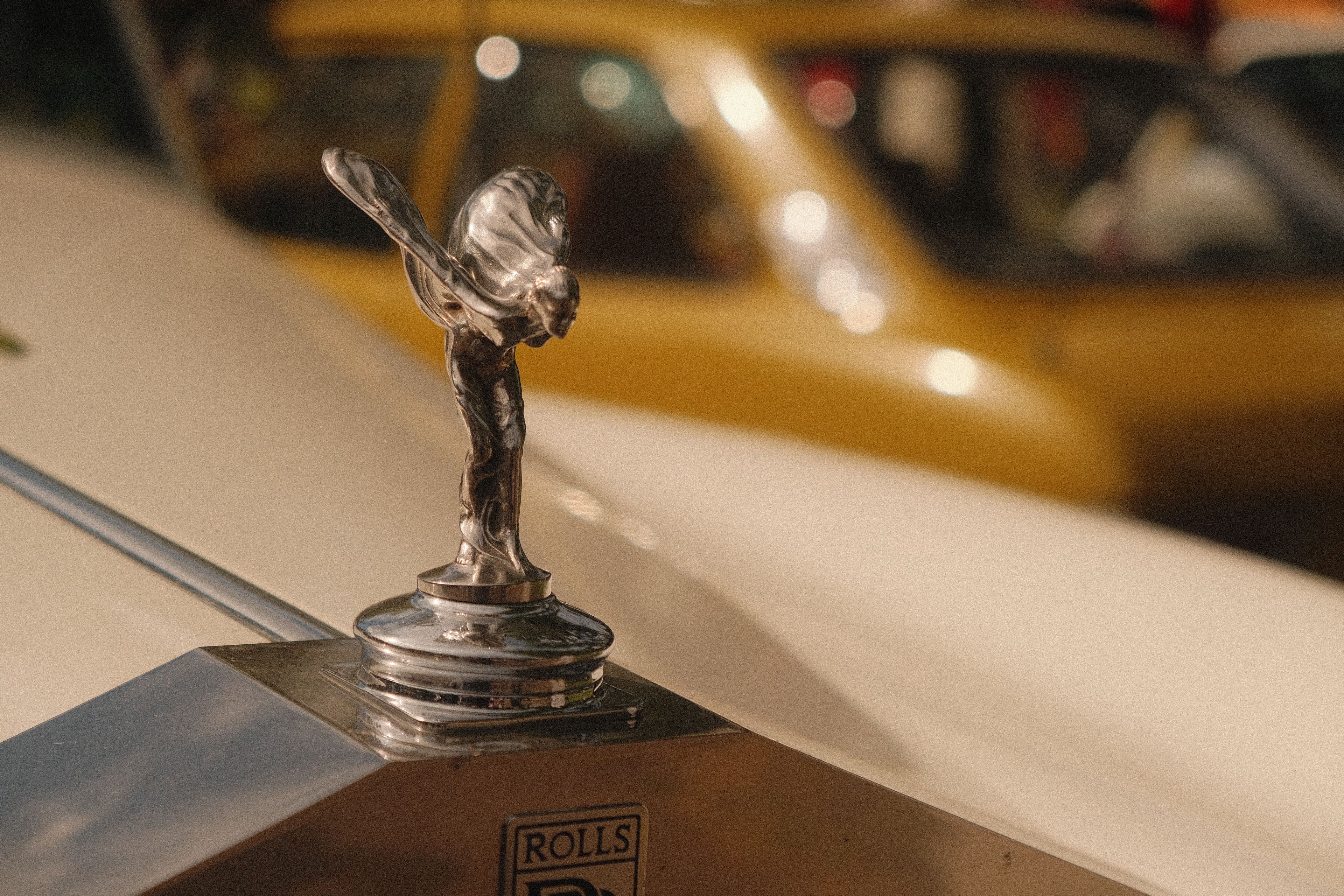
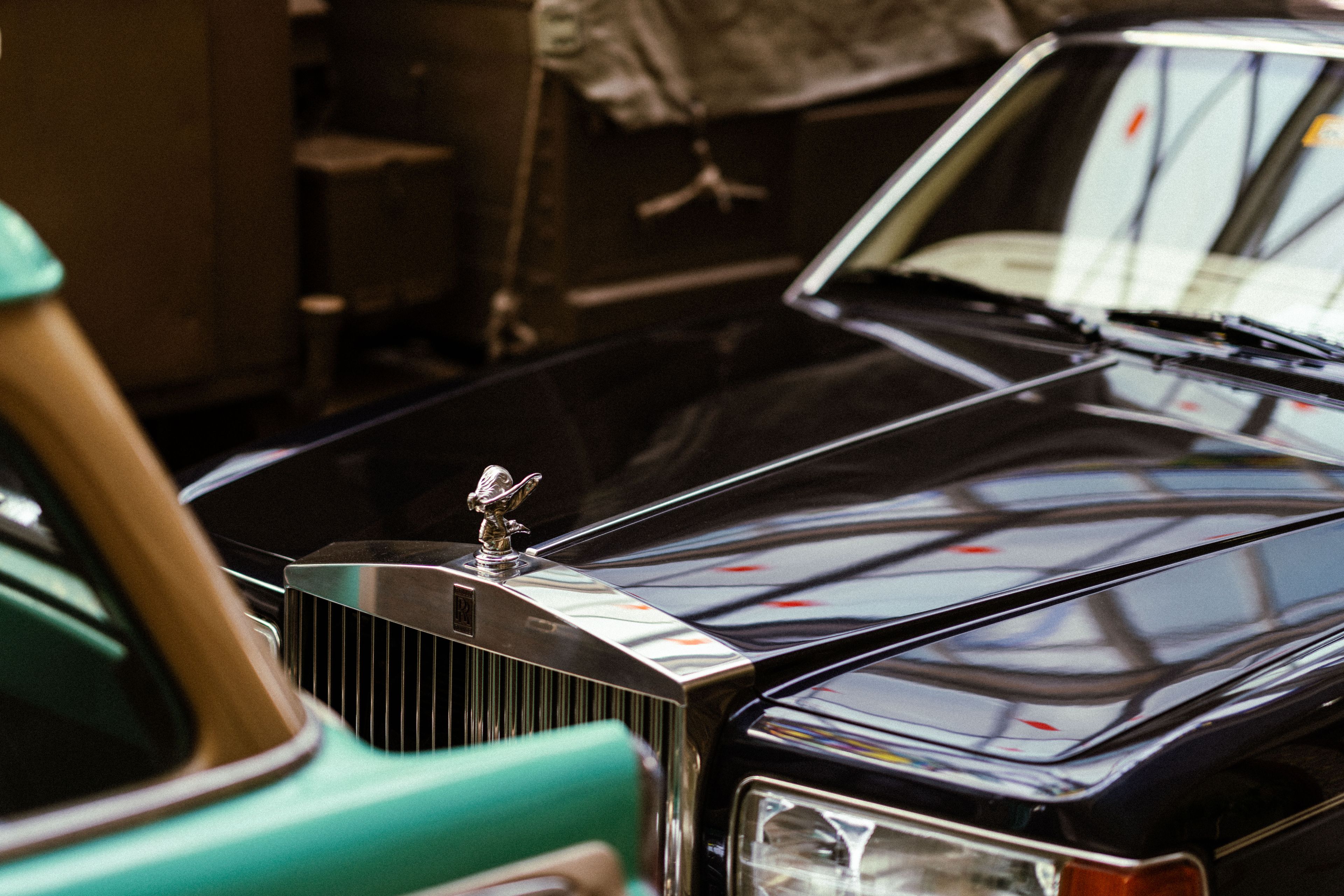
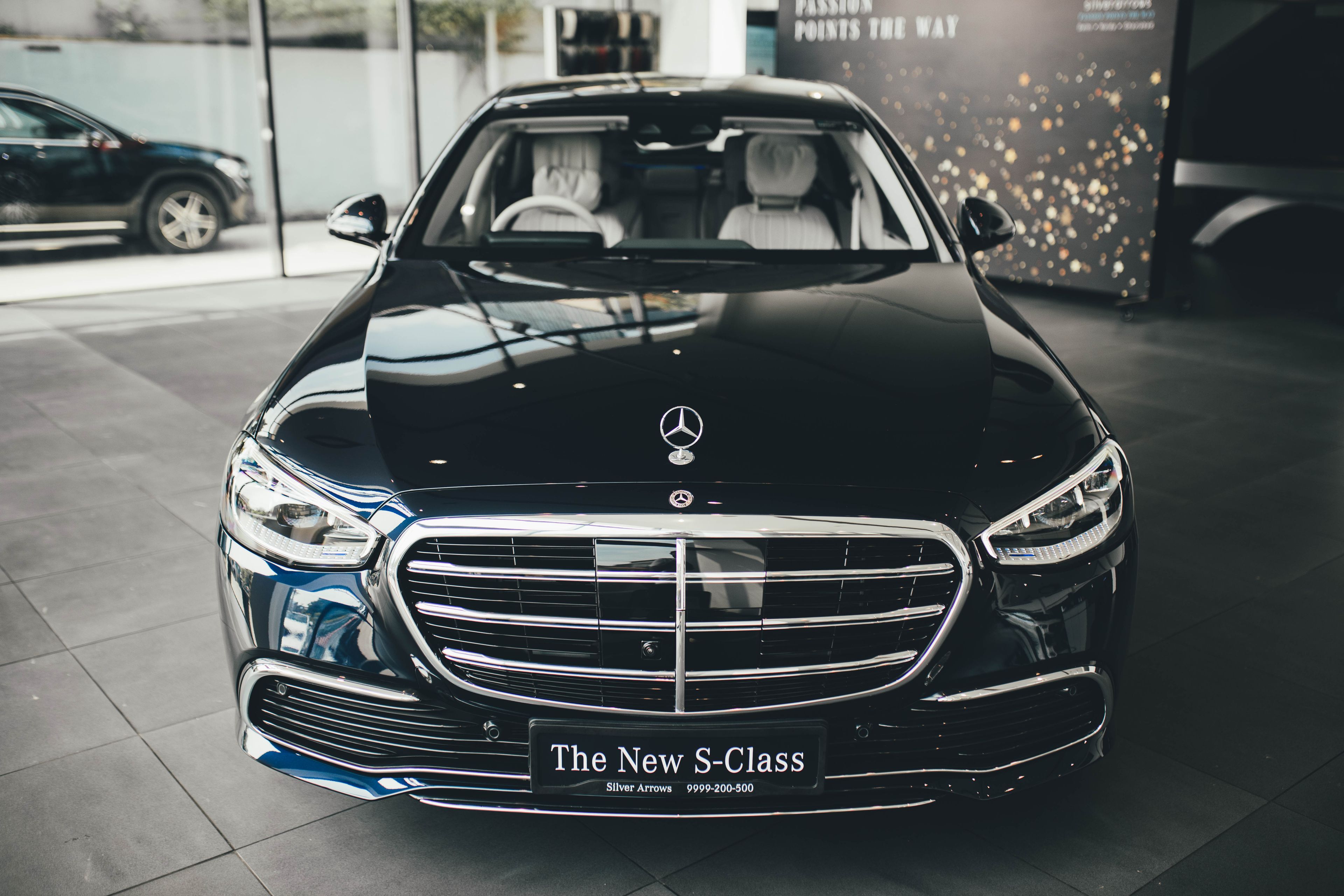
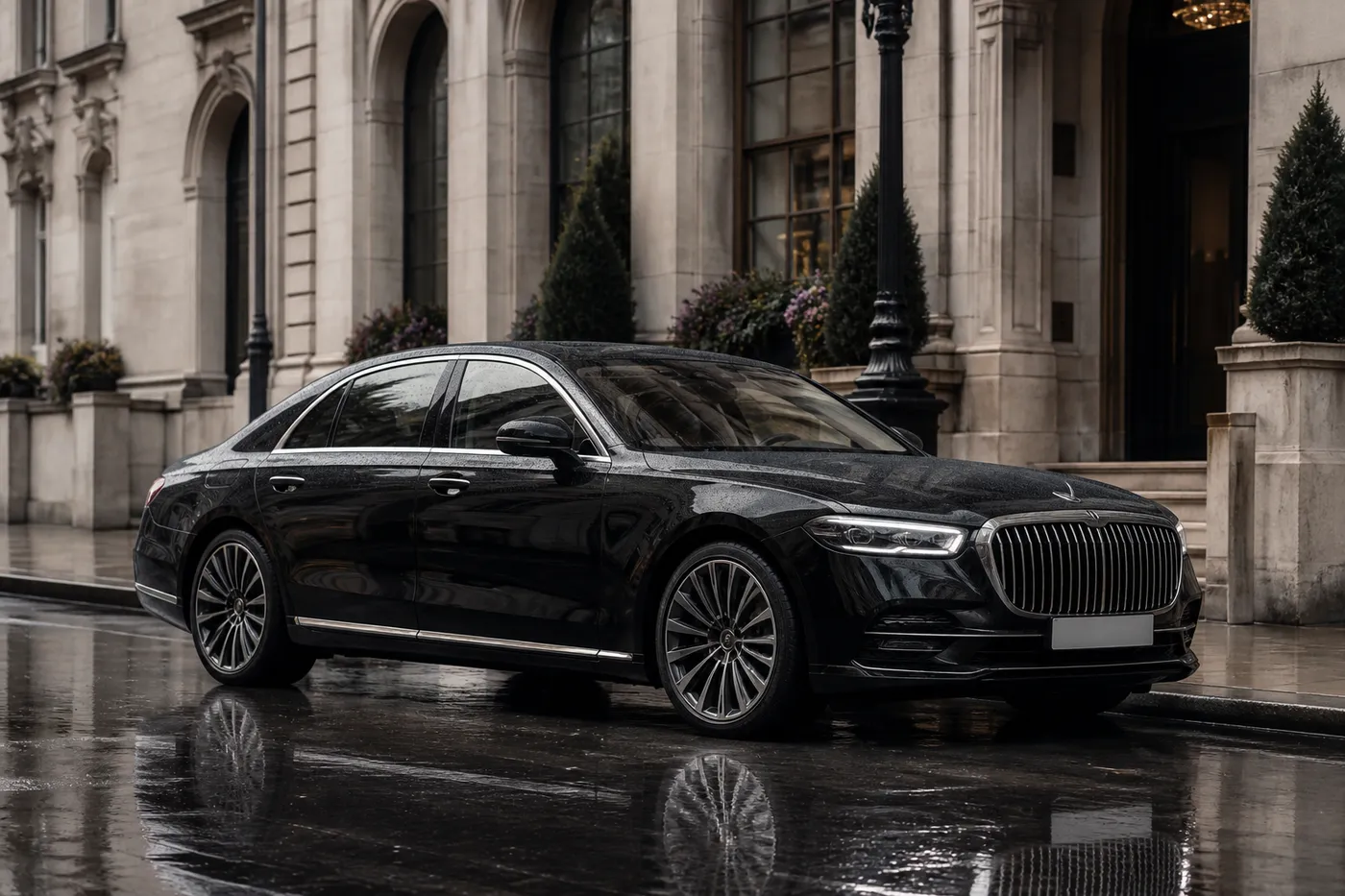
The S-Class exists to make the rear compartment exceptional rather than adequate. Its length goes into rear legroom, its glass and structure into silence, and its suspension into isolating the passenger from the surface. Everything distinctive about it happens behind the front seats, which is why it feels like a modest step up from the driver's position and a considerable one from the back.
From the rear seat, specifically
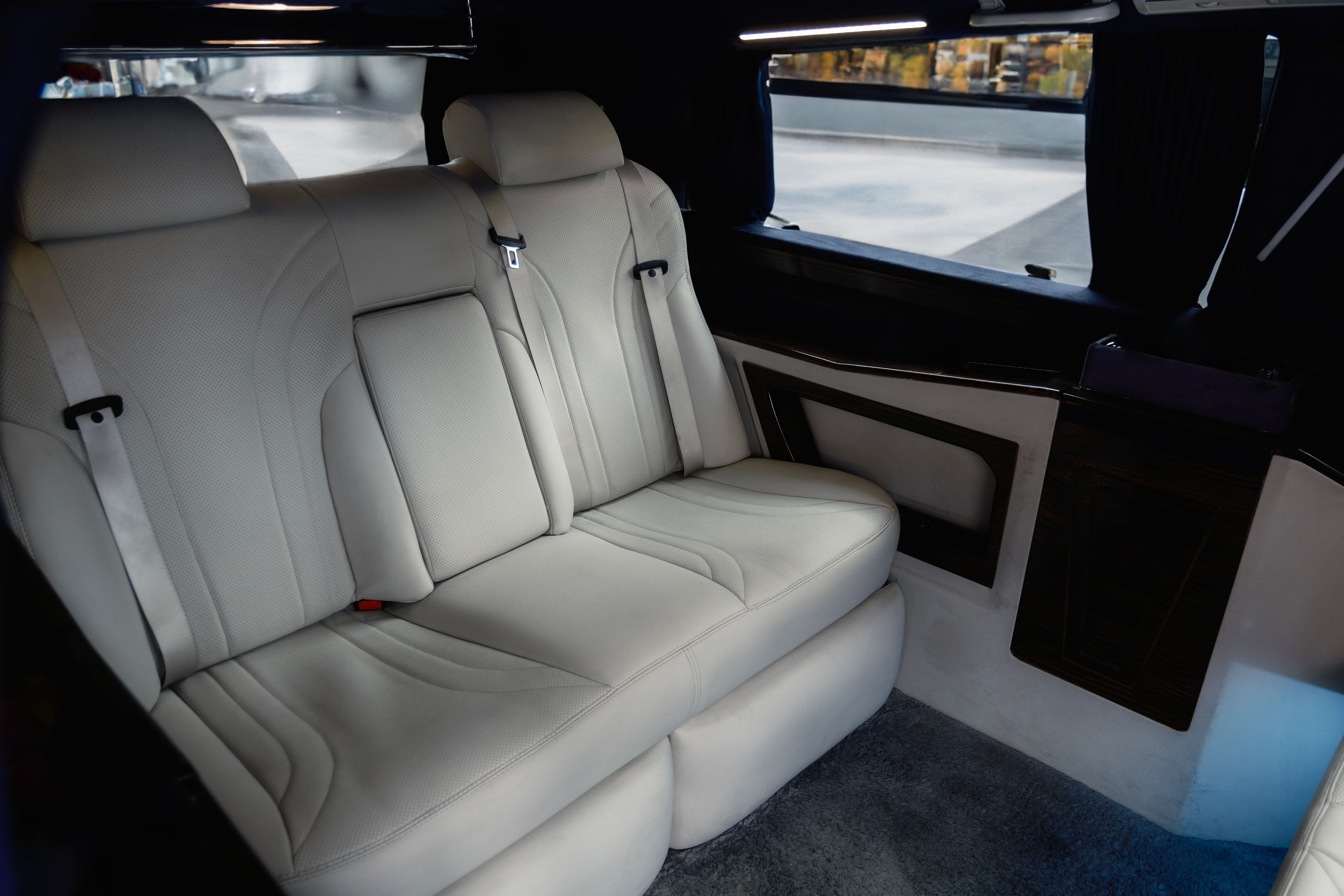
Legroom is the obvious difference and the least important one for short journeys, because both are comfortable for two adults over an hour. What separates them is what happens after that. The S-Class rear seat reclines further, supports the thigh better and, in cars ordered with the relevant options, offers heating, massage and adjustable backrest angle. Over three hours those are not luxuries but the difference between arriving stiff and arriving fresh.
Noise is the second difference and the more immediate one. The larger car is audibly quieter at motorway speed, which matters most on a call: you speak at a lower volume, the person at the other end hears you better, and you finish the journey less tired than you would from an hour of raising your voice slightly without noticing.
Ride quality separates them too, though less dramatically than specification sheets imply. Both handle a motorway beautifully. Over London speed cushions, poor urban tarmac and country B roads the S-Class is the more composed of the two, which is felt as an absence of small disturbances rather than as anything you would point to. Passengers rarely mention it and consistently prefer it.

Luggage and practical limits
Both are saloons and both have saloon boots, so the difference is smaller than the difference in the cars. Either will take two large suitcases and a pair of cabin bags without difficulty. Neither will take four large cases for four passengers, and the answer to that requirement is a luxury MPV rather than a longer saloon. Length of car does not translate into length of boot.
Passenger capacity is identical in practice: three in the back is legal in both and comfortable in neither over any distance, and the middle position loses out to the transmission tunnel and the centre armrest in each. If you have three adults travelling together for more than half an hour, the honest recommendation is a larger vehicle rather than a grander saloon.
Where the difference actually shows
Set against each other on the points that decide a booking rather than on badges, the two separate along a fairly short list. Notice how many of the lines are about duration rather than about the cars themselves; that is the honest shape of this particular comparison, and it is why the same client sensibly books each of them in different weeks.
- Journeys under about forty minutes: no meaningful difference for most passengers
- Three hours or more in the car: the S-Class, clearly
- Taking calls at motorway speed: the S-Class is the quieter cabin
- Placing the car on a tight city street or mews: the E-Class
- Luggage capacity: effectively equal, and both limited to two large cases
- Arriving at a formal event: the S-Class carries more presence
- Value on a routine airport run: the E-Class, without any sense of compromise
When the E-Class is the right car
For a standard airport transfer with one or two passengers, it is the sensible choice and we recommend it constantly. The journey is an hour, the cases fit, the cabin is quiet, and nobody at a terminal forecourt is assessing your car. Spending more on that particular journey buys refinement you are unlikely to register at six in the morning.
It is also better in a dense city. A shorter saloon is easier to place against a kerb on a busy street, easier to bring into a mews or a hotel undercroft, and less conspicuous outside a private house at midnight. Where the day involves many short hops in central London, the smaller car is often the more practical instrument.
And it is the right answer whenever the money is better spent elsewhere in the day. Booking the E-Class and holding it for a full day frequently produces a better experience than booking the S-Class for two transfers and standing about in between. We would rather arrange the day well in a good car than arrange it badly in a grand one.
Choosing, and what we confirm
The rule of thumb we use is duration. Under an hour, book the E-Class unless the occasion itself calls for something more. Over two hours, or where the passenger will be working or resting throughout, book the S-Class and you will feel the difference. Between those, ask what the day is for, since a routine journey and an important one are not the same journey.
Vehicles come from our own cars and a vetted network of professional chauffeur operators, so we quote a class of vehicle rather than a specific car. Model year, colour and interior specification depend on availability and are confirmed when you book. If a particular feature matters, such as rear recline or a light interior, say so at the enquiry stage and we will tell you what can be held for your date.