


These are the two workhorses of chauffeur travel in Britain, and between them they cover the large majority of ordinary journeys. One is a quiet executive saloon that has been the default airport car for decades. The other is a luxury people carrier that has quietly become the default for anybody travelling as a group or with real luggage.
The decision between them is refreshingly unromantic. It is settled by counting passengers and counting cases, and only rarely by preference. What follows sets out where the boundary actually sits, why so many bookings get it wrong in the same direction, and the situations in which the saloon remains the better choice even when the larger vehicle would fit.
The default saloon and the default group car
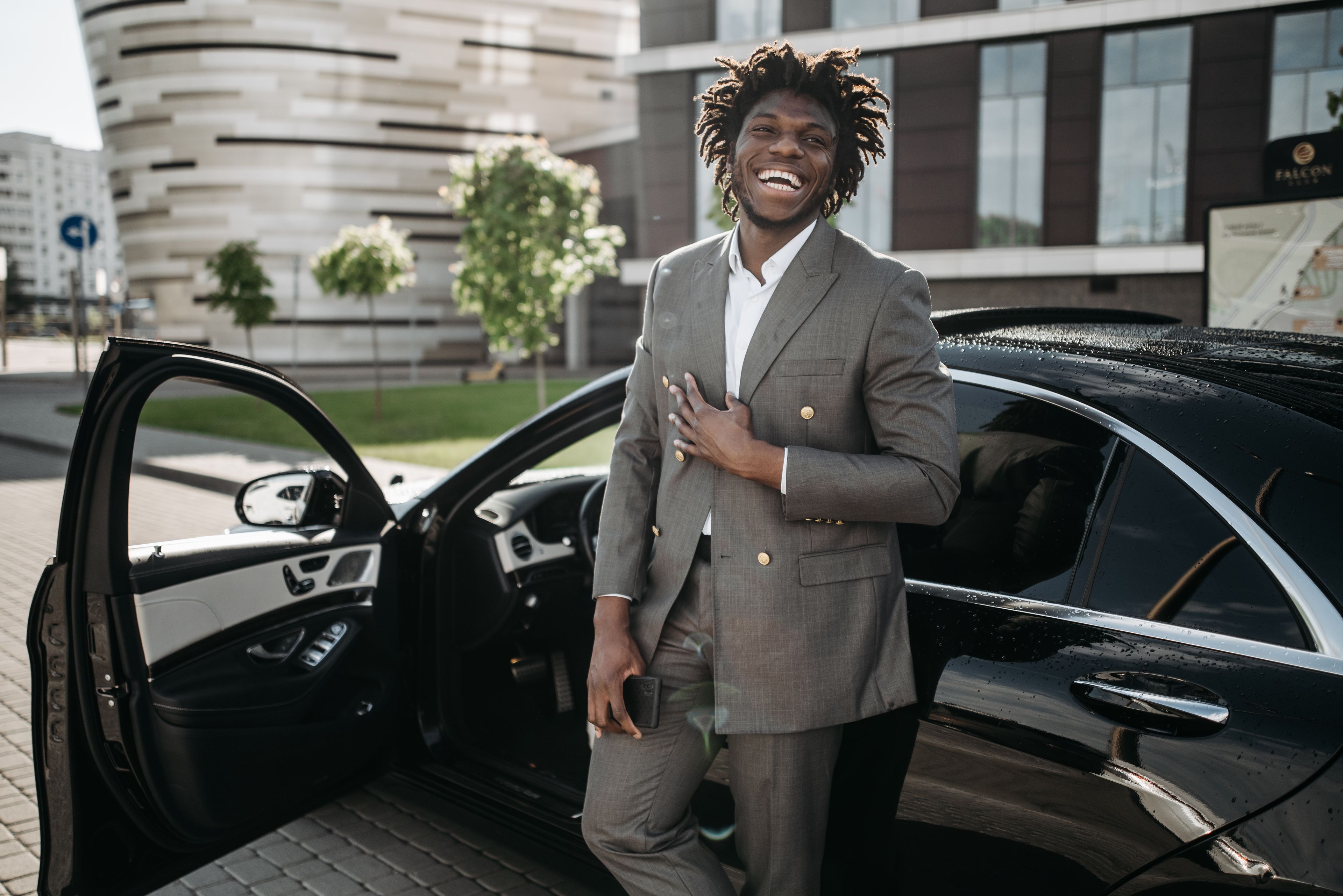
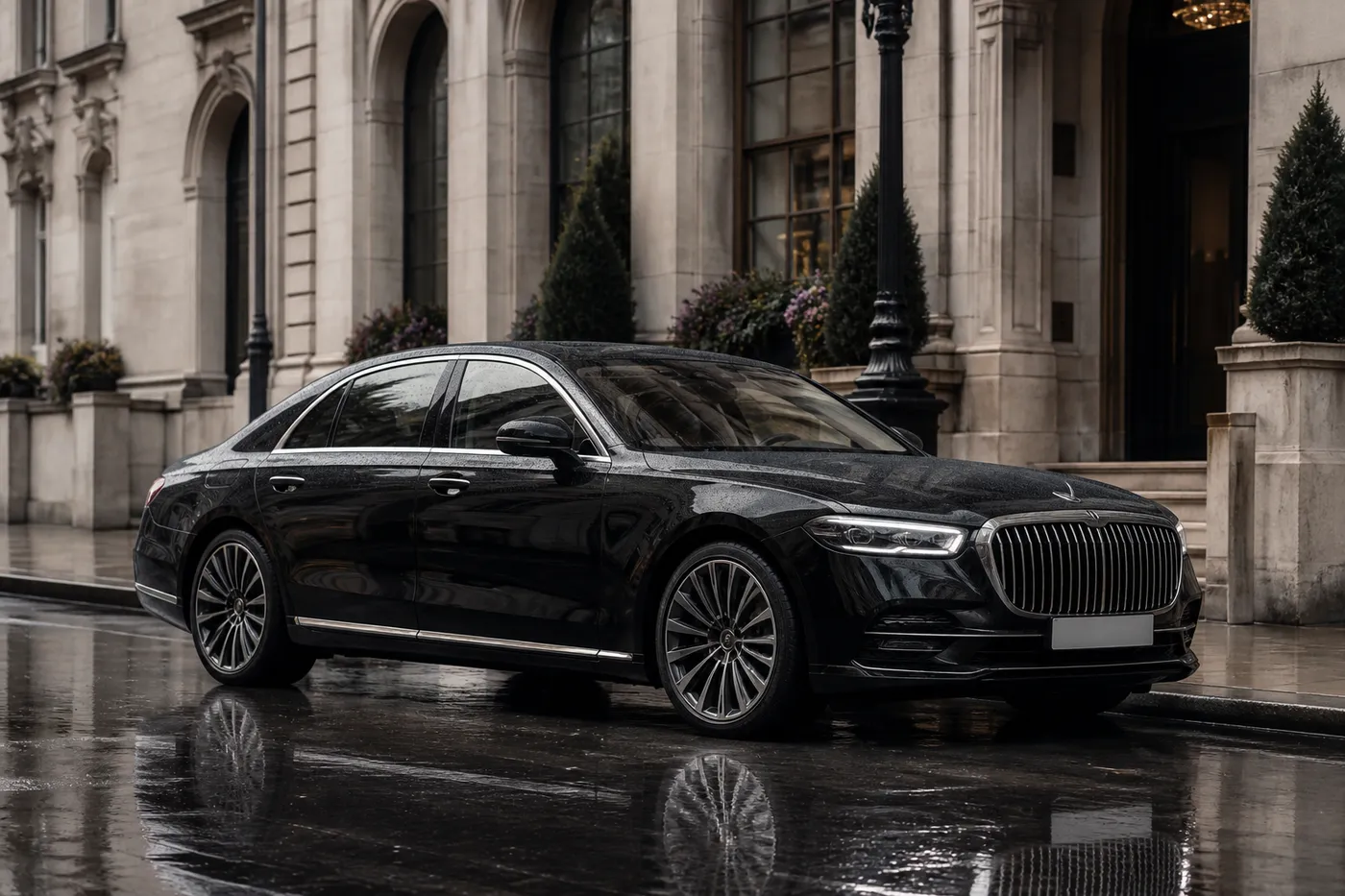
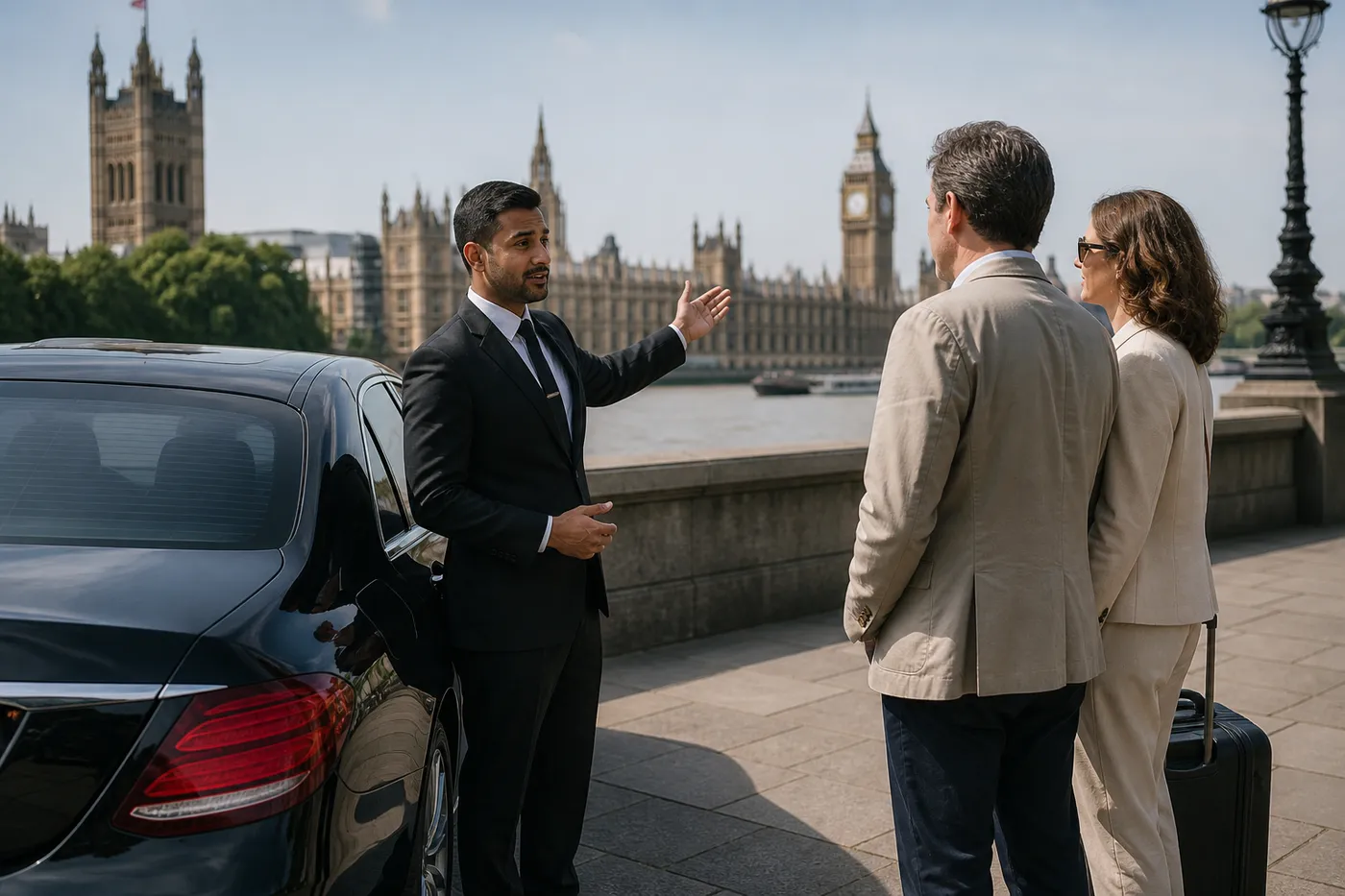
The E-Class does one job extremely well: moving one or two people quietly and comfortably with a sensible amount of luggage. It is unobtrusive, easy to place, economical to run and entirely capable of a long motorway journey. For a solo traveller or a couple, there is very little to improve upon and no reason to spend more. It has held that position for a reason.
The V-Class does a different job equally well. Individual seats, a high roof, sliding doors and a luggage bay behind the rear row make it the obvious answer for three or more people, for families, and for anybody whose luggage exceeds what a boot will take. It is not a downgrade from a saloon; it is a different tool. The two are not on a ladder.
Where the boundary actually sits
The saloon is comfortable for two adults and workable for three over a short distance. Its boot takes two large suitcases with cabin bags on top, and that is the genuine ceiling rather than a conservative estimate. Beyond either of those limits, something ends up on a lap or in a footwell and the journey starts on a sour note.
The people carrier takes over from three passengers upwards and from three large cases upwards. The change is not gradual: at four passengers with luggage, a saloon becomes actively unpleasant while a people carrier remains completely relaxed. Recognising that boundary before the day is the single most valuable thing a client can do when booking. Nothing about it is a matter of judgement or taste.
The most common booking error we see, by a considerable margin, is a family of four with checked luggage booking a saloon because it sounds more comfortable. It is more comfortable, for two people. For four with cases it is the wrong vehicle and the mistake is discovered at the kerb. We ask about cases specifically for this reason, and we ask about them every time.
Kerbside practicality and city work
In dense cities the saloon has real advantages. It fits height-restricted car parks and hotel undercrofts that occasionally defeat a taller vehicle, it places easily against a kerb on a busy street, and it turns comfortably in a mews or a narrow residential road. On a day of many short hops in central London, those small things add up. Small frictions repeated nine times stop being small.
The people carrier answers with door design. A sliding door needs no swing space, which is a genuine advantage where cars are parked tightly on both sides, and the step in is at hip height rather than below the knee. For elderly passengers, for anyone in formal dress and for parents handling children and bags, that is worth more than manoeuvrability.
The arithmetic laid out
This comparison resolves more cleanly than most, because the deciding factors are countable rather than subjective. There is no line below that requires an opinion about styling, presence or prestige, which is unusual and rather refreshing. Work down the list, stop at the first line that describes your own booking, and that will be your vehicle in nearly every case. Genuine disagreements about this pair are rare.
- One or two passengers with up to two large cases: the E-Class
- Three or more passengers on any real journey: the V-Class
- Three or more large suitcases: the V-Class, regardless of passenger count
- Height-restricted car parks and tight mews: the E-Class
- Elderly passengers or anyone who dislikes a low seat: the V-Class
- A single passenger on a long motorway run: the E-Class, comfortably
- Colleagues who need to talk on the way: the V-Class, with room to face
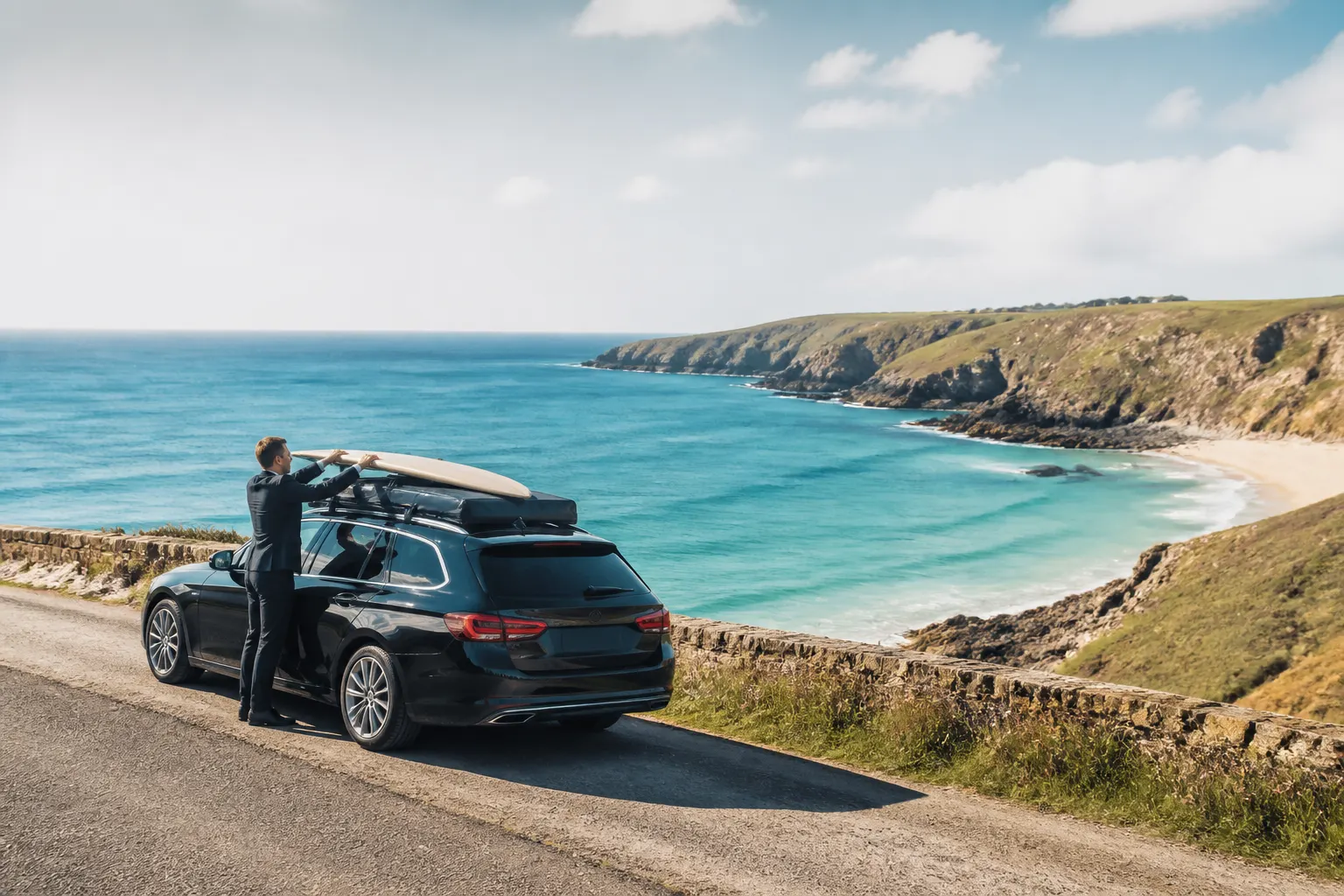
- Prams, sports equipment or anything awkward: the V-Class
When the saloon is still the better booking
For one or two passengers it is the right vehicle almost every time, and booking the larger one gains nothing. A couple with two cases going to an airport are better served by a car that is quieter at speed, easier to park at both ends and less expensive to arrange. Spare space is not a feature if nobody is using it.
It is also better for a solo business traveller on a long run. The saloon sits lower, is less affected by crosswind, and is the more restful place to work or sleep for a single person. A people carrier's advantage is entirely about separation between passengers, which is irrelevant when there is only one. Space nobody occupies is not comfort; it is simply space.
And it is the sensible choice on a city day of frequent stops. Where the vehicle is doing eight or nine short journeys and parking repeatedly in awkward places, the smaller car simply makes the day run more smoothly. We would rather recommend it and be right than recommend the larger vehicle and be safe. Being right about the vehicle matters more than being cautious about it.
What to tell us when you book
Two numbers settle it: how many people, and how many large cases as distinct from cabin bags. Add whether there are children and whether anybody needs a child seat, since seats take up space and need fitting. With those four details, the recommendation is immediate and we will not need to ask anything else about the vehicle. Everything else about the day can be discussed afterwards.
Vehicles come from our own cars and from a vetted network of professional chauffeur operators, so seat layout, model year, colour and specification depend on availability and are confirmed at the point of booking. Send the outline over WhatsApp or by email, including anything unusual you are carrying, and we will reply in writing with the class of vehicle and the reasoning.