


British railways do not sell business class; the equivalent is first class, and the distinction matters because expectations imported from elsewhere lead to disappointment. What a first class ticket buys here is a wider seat, a quieter carriage, usually a table, and on many services some form of refreshment. It is a good working environment, and on the right route it is an excellent one.
This comparison sets aside cost, comfort and speed and asks a narrower question: which is the better place to work between leaving one meeting and arriving at the next? That turns on quite specific things, such as whether you can take a confidential call, whether the surface is steady enough to write on, and how many times you are interrupted between departure and arrival.
What a first class carriage actually gives you
At its best it is a genuinely good office. A table seat with power, a wide window, a steady ride at speed and a carriage where the social convention discourages noise adds up to two or three hours of uninterrupted concentration. For reading, drafting, reviewing documents or clearing correspondence, very little beats it, and anybody who works regularly on the fast lines knows the value.
It has predictable weaknesses too. Connectivity varies considerably along a route and drops out entirely in cuttings and tunnels, so anything requiring continuous access is a gamble. Tables are shared on many services, the carriage may be busier than expected, and at peak times the quiet you were counting on is not guaranteed by anything more than good manners. Good manners are not a specification.
Calls, confidentiality and the person opposite
This is the sharpest difference and the one that decides most working journeys. A train is a public space. Anything you say on a call is audible to the people around you, anything on your screen is visible to anyone passing, and there is no version of a carriage in which a genuinely sensitive conversation is appropriate. Even in a quiet coach, discretion is a limitation rather than a feature.
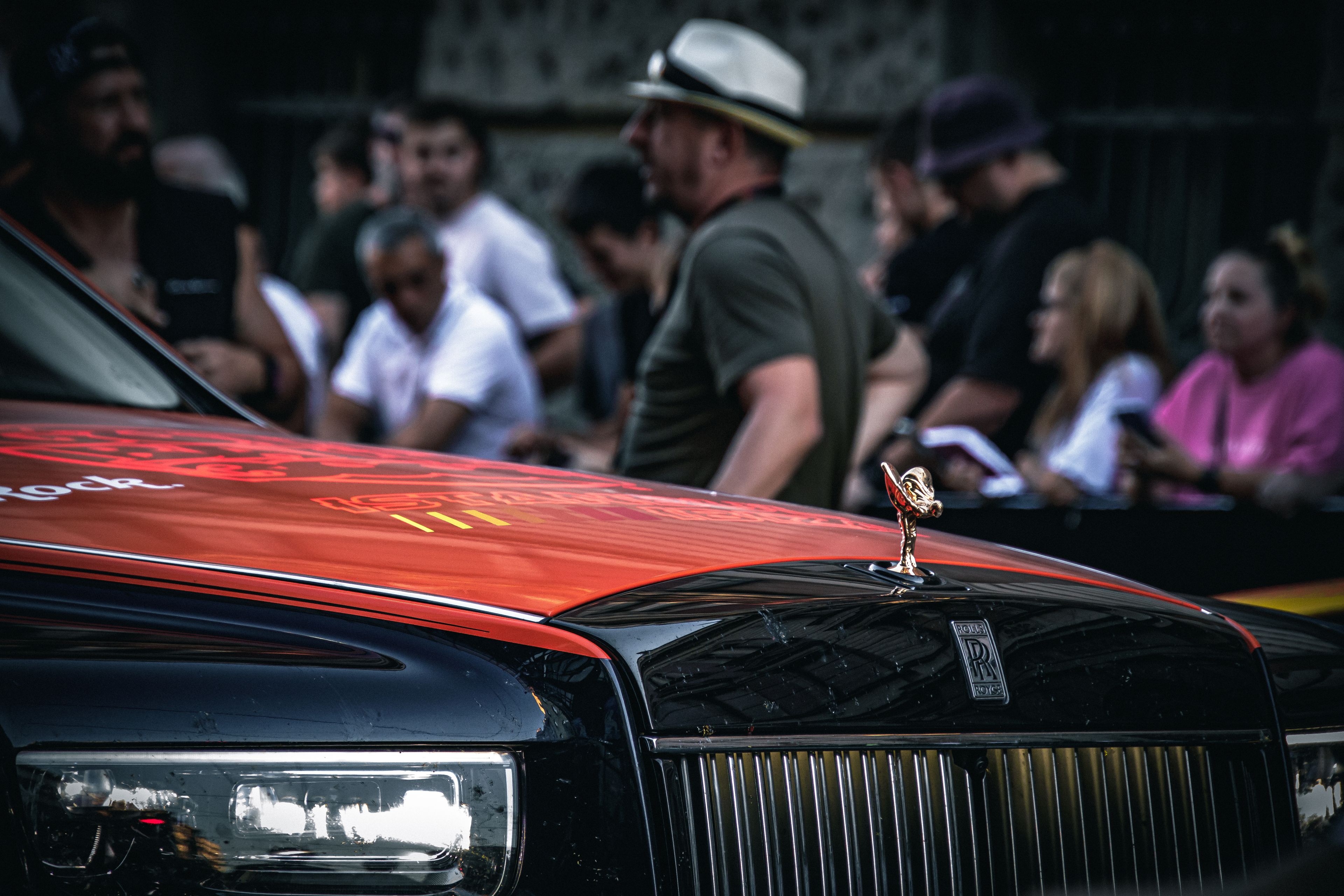
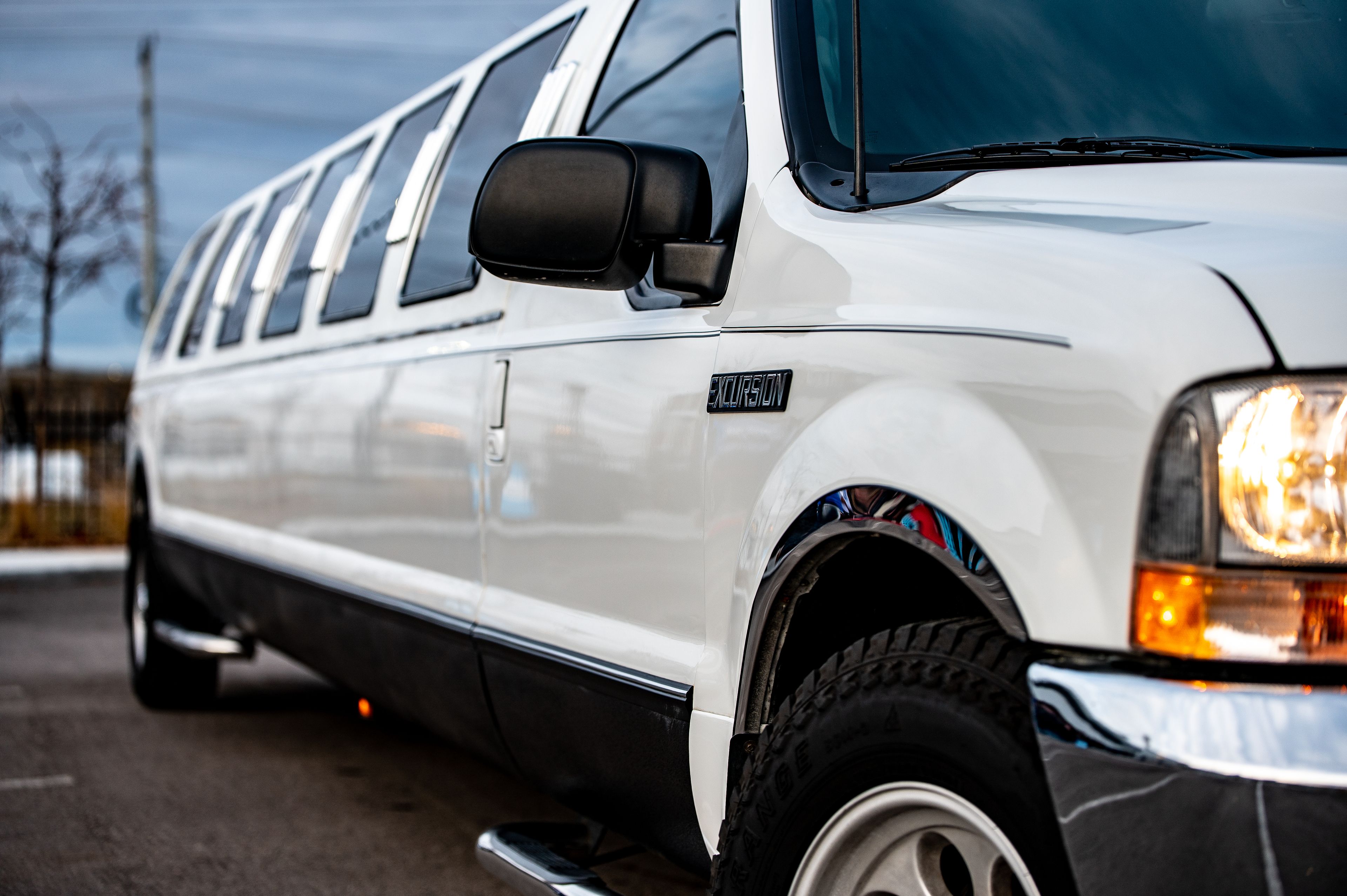
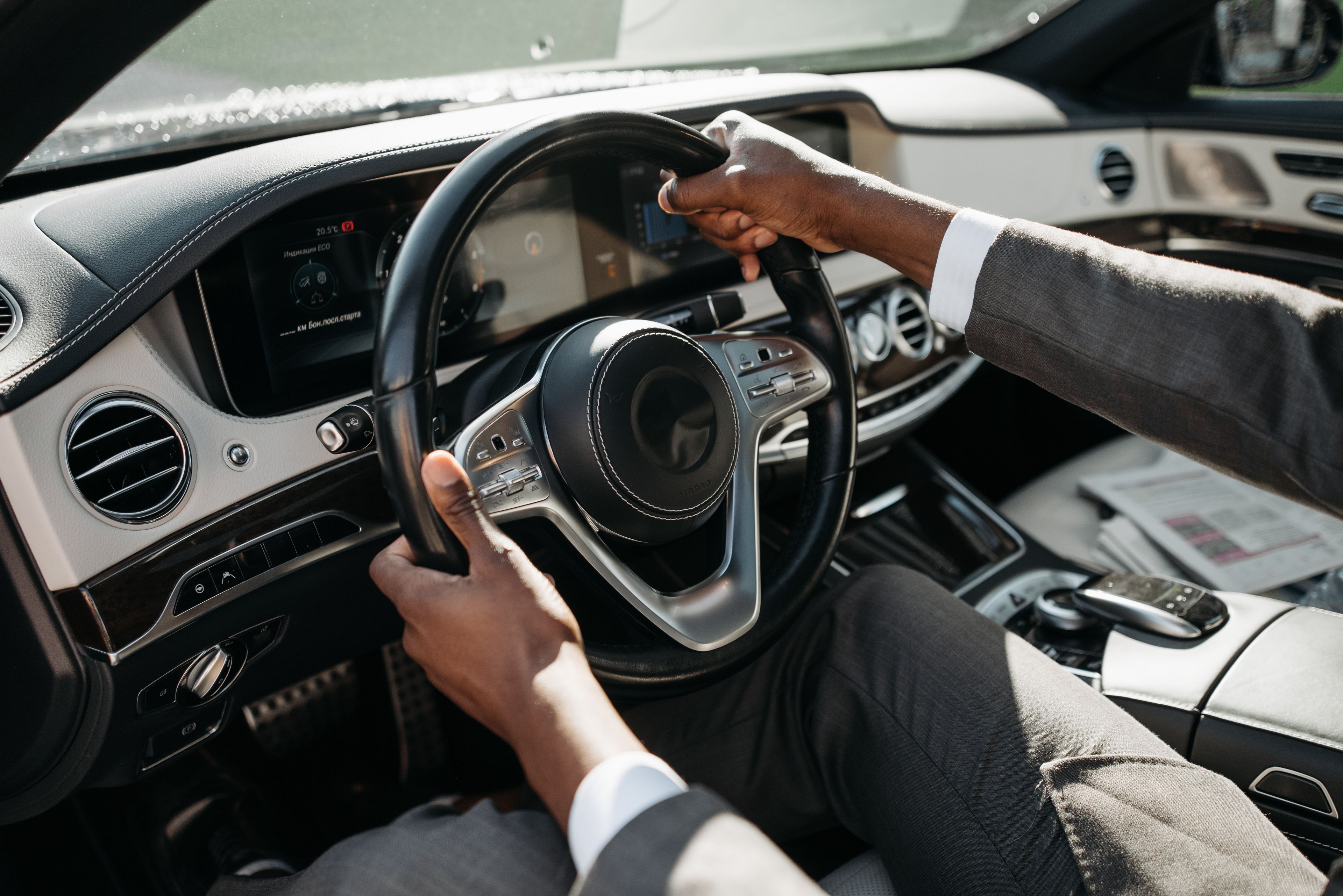
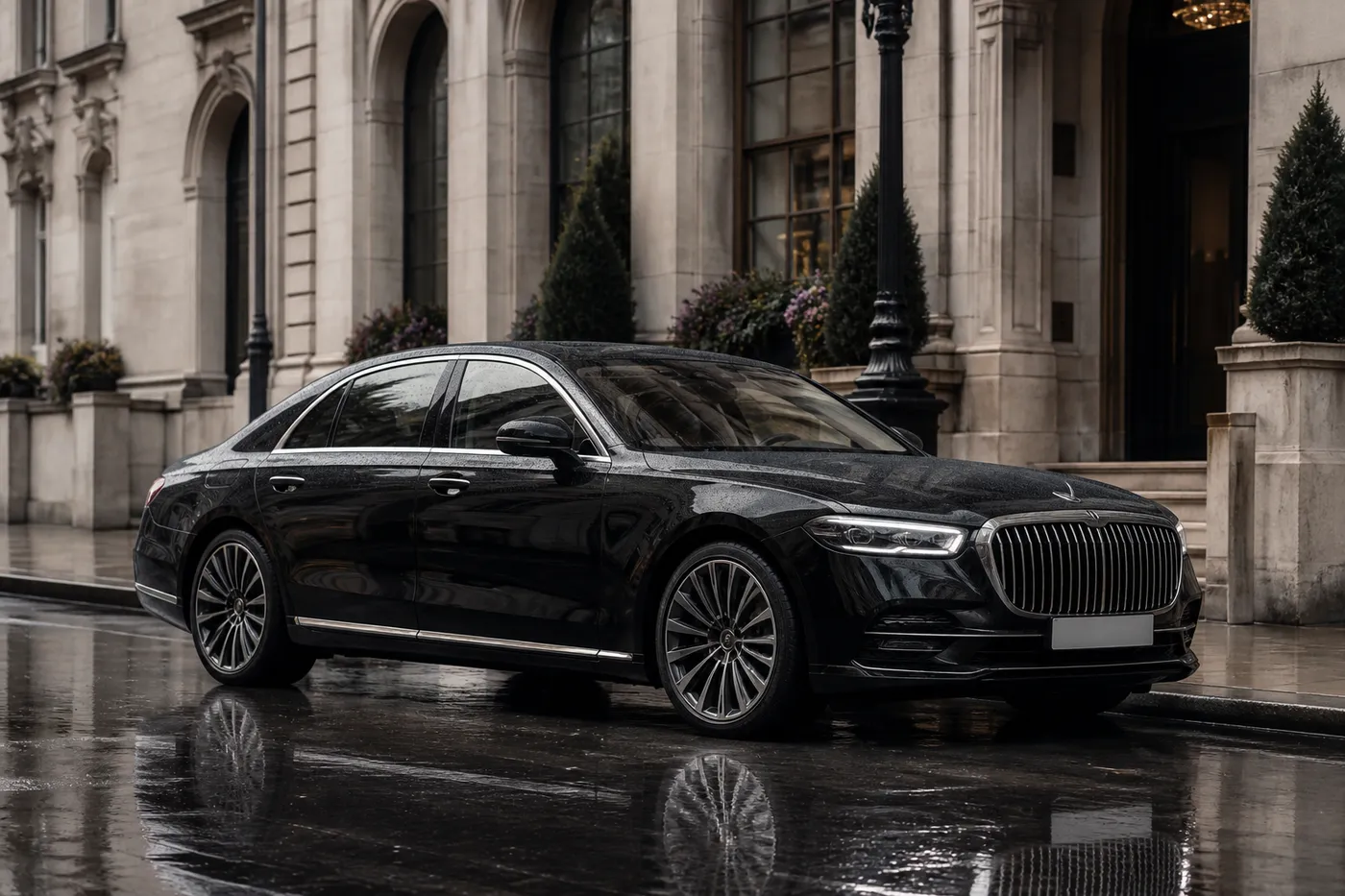
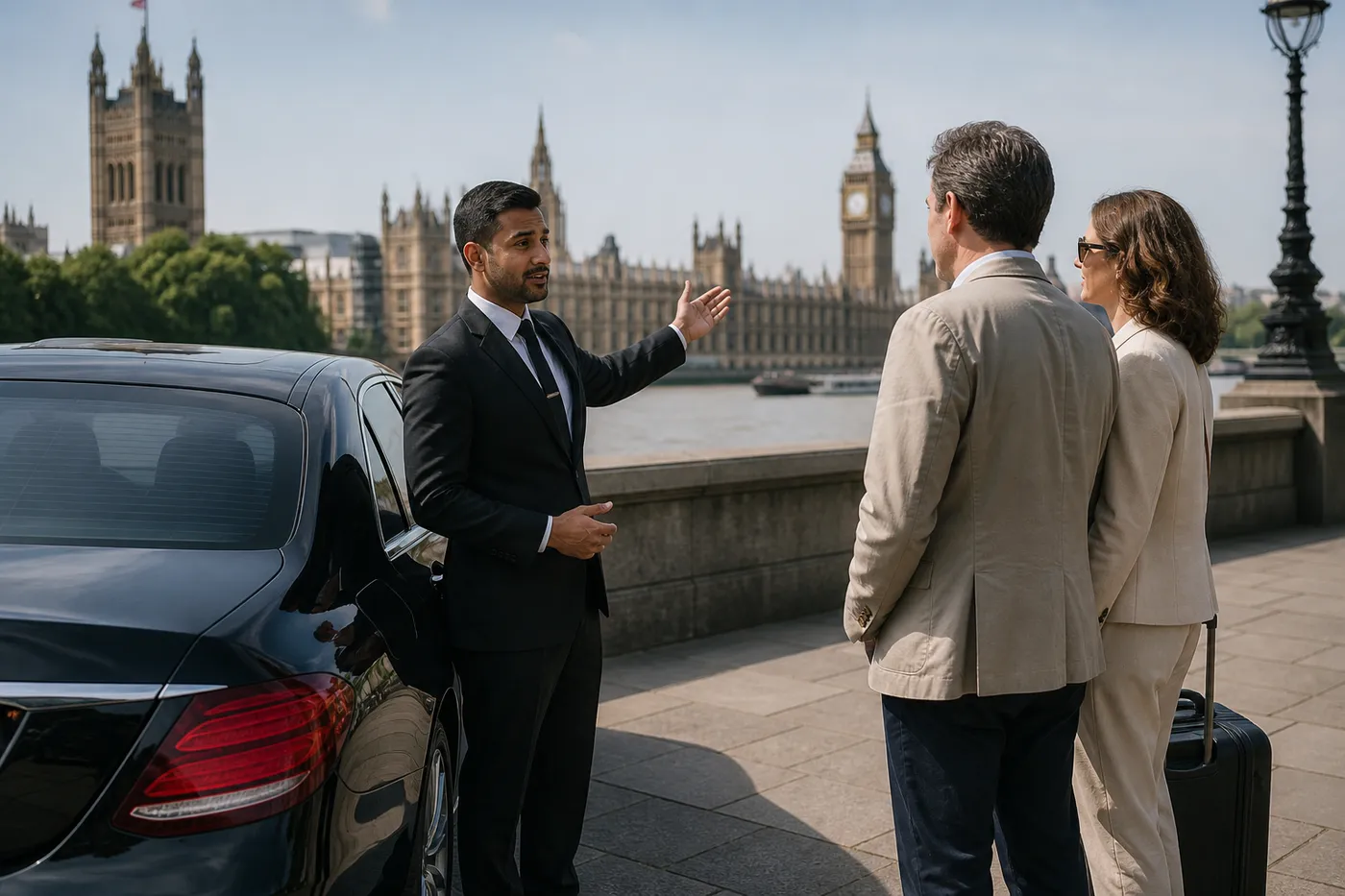
A car is a private room that happens to be moving. Calls can be taken at normal volume, documents can be spread out, two colleagues can talk through something difficult, and a professional chauffeur is trained to be a non-participant: no comment, no repetition, no interest in what is being discussed. For confidential work between meetings, that is not a marginal advantage. It is the whole of it.
Continuity from door to door
Working time on a train is bounded by the parts of the journey you cannot work in. Getting to the station, waiting on the concourse, boarding, finding the seat, then packing up ten minutes before arrival and finding onward transport at the far end: each of those is dead time, and together they can consume as much of the journey as the productive portion.
In a car the working period starts at your own front door and ends at the destination entrance. There is no packing up and no interval. For a two-hour journey with an hour of dead time around it, a longer drive with continuous working time can produce more finished work than a shorter train journey, which is a calculation people rarely make and usually find surprising.
The reverse is equally true and worth stating. On a long, fast, direct route where both ends are near stations, the train delivers more usable hours than a car ever will, because the driving time itself is far longer. The right answer depends on the route, not on a general preference for one or the other. We would rather work that out with you than apply a rule.
The working journey, compared directly
Judged purely on output rather than on comfort or cost, the two divide along these lines. Most people know within a moment which of them describes their own typical journey. The point of the exercise is to separate what you would enjoy from what you would actually finish, since those are different things and only one of them justifies the arrangement you are paying for.
- Confidential calls and sensitive documents: the car, without question
- Long stretches of quiet reading: the first class carriage, comfortably
- Continuous connectivity: neither is perfect, though a car is more consistent
- Writing at a steady table: the train, on smooth track at speed
- Two or three colleagues working together: the car, as a private space
- Dead time at either end: minimal in a car, substantial around a train
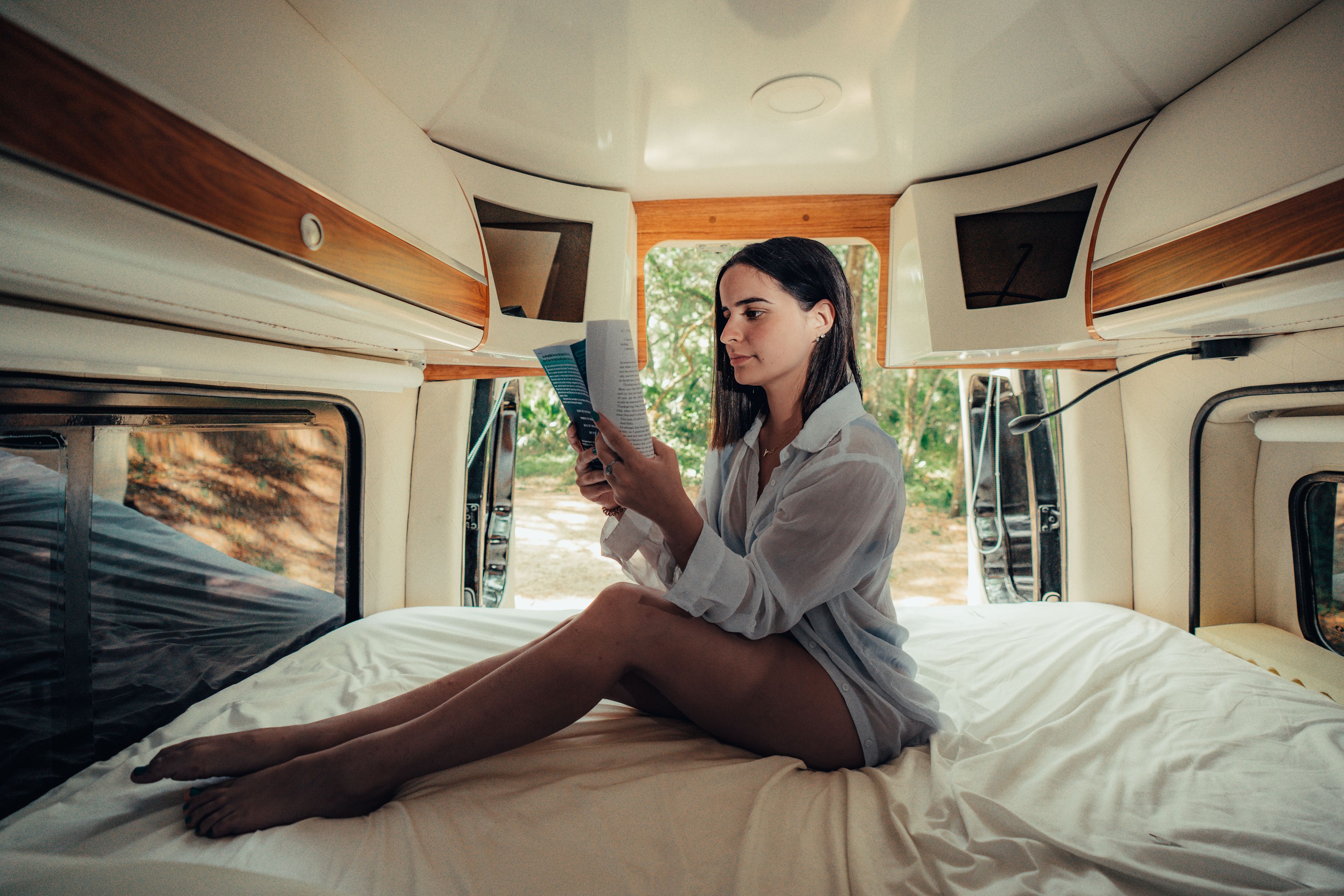
- Arriving rested rather than merely on time: the car, with a reclining seat
- Very long distances such as London to Scotland: the train, decisively
When the train is the better office
On the fast trunk routes, most of the time. If your journey is city centre to city centre, both ends are walkable from a station and you are travelling with a laptop and nothing else, the train gives you more working hours than any car, and the work you do there will be better because you are at a table rather than in a seat.
It is also the better choice for solo work that does not need to be spoken aloud. Reading a long report, reviewing a contract, drafting something that requires concentration: a quiet coach on a good day is an unusually productive place, and the enforced separation from the office can be the most valuable part of the trip. Solitude is a working condition rather than a luxury.
And it wins whenever the alternative is a very long drive. Five hours in a car is five hours in which the useful working portion shrinks with fatigue, however comfortable the seat. A three-hour train journey with a table beats it on output, on arrival condition and on environmental grounds, and we would rather point that out than take the booking.
Planning either around the meeting
The most useful discipline is to plan backwards from the fixed appointment rather than forwards from your door, and to be honest about which parts of the journey will genuinely produce work. If the answer is only the middle hour, book whichever mode makes that hour longest. If the answer is calls throughout, the car is the only serious candidate.
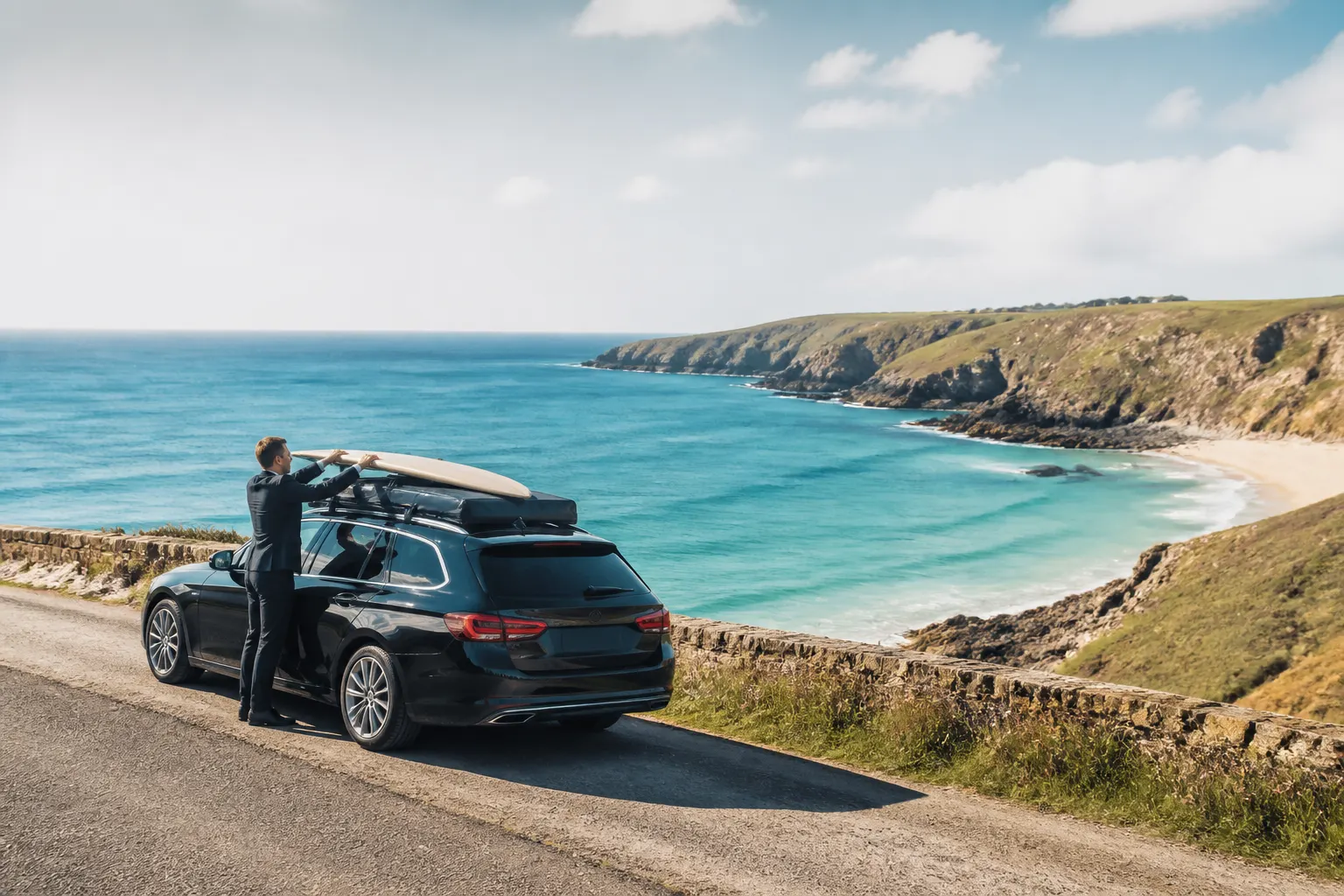
Where the road is the right choice, the details that matter are the ones you can specify at the booking stage: whether you want silence, whether a colleague is joining, whether a table surface is needed, whether the seat should recline for a rest afterwards. Send the shape of the journey over WhatsApp or by email and we will recommend a vehicle class to match the work, or tell you that the train will serve you better.