



Travelling to an airport with young children is an exercise in logistics rather than driving. The car is the easy part. What takes planning is the seats, the pushchair, the luggage that expands mysteriously between the packing and the loading, and the fact that everybody's timings become approximate the moment a toddler is involved. A chauffeur arrangement is genuinely useful here, but only if it is set up properly.
The good news is that almost everything can be settled in a single message at the point of booking. Ages and weights, the pushchair, the case count, whether anybody needs to nap on the way. None of it is intrusive and all of it changes what we send. This page covers what to tell us and why each piece of it matters more than it might appear.
Child seats and what we need to know
A child seat has to match the child, not the family. The relevant details are age, weight and, for the smaller sizes, height, because those determine which type of seat is correct and how it is fitted. Asking for a seat for a two-year-old without a weight tells us less than it seems to, since two-year-olds vary considerably.
Tell us at the point of booking rather than the night before, since seats need to be arranged with the vehicle rather than added to it. Where a family is travelling with two or three children in different sizes, that combination affects which vehicle makes sense as much as the luggage does. The list below is what we ask for each time.
- The age of each child travelling
- The weight of each child, which determines the seat type
- Height as well, for babies and the smallest sizes
- Whether you are bringing your own seat instead
- Whether a booster is sufficient for an older child
- How many seats are needed in total, and in which vehicle
Pushchairs and the vehicle question
Pushchairs are the item most often forgotten in a luggage count, and they vary enormously. Some fold to the size of a large handbag. Others fill a saloon boot on their own and leave no room for anything else. A double buggy is a substantial object by any measure. Since the pushchair usually travels alongside a full complement of holiday luggage, it frequently decides the vehicle by itself.
The practical answer for most families is an MPV rather than a saloon. Everyone gets a proper seat, there is a flat floor and a square boot opening, the sliding doors make loading a child seat far easier in a tight space, and nobody travels with a bag on their knees. It is not a luxury choice so much as the correct shape of vehicle for the job.
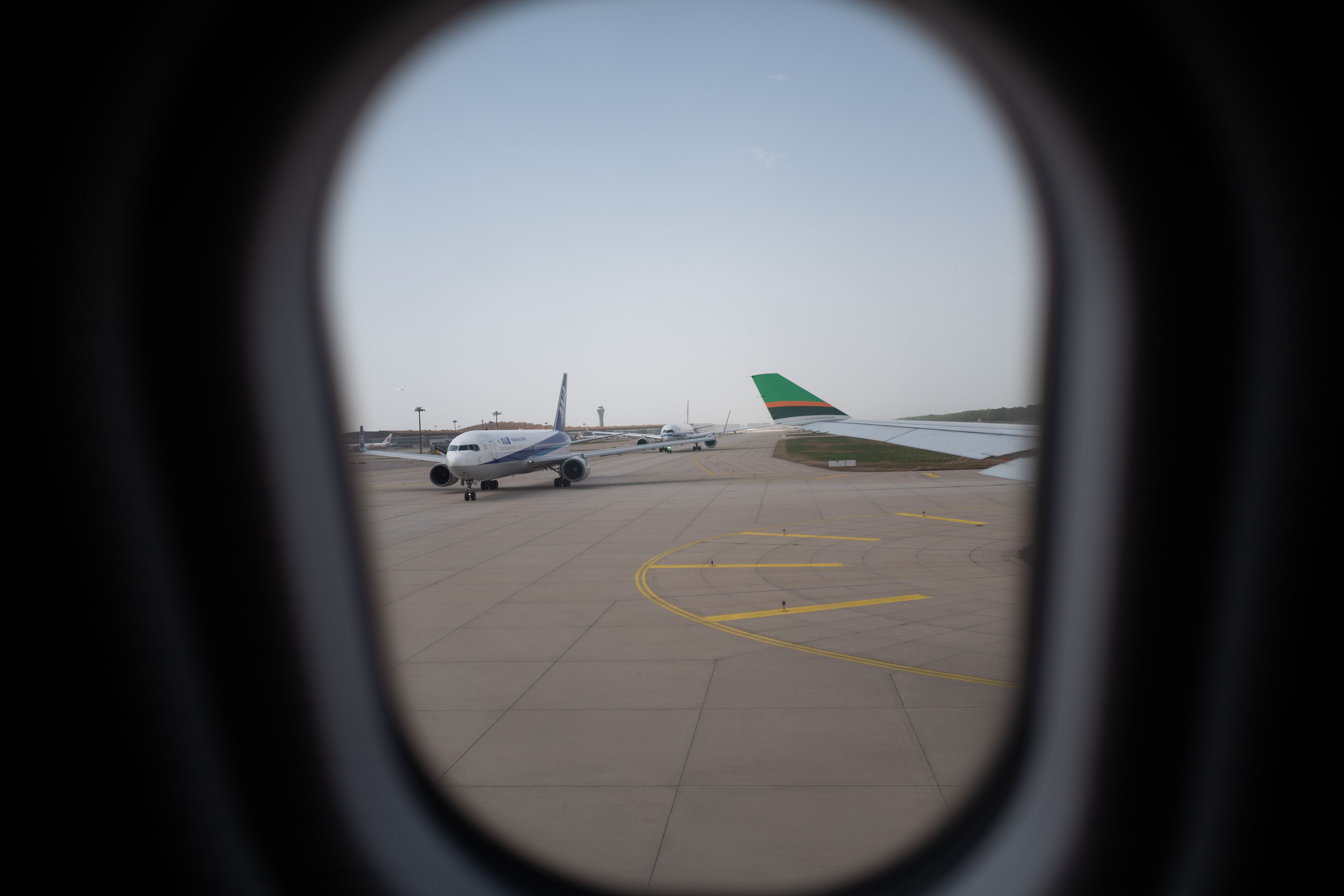
Being met in arrivals with children
This is the arrival where meet and greet earns its place most clearly. At the end of a flight with young children, the last thing anybody needs is a coordination exercise involving a phone, a pickup area and a set of directions. Walking out of the customs channel and seeing your name on a board, with somebody stepping forward to take the cases, is a materially better experience.
Your chauffeur is on the public side of the arrivals doors and nowhere else, which is worth being clear about. We hold no airside access and no affiliation with any airport or airline, so nobody meets you at the gate or helps with a pushchair through the border. From the arrivals hall onwards, though, the luggage stops being your problem.
Timing a departure around children
Every stage takes longer with children, and the honest way to plan is to accept that rather than to hope otherwise. Loading a family into a car is not a two-minute exercise: seats need fitting or checking, children need strapping in, somebody needs the loo, and the case that would not close needs opening again. Your chauffeur arrives ahead of the agreed time precisely so this happens calmly.
The other consideration is the shape of the day. An early flight with small children is genuinely hard, and sometimes the better arrangement is a later collection and a slower morning rather than a heroic pre-dawn start. We would rather have that conversation when quoting than watch a family arrive at a terminal already exhausted before the flight has begun.
In the car
A few small things make a long transfer considerably better. Ask for the temperature you want rather than tolerating the default, because children are less tolerant of a cabin that is too warm than adults are. Say if you would rather have no music, or if a child is likely to sleep and you would prefer the journey kept quiet.
Motion sickness is worth mentioning too. If a child is prone to it, a seat position and a route with fewer winding sections both help, and having something to hand for the worst case is sensible. No chauffeur minds being told, and every chauffeur would rather know in advance than deal with it as a surprise on a motorway.
What to send us in advance
The message below takes a minute to write and it settles nearly everything. Families who send it get the right vehicle with the right seats fitted, and the collection happens without anybody having to solve a problem on a driveway with a flight to catch.
If anything changes, tell us. Children grow, seats change, an extra case appears, a grandparent joins the trip. All of that is easy to accommodate in advance and awkward to accommodate at the kerb, which is the general rule of airport travel with children and probably of airport travel in general.
- Number of adults and number of children, with ages
- The weight of each child needing a seat
- Whether you are bringing your own child seats
- Pushchair type and folded size, or a double buggy if applicable
- A counted total of large cases and cabin bags
- Flight number, terminal and full address at both ends
- Anything that helps: naps, motion sickness, a preferred seat position