



Every business already has ground transportation. What most do not have is managed ground transportation, and the difference between the two is usually invisible until something goes wrong at half past five in the morning and nobody can say who booked what, on whose authority, or who is responsible for the person now standing outside a terminal.
The term exists because the road leg has historically been the least controlled part of corporate travel. Flights and hotels are booked through a system with policy and reporting attached; the car to the airport is often arranged by whoever happened to be nearest a phone. Bringing that leg into the same framework is what the phrase describes.
What the term covers
It spans routine and exceptional movement alike. On the routine side sit airport transfers, journeys between offices and sites, and travel to client meetings. On the exceptional side sit roadshows with multiple cars over consecutive days, board meetings, site visits, conferences and the movement of visiting delegations who have never been to the city before.
Around all of that sits a set of arrangements rather than a set of journeys: who may book, how requests are made, which vehicle classes apply to which situations, what happens out of hours, and how the business sees what was spent and by whom. That framework is what separates a programme from a habit of calling the same number.
- Airport transfers for staff, executives and inbound guests
- Inter-office, site visit and client meeting journeys
- Roadshows and multi-day, multi-vehicle schedules
- Event and conference movement for delegations
- A defined booking route with authorised requesters
- Consolidated reporting back to the business
Duty of care and governance
The reason this became a discipline rather than an administrative preference is duty of care. An employer has obligations towards people travelling on its behalf, and satisfying them means knowing that vehicles are properly licensed and insured, that drivers are vetted and licensed, and that someone can say where a traveller is if a flight lands at an unexpected hour.
Governance also covers the unglamorous things: a booking trail showing who authorised what, consistency of standard so that a director and a graduate both arrive safely, and a single channel for changes so that a cancellation reaches the right people. None of it is complicated, but it only works if it is agreed in advance rather than assembled during an incident.

How it works in practice with us
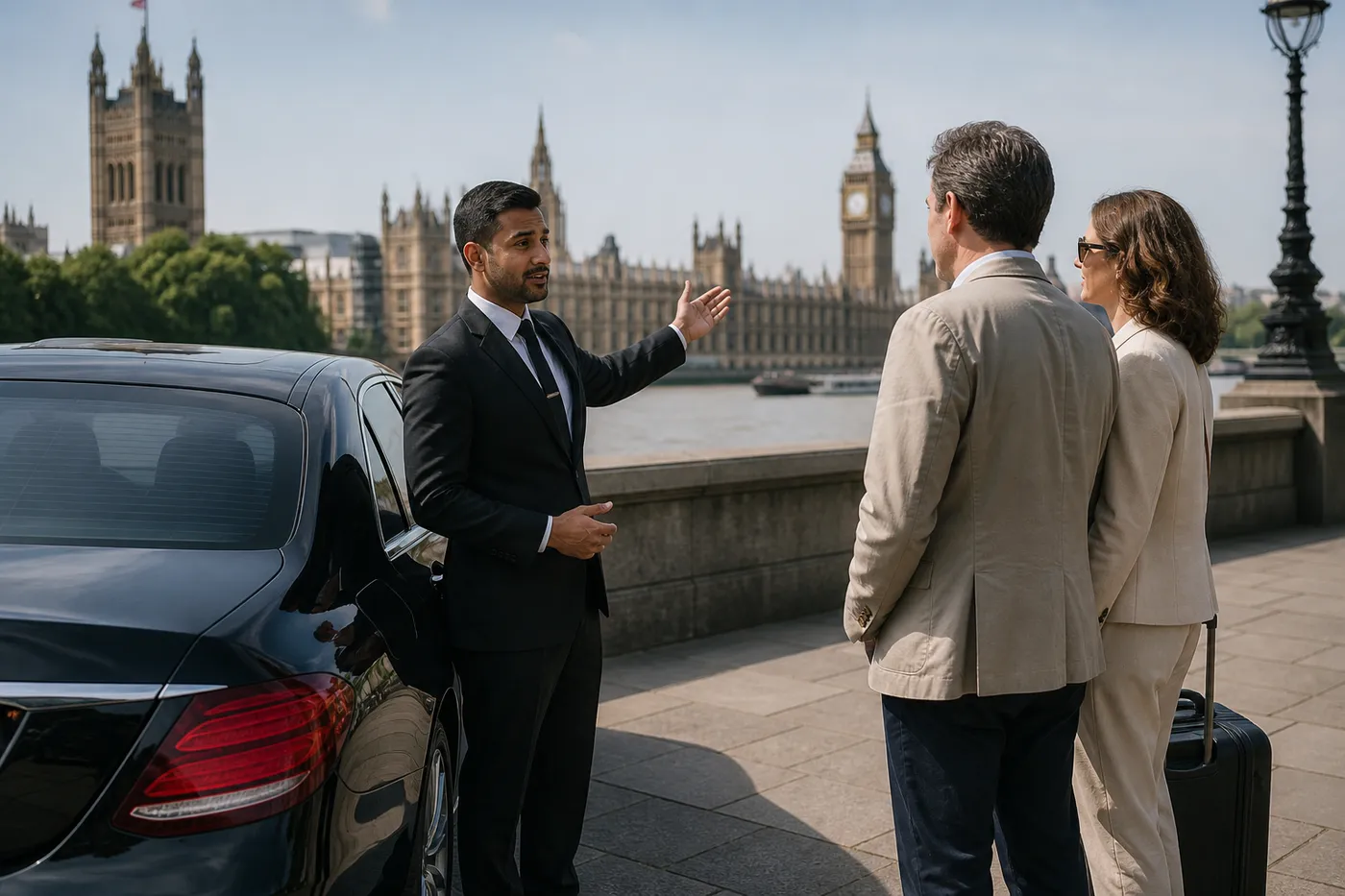
For most companies, the workable arrangement is a named point of contact, a small set of agreed vehicle classes, and one channel through which requests arrive - typically WhatsApp for speed and email for anything that needs a record. Every journey is confirmed in writing with the vehicle, the timings and the terms set out, so there is a document behind every movement.
Where a business travels frequently, the schedule can be built ahead as a standing pattern with individual bookings placed against it, which is far more reliable than treating each journey as a new problem. Tell us the shape of the travel your organisation actually does, and the arrangement can be designed around it rather than around a template.