

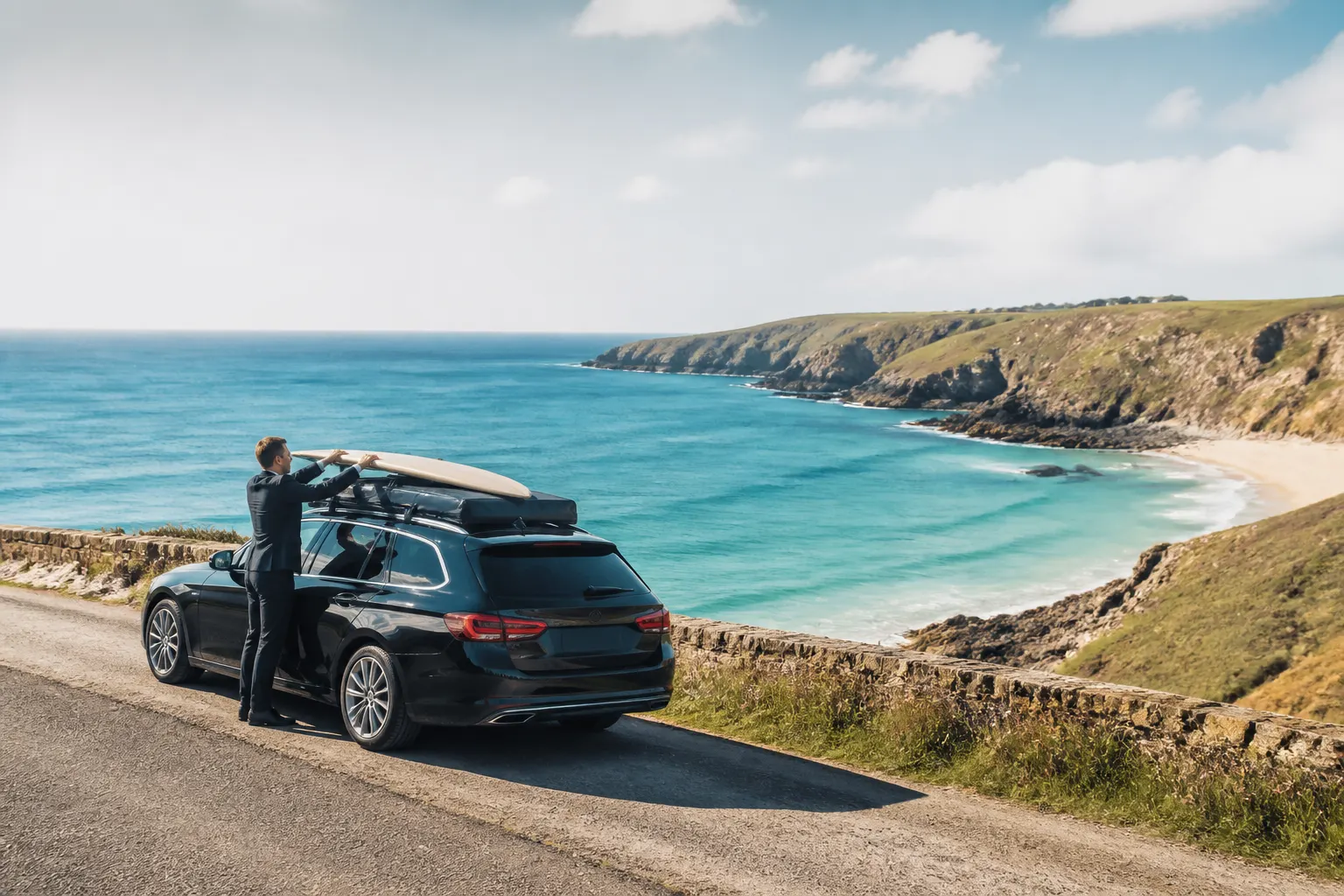


There is a particular pleasure in seeing Britain from the back of a car with somebody else navigating the lanes, and it is one of the few things chauffeur travel does that no other arrangement replicates. It is also the service people find hardest to price in their heads, because a tour is not a journey at all. It is a series of them wrapped inside a day that has been bought whole.
Once you look at it that way, the variables become clear. The day is the unit. Everything that lengthens the day, spreads it across more counties, or adds a night away has an effect; everything that tightens it has the opposite one. Below is how each factor works, along with the honest limits of what a chauffeur can and cannot provide on a touring day.
A tour is a day, not a route
When you book a touring day, the car and the chauffeur are yours from a stated start until a stated finish, and what happens in between is largely up to you. That is the appeal: you can stay longer somewhere that turns out to be wonderful and skip the thing that does not. It also means the driving distance has less influence on the arrangement than the hours do.
In practice this makes short, dense itineraries better value than they appear and sprawling ones worse. Three houses within twenty miles of one another fill a day comfortably. Three attractions spread across two counties fill the same day with driving, which is pleasant enough but leaves less time to be anywhere. It is worth deciding which of those experiences you actually want.
Itinerary density and driver hours
An ambitious itinerary tends to grow at the edges. A stop is added at the start because it is on the way, another at the end because it seems a shame not to, and suddenly a comfortable day has become a long one that runs into the chauffeur's legally regulated hours. That limit is real and it cannot be negotiated, so it is better designed around than discovered.
The remedy is usually to cut one stop rather than to extend the day. Touring is one of the few things where less genuinely is more, and the stop that gets removed is almost always the one that was added last and belonged to nobody in particular. We will say plainly when an itinerary looks too full, because a rushed day is a poor use of a good one.

Where the chauffeur waits
For most of a touring day the car is standing still while you are somewhere else, and that is entirely as it should be. What varies is how easy the standing is. A country house with a proper car park is straightforward. A village with two hours of restricted parking, a city centre with a low emission zone, or a coastal town in August is a different matter, and it takes time to solve.
It also affects how quickly the car appears when you come out. Where parking is difficult, the sensible arrangement is an agreed meeting point and a message when you are ready, rather than expecting a vehicle to be idling by the gate. Tell us which stops you expect to be brief and which will be long, and the day plans itself much more neatly.
Multi-day touring and nights away
A tour that runs over several days introduces the same considerations as any long trip: where the chauffeur sleeps, how the car gets home at the end, and whether the same person can stay with you throughout. Consistency is worth a great deal on a touring trip, because by the second morning your chauffeur knows how you like the day to run and what you actually enjoy.
The arrangement for accommodation is agreed in advance and written into the quotation, along with the days, hours and any repositioning at either end. It is far better settled before you set off than raised over dinner on the first evening, and it lets you plan the route without worrying about where everyone ends up each night.
- The number of touring days and the hours wanted on each
- Where each day starts and finishes, which need not be the same place
- Overnight arrangements for the chauffeur across the trip
- How far the car must travel to reach the first day and leave the last
- Whether the same chauffeur stays with you throughout
- Any day where the car is not needed at all
What a chauffeur is and is not
A chauffeur is not a tour guide, and it is worth being clear about the distinction. Many are extremely knowledgeable about the roads, the countryside and where to stop for lunch, and they will happily share it. What they do not do is deliver a curated commentary on a house or a collection, and if that is what you want, a registered guide is the right person and can travel with you.
Entry tickets, timed slots at popular properties, restaurant reservations and anything requiring membership are yours to arrange unless we have agreed otherwise. We are glad to advise on what is realistic in a day and what will be crowded on a bank holiday, but we do not claim any relationship with the venues themselves, and we would rather be useful than overstate what we can do.
Designing a tour that costs less
Almost all of the improvement here comes from geography and honesty. Group stops that sit near one another, choose a base and radiate from it rather than driving in a long line, and be realistic about how long you actually want to spend at each place. A tour with breathing room in it is both cheaper and considerably more enjoyable than one that is a schedule.
Send us the outline of what you would like to see and where you are staying, and we will tell you what fits comfortably and what does not. Touring days are quoted individually in writing, with the hours and any overnight arrangements set out, and we will happily propose an alternative shape if we think yours will leave you tired rather than delighted.
- Cluster stops geographically instead of crossing the same county twice
- Work outwards from one base rather than moving hotels every night
- Trim the last stop that was added rather than extending the day
- Say which stops are brief and which will be long
- Book a registered guide separately if you want expert commentary
- Avoid the busiest properties on bank holiday weekends where you can