




Heathrow is the only airport in this guide where the phrase private travel could reasonably mean two entirely separate things. It might mean a business aircraft using the general aviation side of the airfield, or it might mean a first or business class passenger using a premium service inside a passenger terminal. Both are handled quietly and neither resembles the other from the driver's seat.
Confusing the two is the most common planning error we see here, and it is expensive in time rather than in anything else. This page separates them. Throughout, remember that we are an independent chauffeur company: we do not provide, book or influence any airport or airline service, and every access arrangement is confirmed by the party handling you rather than by us.
Two different journeys, one airport
A private aircraft movement puts you in a dedicated part of the airfield with its own access, its own reception and its own tempo. A premium airline departure puts you in the same terminal as everyone else, with a different door and a shorter queue. The first is a short walk from a car to a small building; the second is a normal terminal experience conducted more comfortably.
For the car, the difference is where it goes and how long it waits. A private movement means driving to an address the handler gives us and treating the arrival window as tight. A premium airline departure means a terminal set-down, generous check-in margins and a completely conventional plan. We ask which applies before quoting, because the answer changes the timing rather than the vehicle.
The private side of the airfield
Business aviation at Heathrow operates apart from the passenger terminals and is reached by its own route around the perimeter. Access is controlled and the arrangements are set by whoever is handling your flight, so we ask for the handler at booking and follow the instruction they give, including where a vehicle may wait and whether a chauffeur can go inside for the bags.
Movements here are limited and often arranged at some notice, so plans change less often than at a purely private field but are less flexible when they do. If your slot moves, tell us early and we reposition the car calmly. We make no claim to track aircraft; the flight time you hold, plus a message when you are down, is what the plan runs on.
Premium arrivals in the passenger terminals
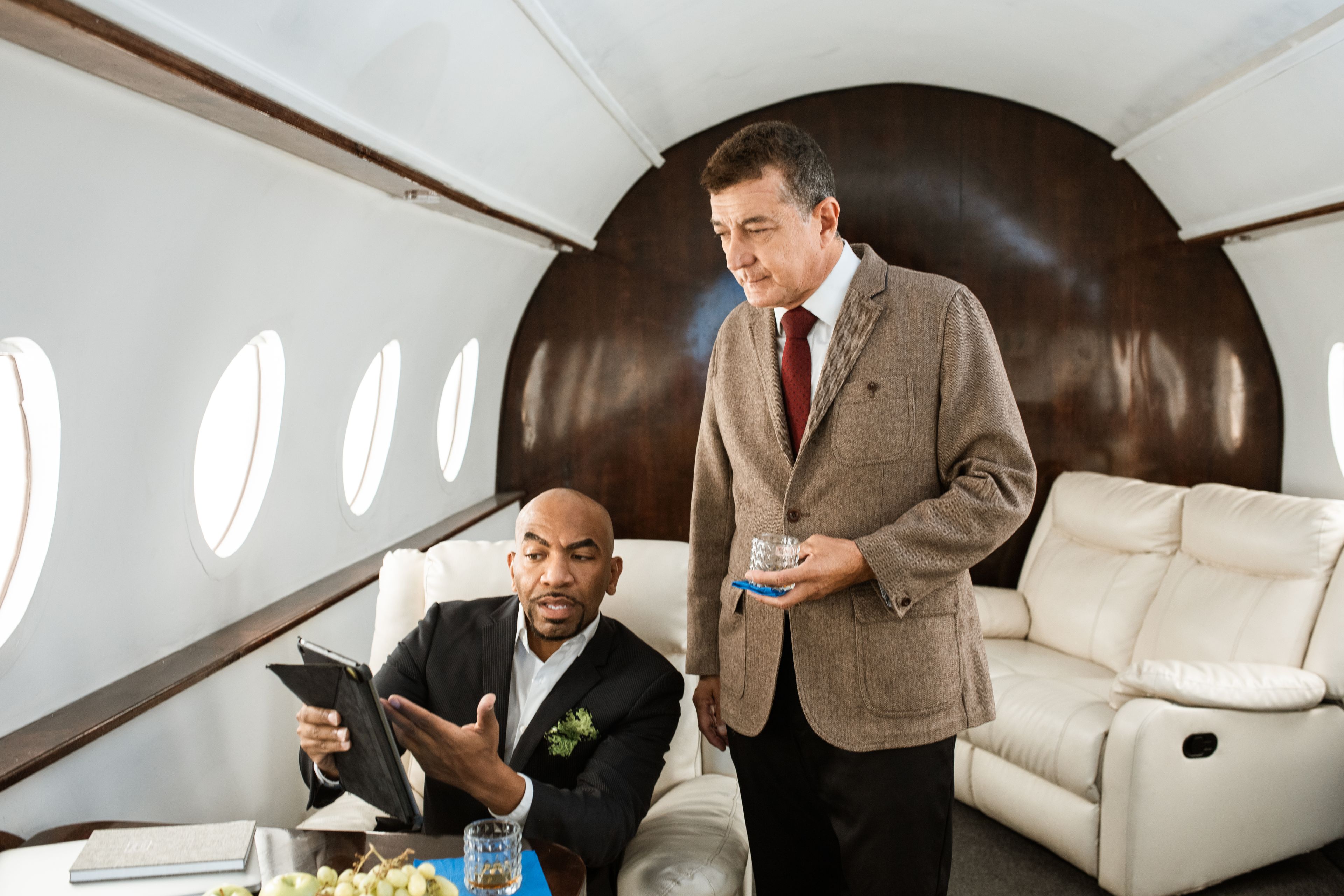
If you are arriving on a scheduled flight, the ground plan is a conventional airport collection performed properly. Your chauffeur parks, walks into the public arrivals hall of the terminal your flight actually lands at, and waits with a name board until you come through. The luggage moves once and the walk to the car is short. That is the whole of the service on this side.
Any lounge, fast-track or private suite arrangement is provided by the airline or the airport and is booked directly with them. We are not a party to it, cannot obtain it and would be misrepresenting ourselves if we implied otherwise. What we can do is meet you at whichever door that service delivers you to, which is a question worth confirming with the provider in advance.
Perimeter roads and the central tunnel
Heathrow occupies a large site with a perimeter road that is longer than most people expect and terminals that are not quick to move between. Approaches come from the M4 and from the M25, with the A4 available when the motorway is poor, and the tunnel serving the central terminals is a bottleneck in its own right at certain hours.
From Mayfair, the honest range runs from around three quarters of an hour to well beyond an hour, with the peaks pushing the top of it further than a mapping application will admit. From the Thames Valley and Windsor the run is short and dependable. We choose the approach for the time of day and the destination within the airport rather than defaulting to the same route each time.
- M4 and M25 are the main approaches, with the A4 as the surface alternative
- The central terminal tunnel is a bottleneck at predictable hours
- The private side is reached by its own perimeter route, not the terminals
- Terminals are slow to move between once you are on the site
- Forecourt access arrangements are set by the airport and included in writing
- Thames Valley and Windsor journeys are short and unusually reliable
What we do not arrange
Clarity here saves disappointment later. We do not sell or supply private suites, fast-track passage, meet and assist inside the controlled area, baggage handling beyond the car, or anything requiring airside authority. Those services exist and are worth having, but they come from the airport, the airlines and your handling agent, and the honest answer to a request for them is a redirection rather than a quotation.
We also do not claim real-time flight tracking. What we ask for is the flight number and the date rather than only a time, because a number survives a schedule change and a time does not, and we work to a sensible buffer around it. That combination has proved more reliable than any monitoring promise, and it costs nothing to operate.
Details worth confirming early
Because Heathrow supports several quite different journeys, the first thing to settle is which one you are making. After that the details are ordinary but consequential: how many of you, how many cases, whether anyone needs a child seat or help with a low seat, and where the car is going afterwards, since a run to the Cotswolds and a run to Knightsbridge are not the same day.
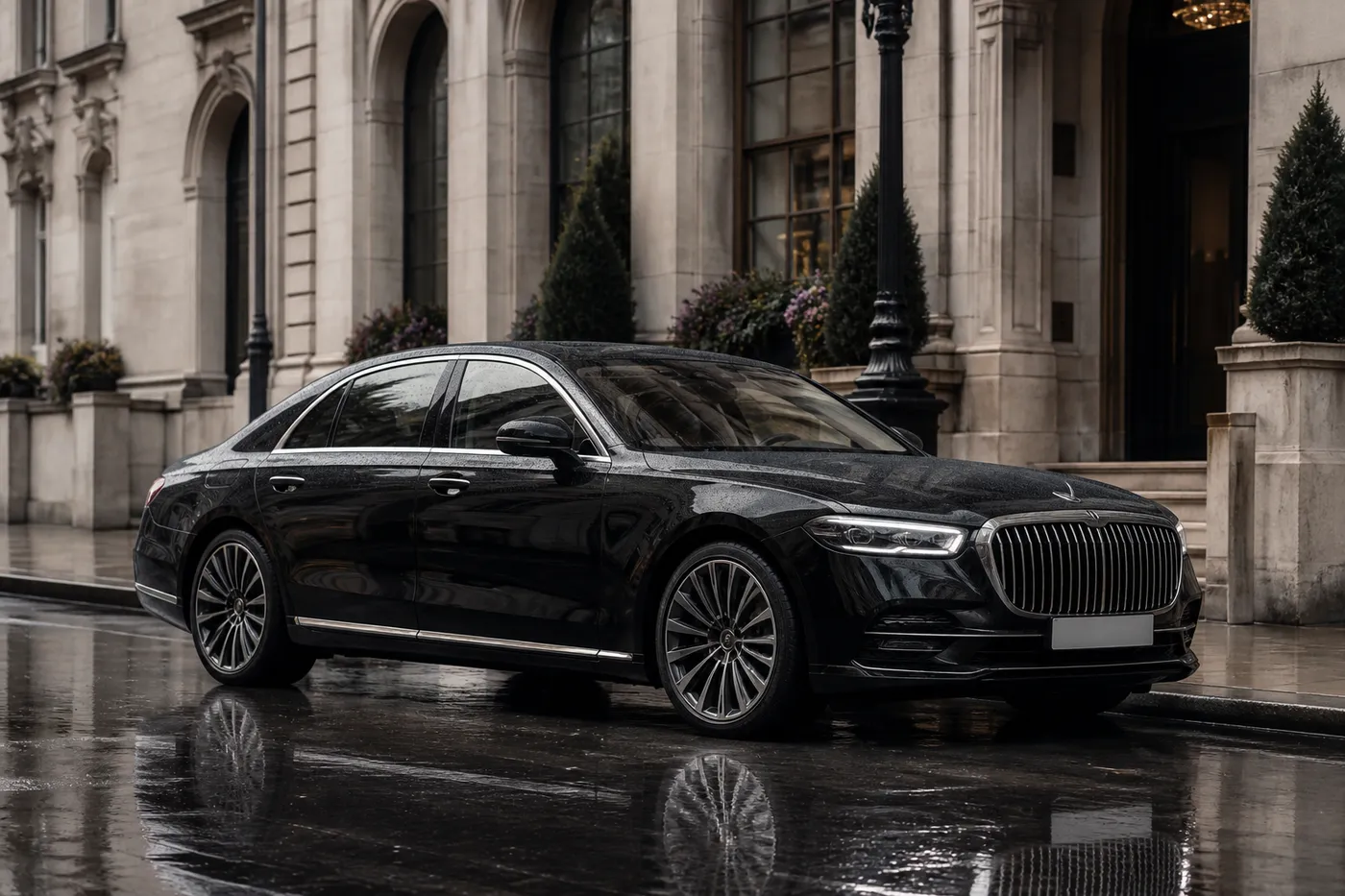
Arrangements are made over WhatsApp or by email, and you receive a written quotation covering the vehicle, the timings and the terms before anything is confirmed. Vehicles come from our own cars and from a vetted network of professional chauffeur operators, so a second car for luggage on a long-haul arrival or a crew vehicle on separate timings sits comfortably on the same booking.
- Whether this is a private movement or a passenger terminal journey
- Handling agent and address if you are using the private side
- Flight number and date rather than only a scheduled time
- Terminal, confirmed rather than assumed, on a codeshare booking
- Passenger and case counts, particularly after a long-haul flight
- Onward destination, which often decides the vehicle