





An airport transfer looks like the simplest thing a chauffeur does. One address, one terminal, one motorway in between. In fact it is the job with the most moving parts, because it is the only one where the timing is set by somebody else entirely and where the difference between the outbound and the return is enormous.
Understanding that difference is most of the battle. A departure is a planned journey with a deadline; an arrival is an open-ended commitment to be standing somewhere until a person appears. They consume different amounts of a chauffeur's day and they price differently as a result. Everything else in this guide follows from that single distinction.
The two halves of an airport job
A departure is largely predictable. You know the address, you know the terminal, and the only real variable is how much margin you want on the road. The chauffeur arrives, loads, drives, sets you down and is released. The whole thing has a defined end, which means the rest of the day can be planned around it.
An arrival is a different animal. The landing time is a published estimate, and what happens after it is genuinely unknown: immigration queues vary by hour and by aircraft, baggage reclaim varies by handler, and a single missing case can add half an hour. The chauffeur is committed for the whole of that unknown period, and a quotation has to account for it honestly.
This is why sending a flight number matters. It lets us plan around the published schedule, set the collection sensibly and avoid either arriving absurdly early or leaving you waiting. It is not a promise to track anything in real time; it is simply the most useful single piece of information you can give us about an arrival.
Terminal access and where the car waits
Almost every significant UK airport now charges vehicles for entering the drop-off and pick-up areas, and most charge separately for time spent in the car parks where chauffeurs wait for arriving passengers. These are real costs attached to the job rather than to the mileage, and they vary by airport and sometimes by terminal.
Where you want to be met changes the shape of this. A meeting inside the terminal, at the arrivals barrier, means the chauffeur parks, walks in, waits and walks back with your luggage, which occupies more time and more parking than a kerbside collection. Both are perfectly reasonable arrangements, but they are not the same arrangement, and it is worth saying which one you want.
- Terminal drop-off charges on departure
- Car park time while a chauffeur waits for an arrival
- Whether you want a meet inside arrivals or a kerbside pickup
- Which terminal, since access and parking differ within one airport
- Whether the party is arriving together or in separate groups

Timing, and the hours nobody wants
Airport traffic is concentrated at both ends of the day. Long-haul departures cluster in the morning, which means a great many people want a car at an hour when very few chauffeurs want to be working. The same is true of late-evening arrivals that land after the last convenient train has gone. Those hours are harder to staff, and scarcity does the pricing.
There is also the road to consider. Leaving central London for Heathrow at seven in the morning is a materially longer commitment than the same run at eleven, and a Gatwick departure crossing the M25 during the evening peak needs a margin that a midday one does not. Where your check-in time is flexible, moving it away from the crush is the single most effective saving available.
Luggage decides the vehicle
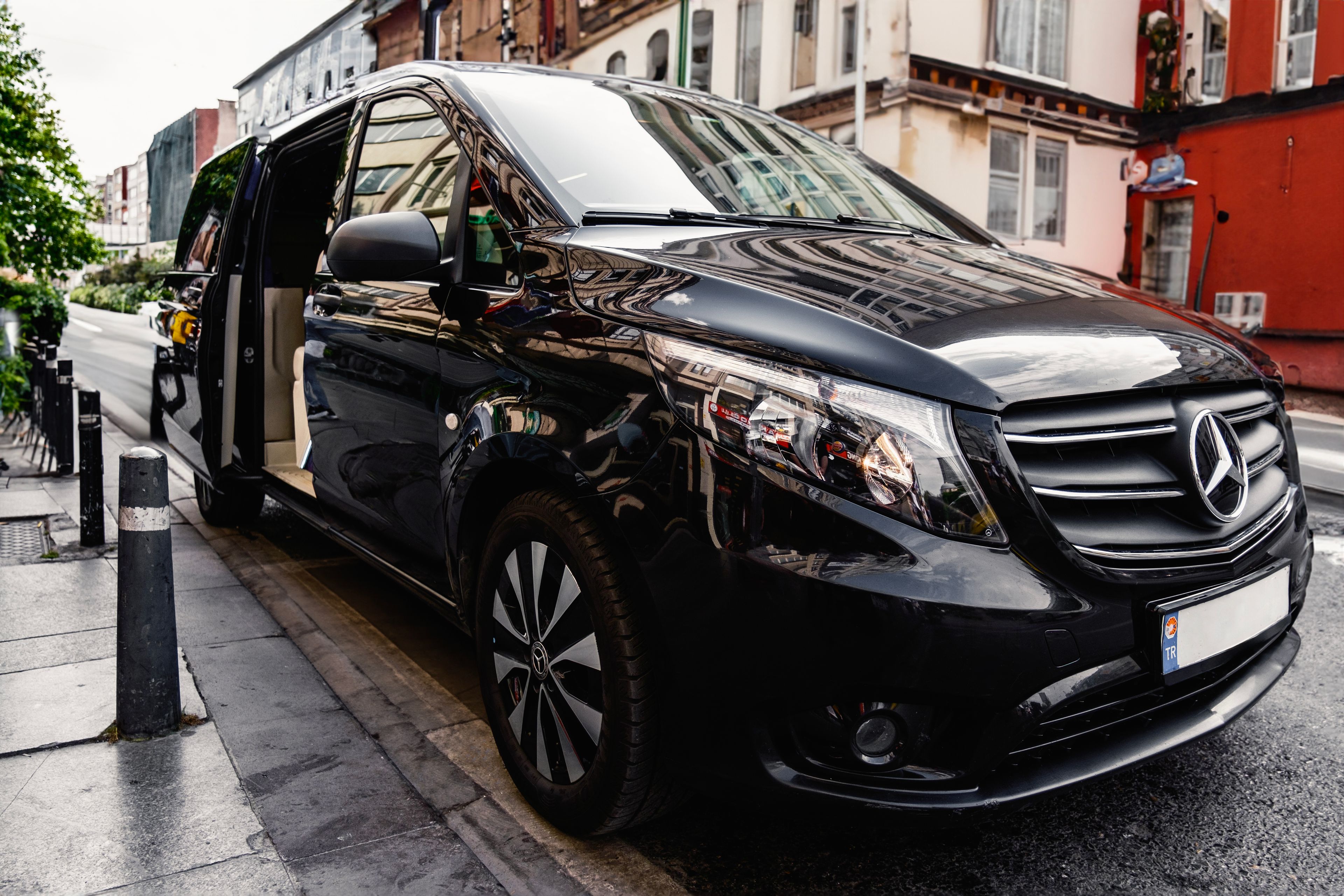
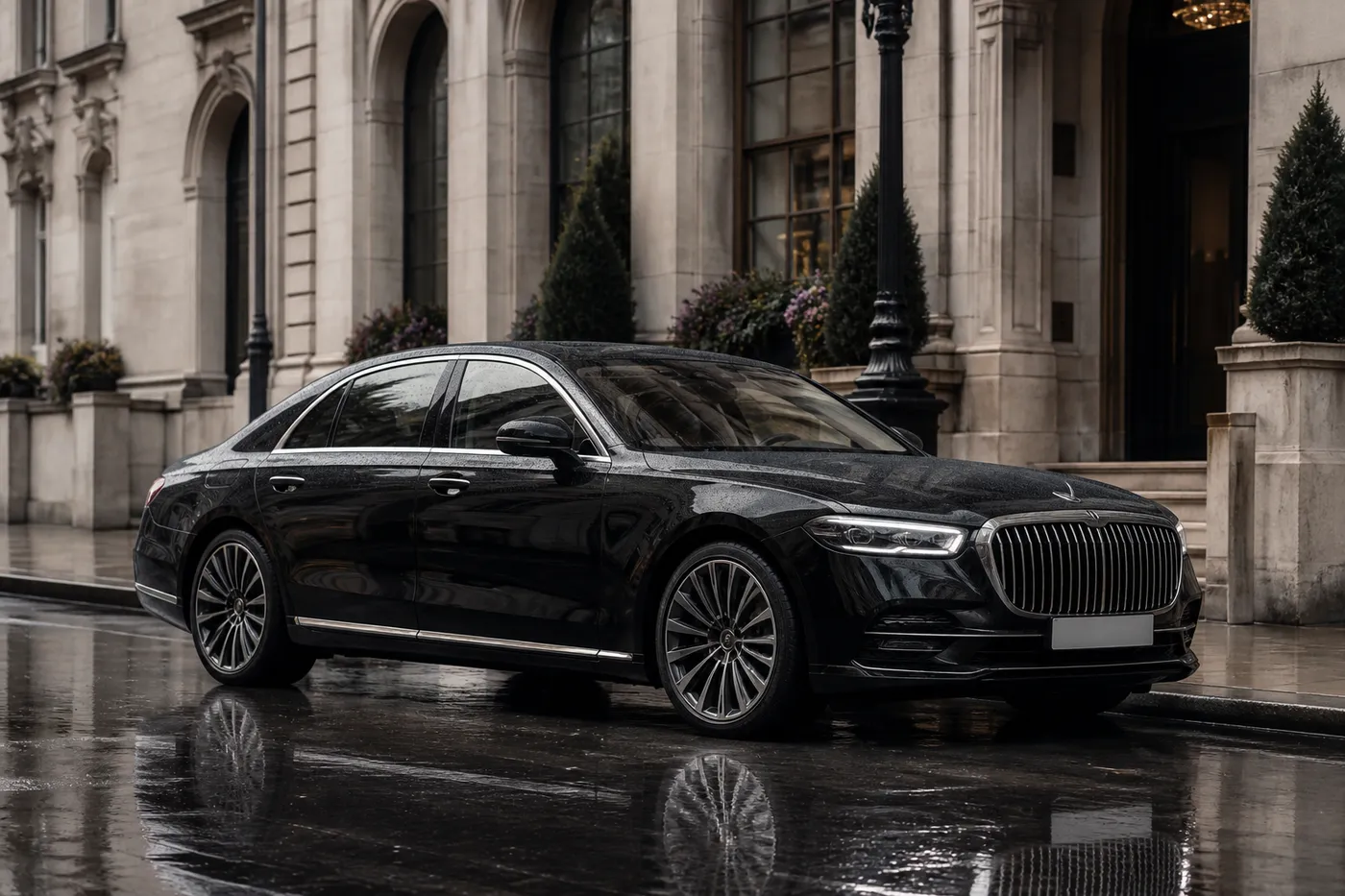
More airport bookings go wrong over luggage than over anything else. A saloon has a defined boot, and four passengers with four large cases will not fit into it however carefully anyone packs. The correct answer is usually a luxury MPV, which carries the party and the bags without anyone travelling with a case on their lap, and it is a better journey as well as a workable one.
Count the actual cases before you enquire, including cabin bags, and mention anything awkward such as golf clubs, skis, a pushchair or a musical instrument. Doing so is not fussiness; it is the difference between the right car arriving and a difficult conversation at five in the morning with a taxi being summoned as a rescue.
Ways to bring an airport transfer down
Most of the available savings come from the shape of the booking rather than from negotiation. Booking the outbound and the return together lets the whole trip be planned as one piece of work. Consolidating a party into a single larger vehicle almost always beats sending two saloons. Being precise about the meeting point removes the contingency that vagueness forces into the arrangement.
Where a chauffeur genuinely is not the right answer, we will say so. A single traveller with hand luggage going from central London to Heathrow at midday has an excellent train option and a perfectly good taxi option. Chauffeur travel earns its place when there is luggage, a party, an unsociable hour, an early start with a child, or an arrival where somebody waiting matters.
- Book the outbound and return together rather than as two separate jobs
- Move the collection out of the early-morning or evening peak if you can
- Put the whole party in one larger vehicle instead of two saloons
- Send the flight number so the collection can be planned around the schedule
- Confirm the terminal and the exact meeting point in advance
- Say clearly whether you want to be met inside or collected at the kerb