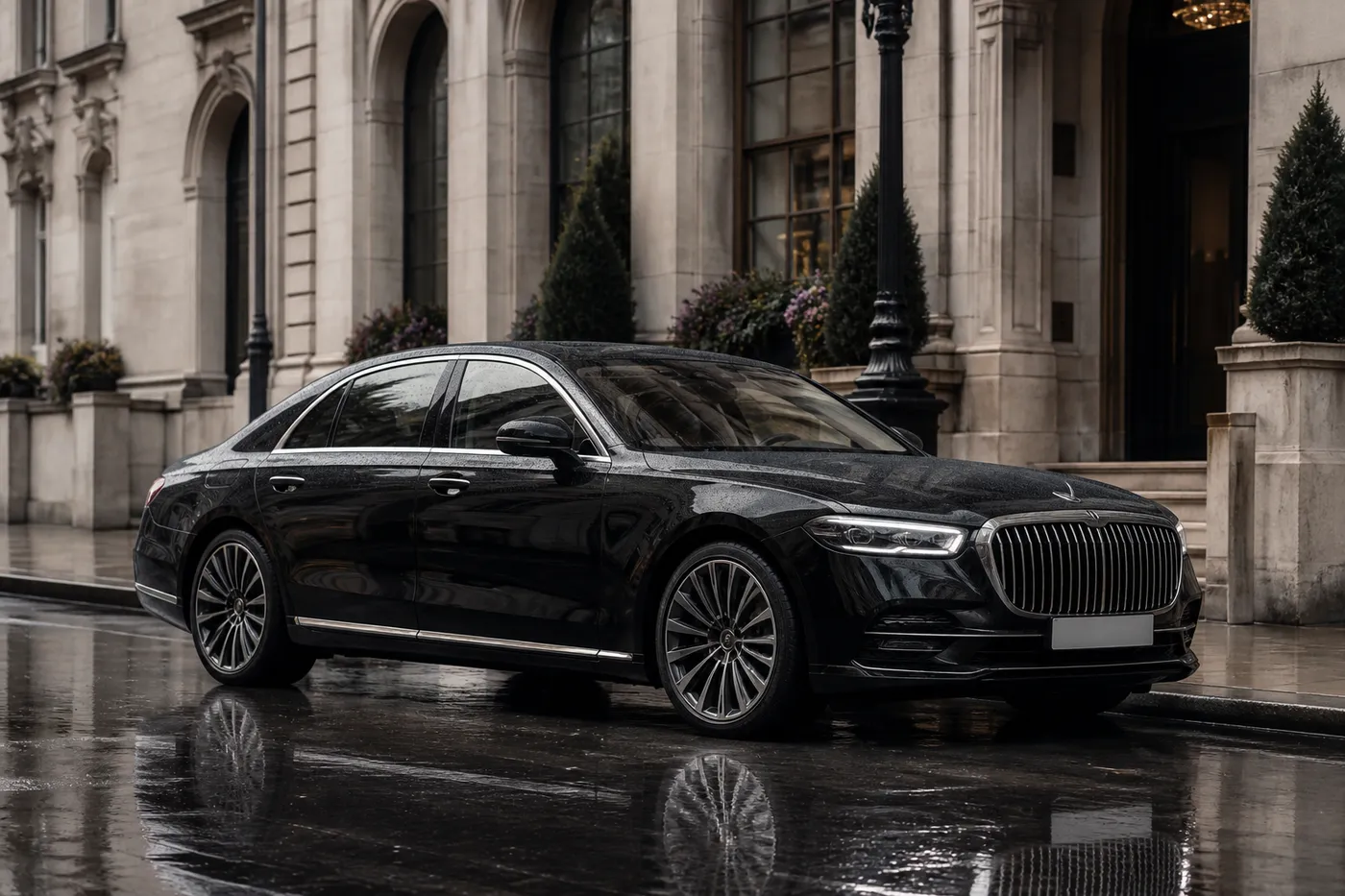






Choosing between chauffeur companies is difficult for a reason that has nothing to do with the companies. Almost everything they publish looks the same: the same adjectives, the same photographs of the same models, the same claims about professionalism. There is very little in the marketing that distinguishes an excellent operator from an adequate one, which means the useful signals lie elsewhere.
The good news is that those signals are easy to find and take almost no time to check. They are in how an operator answers a direct question, in what their quotation contains, and in whether they will tell you something you do not want to hear. What follows is a practical way of applying that test, including to us.
Start with what you actually need
Different operators are genuinely better at different things, and there is no single best company for every journey. Some are built around airport work and are excellent at it. Some specialise in weddings and hold the cars to prove it. Some are corporate accounts businesses whose strength is invoicing and consistency across cities rather than the occasion itself. Each of those is a perfectly good business, and none of them is the right answer to all three requirements.
Work out which category your requirement falls into before you compare anybody. If you need one car for one wedding, the operator with a slick corporate booking portal is irrelevant to you. If you need a hundred movements a quarter across three offices, the operator with a beautiful classic car is equally irrelevant. Matching the shape matters more than ranking the names.
Licensing and who is accountable
In Great Britain, chauffeur work is private hire work, which means it must be pre-booked and operated by a licensed private hire operator using licensed drivers and licensed vehicles. Insurance must cover hire and reward. These are legal requirements rather than badges of excellence, but an operator who cannot answer a direct question about them clearly is telling you something important.
Ask who is accountable if something goes wrong. Many companies, including us, use their own cars alongside a vetted network of professional chauffeur operators, which is a normal and sensible way of covering the country. What matters is that somebody named remains responsible for your booking end to end, rather than the enquiry being sold on and forgotten the moment it leaves the building.

The questions that separate operators
You are not listening for the cheapest answer or the most enthusiastic one. You are listening for specificity. An operator with a clear model of the job in front of them answers precisely and briefly. One who is quoting from habit reassures you in general terms and moves on, and that difference is audible within about two minutes of conversation.
Ask the questions below of everybody you are considering. It is not rude and it is not unusual; anybody who has run this kind of business for any length of time hears them every week and should welcome them, because they favour the operators who have already thought carefully about the answers, and quietly disadvantage the ones who have not. There is nothing to lose by asking and a good deal to learn from the reply.
- How is waiting time measured, and what happens if I am delayed
- What happens if the vehicle I have booked becomes unavailable
- Who is my point of contact on the day itself
- Are the road, parking and terminal charges inside the figure or outside it
- How do you handle a flight that lands very late
- What are the amendment and cancellation terms, and where are they written
- Will you tell me if you think a chauffeur is the wrong choice for this journey
Read the quotation as evidence
A quotation reveals more about an operator than a website ever will. A good one names the vehicle class, the date and times, the exact addresses, how waiting is treated, which charges along the route are covered, and the terms that apply if things change. It reads clearly, uses ordinary language, and needs no interpreting by anybody. You should be able to hand it to a colleague and have them understand the arrangement immediately.
A weak one is a figure and a sentence. That is not necessarily dishonest, but it means every unstated element is being decided later, and later is when disagreements happen. If two quotations differ substantially, check first whether they describe the same journey. Most apparent price differences dissolve once the hours, the vehicle class and the waiting arrangements are matched.
Warning signs worth heeding
Some signals are reliable enough to act on. Reluctance to put terms in writing is the clearest. Vagueness about what happens when a flight is delayed is a close second, because it is a question with a real answer that any serious operator has thought about. Pressure to decide immediately is a third, since a genuine availability constraint can be explained calmly.
Be wary too of claims that cannot be true. Nobody has a partnership with an airport terminal. Nobody guarantees a specific car years out without qualification. Nobody can promise to absorb an unlimited delay for free. An operator willing to say something implausible in order to win the booking will be equally willing to say something implausible afterwards, when it is your journey rather than their pitch at stake.
- Terms that are described verbally but never sent in writing
- No clear answer on delayed flights or extended waiting
- Pressure to confirm immediately without a written quotation
- Claimed affiliations with airports, hotels or manufacturers
- A specific car promised without any availability qualification
- No named point of contact once the booking is made
Size is not the same as quality
Large operators bring consistency, national coverage and the administrative machinery that corporate travel needs. Smaller ones often bring a named person who remembers your preferences and answers their own messages. Neither is better in the abstract; they are better at different things, and the right choice depends entirely on which of those two things you actually value on the day you need them.
What both should share is the willingness to be honest about fit. An operator who tells you that your Tuesday afternoon hop across town would be quicker in a taxi has just cost themselves a booking and earned something more useful. If nobody you speak to is ever prepared to talk you out of anything, treat that as information rather than as enthusiasm.