



A wedding is not one journey. It is a cluster of short movements, most of them under half an hour, arranged around two or three fixed points that will not move: the ceremony slot, the photographer's window, and whatever the venue has said about clearing the room. Planning the cars means working backwards from those points and being honest about how long the human parts of the morning take.
This guide is about choreography rather than vehicles. Where the cars wait, how many the day genuinely needs, what happens when a ceremony overruns, and the handful of things that reveal themselves at nine in the morning. Treat everything below as a starting framework. Your venue, your officiant and your photographer set the real times, and we build the schedule around whatever they confirm to you.
Work backwards from the ceremony
Every wedding schedule should be built in reverse. The registrar or officiant holds a slot that will not move, and the venue has told you when the room needs to be clear. Fix those first, then work backwards through the photographs, the drive, the dressing and the arrival of the cars. Planning forwards from a getting-ready time is how a morning quietly runs twenty minutes late before anybody has left the house.
The second immovable point is usually the photographer. Ask how long they need with the party before the ceremony and how long they want afterwards, then put those blocks in the diary in ink. Most of the pressure on wedding cars comes from photography allocated ten minutes that needed thirty. Once the fixed blocks are agreed, the driving time between addresses becomes the easy part to plan around.
- The ceremony slot as confirmed by your registrar or officiant
- The photographer's windows before and after the service
- Any venue curfew or room turnaround the co-ordinator has flagged
- Travel between the getting-ready address and the ceremony
- The gap between ceremony and reception, including group photographs
How long the morning really takes
Driving time is the smallest part of a wedding morning and the part people over-estimate. What consumes the clock is everything either side of the car: a dress that takes two people and several minutes to get through a doorway, a bouquet left upstairs, a final photograph on the steps that nobody had planned for. A three-mile drive is rarely the reason a wedding runs behind.
As a working assumption, allow considerably more standing time at each address than travel time between them. We would normally have the car in position well before the time written on your schedule, so the first thing anyone sees from the window is that it has already arrived. That margin is not padding. It is the buffer that lets a slow start stay invisible to everybody but the drivers.
- Car in position noticeably before the stated departure time
- Several minutes to load a dress without creasing it
- A pause on the steps for photographs at the house
- Deliberately unhurried driving to the ceremony rather than brisk
- Time at the far end for helping people out of the car
- A settling period before anyone expects you inside

Where the cars can actually stop
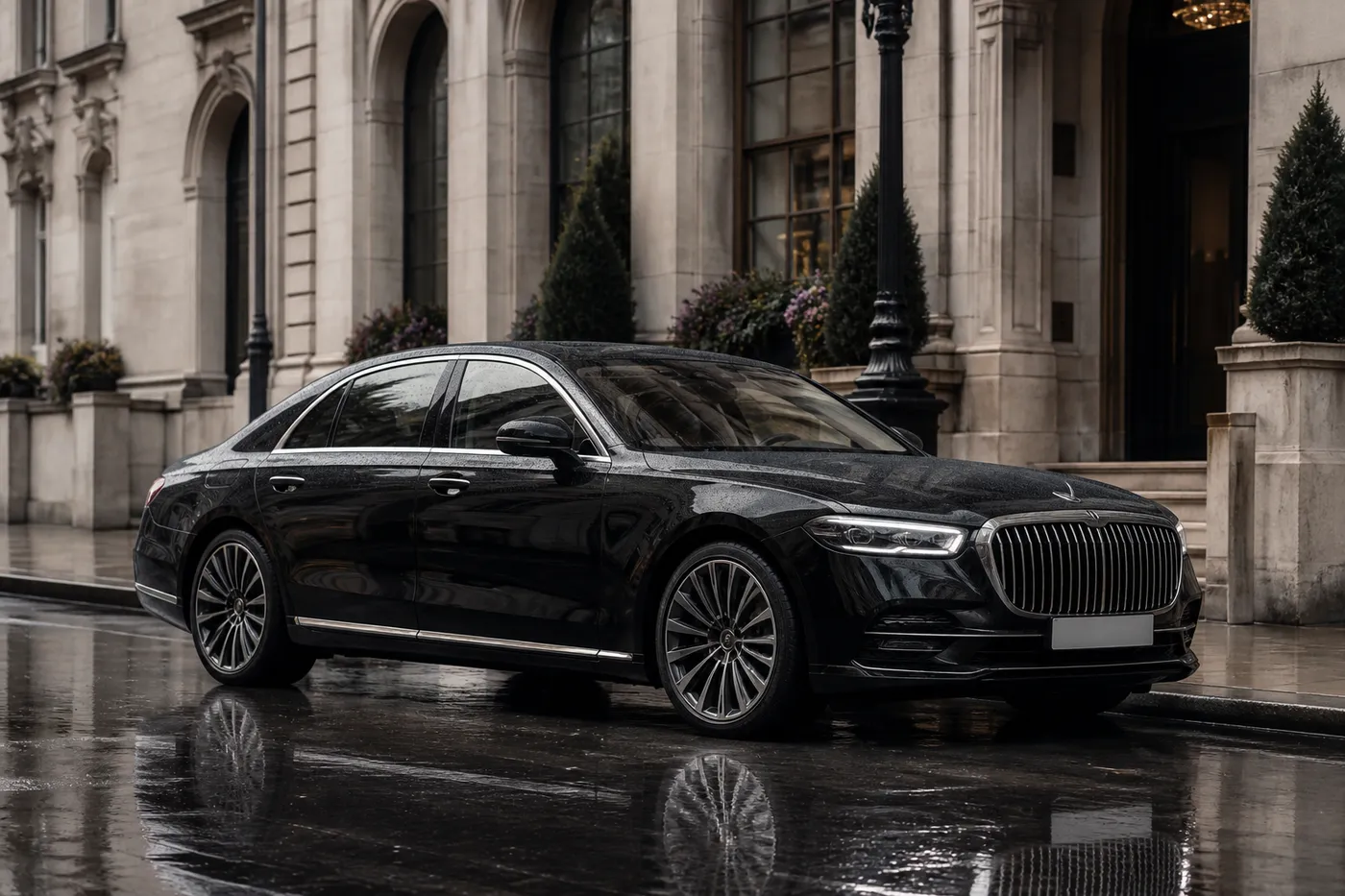
This is the question most worth asking early, and the one venues answer vaguely. Churches frequently have no parking at all and a lychgate a long car cannot pull past. Country houses often have a gravel sweep with a turning circle sized for something rather smaller than a Phantom. Hotel forecourts fill with florists, caterers and a marquee lorry from mid-morning, so the space that looked generous on a viewing is occupied by nine.
Ask your venue three specific things: where a car may set down, where it may wait afterwards, and whether the approach is tarmac, gravel or an unmade track. The answers shape our vehicle recommendation far more than any preference about badges. A low saloon and a rutted farm lane are a poor combination, and it is much better to discover that in an email than on a wet Saturday.
Absorbing the overrun
Ceremonies run late. Not all of them, but enough that a schedule with no slack in it will fail more often than it holds. Guests arrive in a slow trickle, the service expands gently, and the receiving line takes twice as long as anyone expected. The useful response is not to plan tighter but to plan looser, with the car held rather than released between the ceremony and the reception.
In practice we would rather hold a window than a minute for the second half of the day. Tell us the earliest you could plausibly leave the ceremony and the latest you would want to reach the reception, and your chauffeur waits within that band. Nobody is then standing in a car park making apologetic calls while the photographs continue, which is precisely the position the cars exist to prevent.
The details that surface late
A short list of things that tend to come up on the morning rather than in the planning. Whether anyone in the party uses a wheelchair or would struggle with a low seat, which changes the vehicle entirely. Whether children need seats, and at what age and weight. Whether the dress has a structured hoop, which decides how the rear doors are approached. Whether it rains, and who is holding the umbrellas.
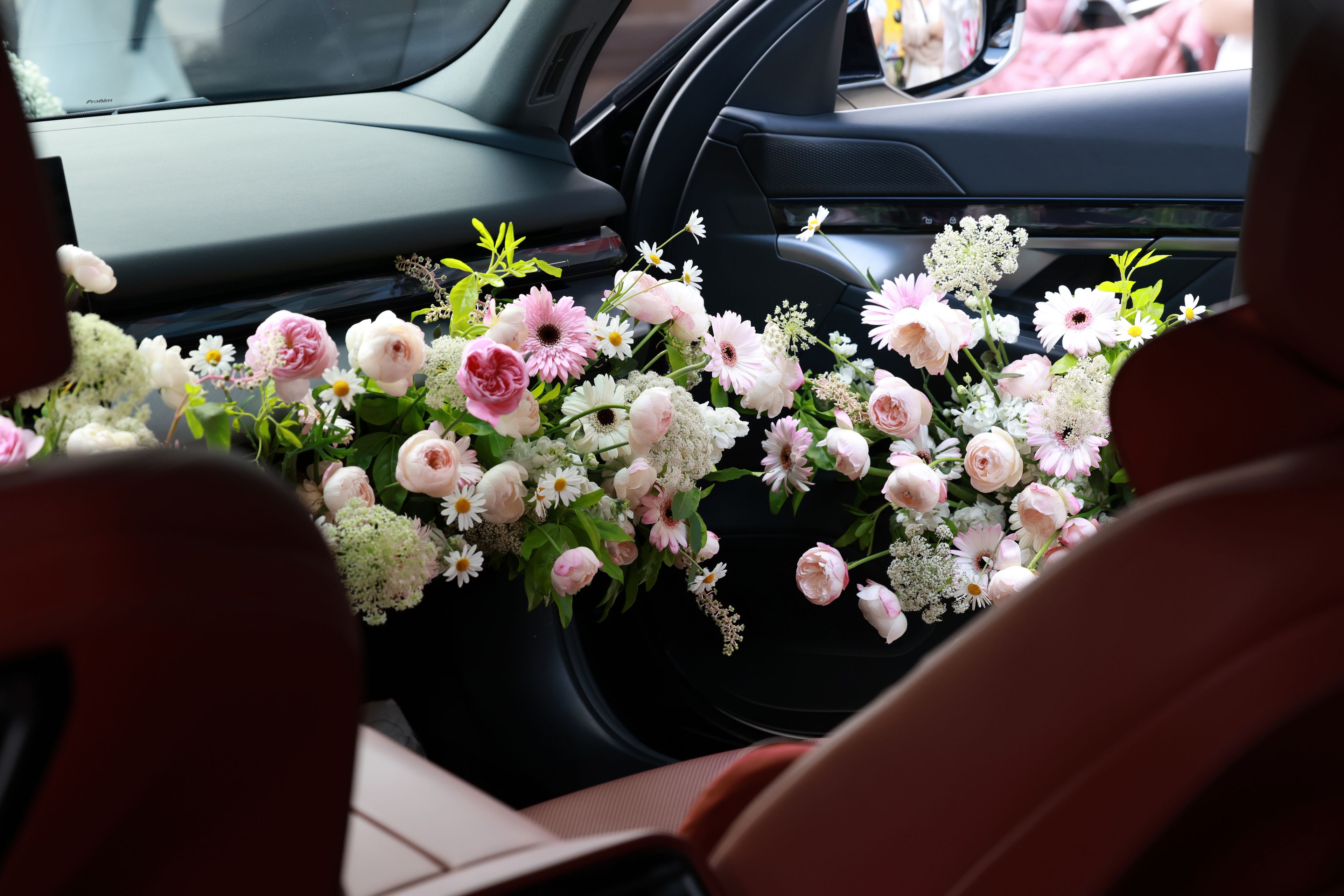
Ribbons cause disproportionate anxiety for such a small thing. They are fitted before the car sets off rather than at your door, in whatever shade you specify, and they come off for the evening if you would prefer. Anything more elaborate, particularly floral work fixed to paintwork or a bonnet, we would want to discuss beforehand so nothing is attached in a way that could mark a car.
- Wheelchair use, walking sticks or difficulty with a low seat
- Child seats, with ages and weights confirmed well in advance
- Hooped or structured dresses needing a wider door approach
- Umbrellas, and who is responsible for them at each set-down
- Ribbon colour, and whether they stay on into the evening
What to send us when you book
The most useful thing you can send is the running order rather than a list of postcodes. Who is at which address, what time each group needs to be somewhere, and which of those times is genuinely fixed. From that we can say honestly how many vehicles the day needs, and the answer is often fewer than expected. A second saloon for parents frequently replaces more taxis than it appears to.
Everything is arranged over WhatsApp or email, and you receive a written quotation covering vehicles, timings and terms before anything is confirmed. Cars come from our own fleet and a vetted network of professional chauffeur operators, so model, colour and specification are subject to availability and are agreed with you in writing rather than assumed. After that, the schedule is ours to hold rather than yours to watch.