

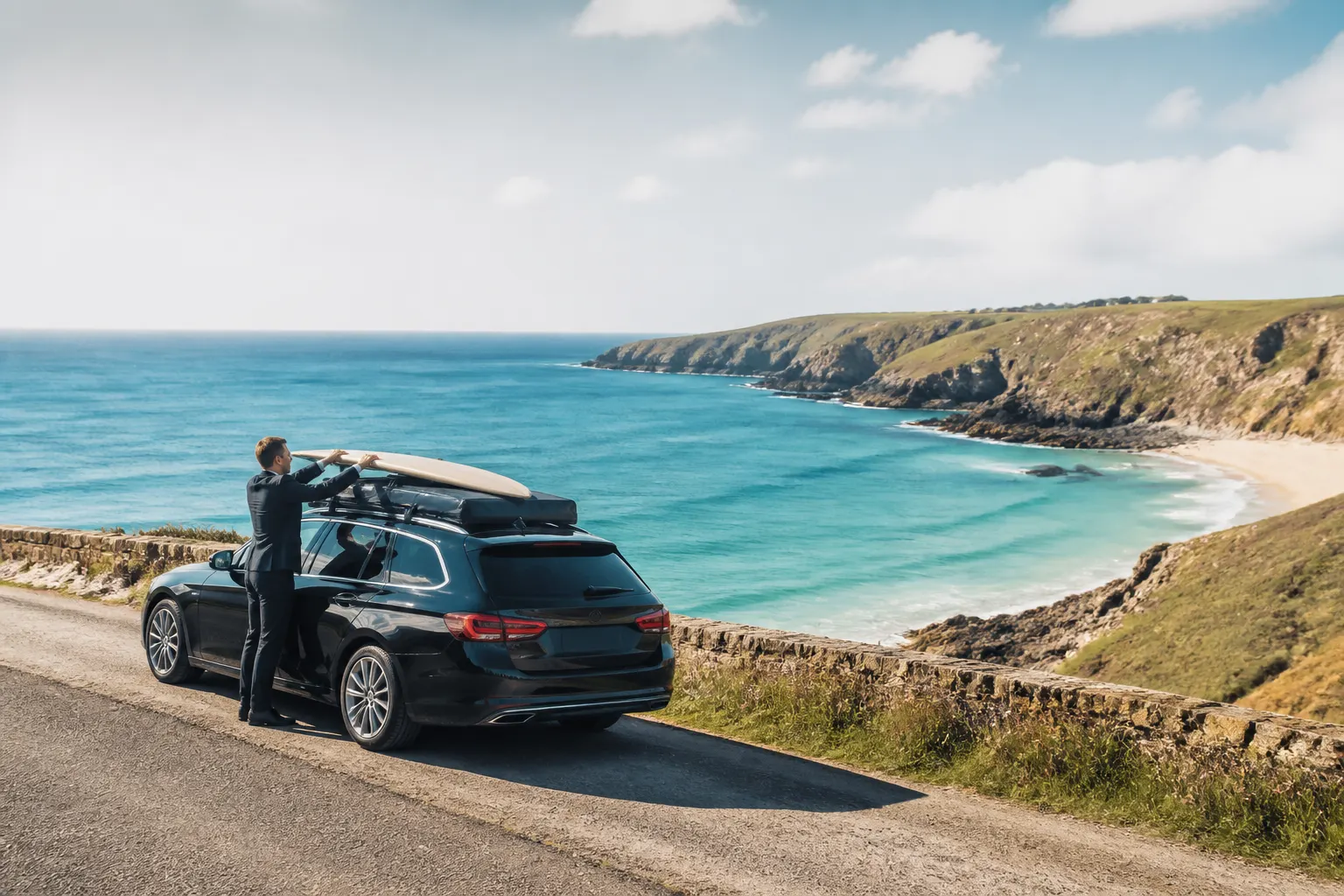



Sightseeing by private car is either a transformation or an expensive way to sit in traffic, and which one you get depends almost entirely on the shape of the group and the geography of what you want to see. A car is superb at covering distance and carrying things and poor at getting close to anything in a pedestrianised historic centre.
This page is about matching those strengths to your particular visit. It sets out who benefits most, which cities and which itineraries genuinely suit the arrangement, and where walking, a boat or the Underground will beat a car outright. It also explains how a registered guide fits into the picture, since that is the question most first-time visitors ask second.
The walking test
Start with a simple question: how much walking does your party actually want to do, and how much can it comfortably manage? A group happy to cover ten thousand steps in a day and stop for lunch where they find it does not need a car for a compact historic centre. A group that includes a grandparent, a pushchair, or somebody recovering from an injury has a completely different answer.
The second half of the test is the weather and the season. A dry June afternoon rewards walking. A wet November morning does not, and the car turns a day that would have been abandoned into one that simply reorders itself. British weather is the reason this arrangement is more popular here than the same idea would be elsewhere. It is a practical answer to an unreliable sky.
Visitors who get the most from it
The value concentrates where distance, carrying and comfort all matter at once. It is rarely about luxury and usually about the day being possible at all in the form you want it. Several of the cases below have nothing to do with the car being pleasant and everything to do with the day being achievable in the hours available.
Time-limited visits are the other clear case. A guest with one free day before a flight home cannot afford to lose ninety minutes to a wrong turn on public transport, and the car buys back exactly the hours that would otherwise be spent working out how to get somewhere. On a single-day visit those hours are a meaningful proportion of the whole trip.
- Multi-generational family groups moving at different paces
- Anyone with limited mobility, or travelling with a pushchair
- Visitors with a single free day and a long list
- Days that combine a city with somewhere outside it
- Winter visits, or any itinerary at the mercy of the weather
- Parties of four or more travelling together
- Guests who want to shop and sightsee on the same day
Where walking or the water wins
Compact historic centres are the clearest case against. York, Bath, central Edinburgh and much of Oxford and Cambridge are best seen on foot, because the streets that make them worth visiting are the ones a car cannot enter. Booking a car to see those places up close is an arrangement working against itself. The right use of a car there is to arrive, to leave, and to hold everything in between.
London has its own version of this. The stretch from Westminster to the Tower is better done by river than by road, and the Underground beats any car crossing the centre at half past five. A good day frequently uses all three: the car for the outer legs and the luggage, the boat for the river, and feet for everything in between.
Traffic is worth naming plainly. In central London at the wrong hour a car covers ground more slowly than walking does. Nobody selling this service should pretend otherwise, and the sensible response is to plan the driving for the times and directions where a car is genuinely faster. That usually means the outer legs, the early morning and the evening.
Half day, full day, or something else
Four hours suits a focused afternoon in one or two districts, and it is the right size for a first taste or for a group with young children. Six to eight hours covers a proper first visit to a large city without becoming a march, and leaves room for a long lunch and a change of plan. Anything beyond that begins to feel like an itinerary rather than a day out.
Beyond a single day, the arrangement changes character. Two or three days seeing one city are usually better booked as separate day bookings, so you are not paying for a car during a morning you intend to spend in one museum. Several days moving between places is a different service altogether, and is planned as a tour rather than a series of sightseeing days.
Whether you also want a guide
This is worth deciding early because it changes what the day is. Your chauffeur is a professional driver with good local knowledge and no formal guiding qualification, and he will not be presented as anything else. If you want interpretation, history and interior access explained properly, that is a registered guide's work. We would far rather point you toward one than approximate the job ourselves.
The best version of a heavily guided day is both: a guide engaged directly by you, and a car and chauffeur carrying you both. That way the guide is not also worrying about parking and the driver is not attempting a job he is not qualified for. If you simply want to see things at your own pace with somebody who knows the roads, the driver alone is plenty.
When to book something else
A sightseeing booking is a specific shape, and a fair number of enquiries are actually asking for something adjacent. The alternatives below usually fit better and often cost less. None of them are lesser versions of the same thing; they are simply different jobs, and matching the booking to the job is most of what makes a day work well.
Tell us who is visiting, how long you have and what you hope to see, and we will point you at the right one. Where the honest answer is a walking tour and a river boat, you will hear that instead of a quotation. We would rather be useful to a visitor once than sell a day that nobody enjoyed.
- A compact historic centre such as York or Bath: walk it, with a car to arrive
- Several days moving between regions: a tour chauffeur, not day bookings
- One long trip to a single site such as Stonehenge: a point-to-point booking
- Structured history and interior access: engage a registered guide as well
- A shopping day with a few sights attached: a shopping chauffeur booking
- A stay where the car is needed for dinners too: a hotel chauffeur arrangement
- Crossing central London at rush hour: the Underground, every time