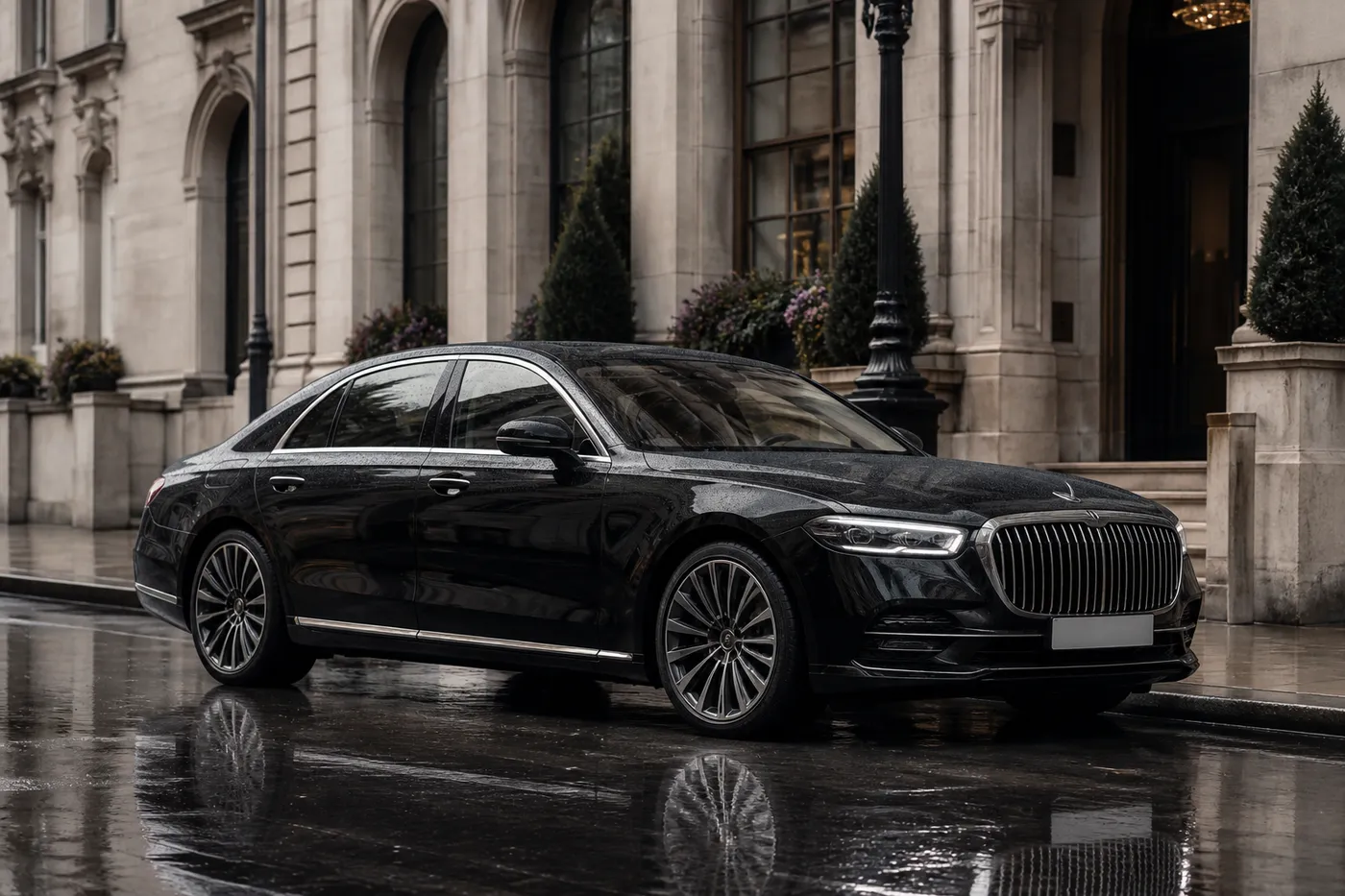


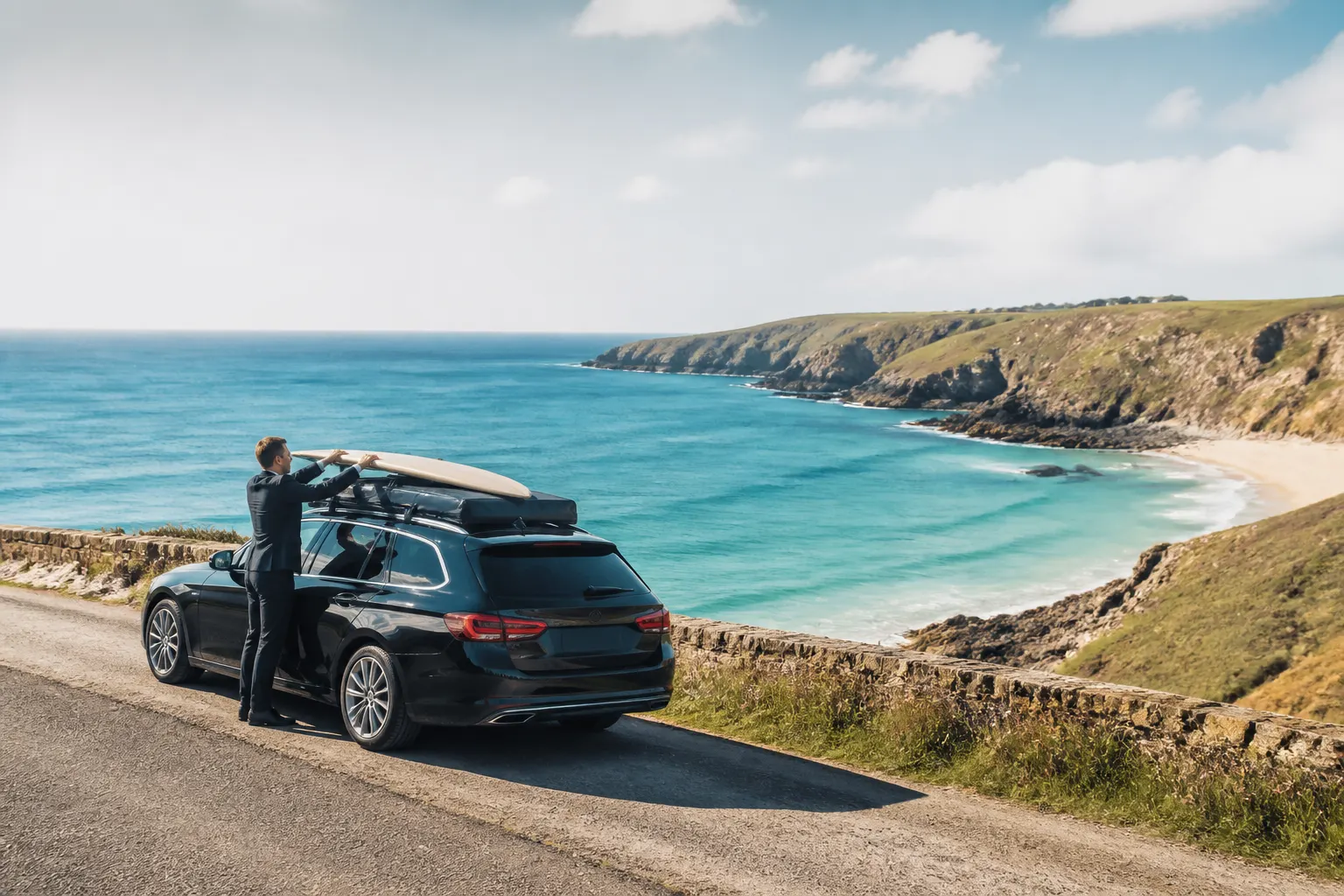



The word roadshow covers everything from four meetings in one city to a fortnight across six countries, and the right ground arrangement is not the same for both. Booking a dedicated car and chauffeur for the whole programme is the correct answer surprisingly often, and the wrong one often enough to be worth checking before you commit.
What follows is the arithmetic. It looks at meeting density, the distance between cities, how much you are carrying and how many people are travelling, and works out where a dedicated arrangement pays and where it simply holds a car outside a building for six hours. Both outcomes are common, and neither is a failure of planning.
Count the meetings, then measure the gaps
Density decides most of it. Four or more appointments in a day, with gaps of an hour or less between them, is the shape a dedicated car is built for. Re-hailing between each stop costs twenty minutes of waiting and a certain amount of composure, and doing that four times removes most of the working day. It also removes the ability to make any useful call between stops.
Two meetings with a three-hour gap is a different case entirely. There, a dedicated car spends most of the day parked, and two separate journeys with lunch in between will serve you better. The threshold sits somewhere around three appointments, and it moves depending on how much you have to carry and how far apart the buildings are. Count honestly rather than optimistically.
Where a dedicated car clearly pays
Certain programme shapes make the argument for themselves. They tend to involve either a schedule too dense to improvise, a group travelling together, or a quantity of material that has to move with you. Any one of those alone is usually enough, and two together settle the question without much debate. The list below is drawn from the programmes we run most often.
There is also a quieter factor. On a demanding programme the traveller's attention is a finite resource, and every decision about transport spends some of it. A dedicated arrangement removes those decisions entirely, which is worth more on day three than it appears on day one. Fatigue is the quiet enemy of a long programme, and it is largely made of small decisions.
- Four or more appointments in a day with short gaps between them
- Two or more people travelling together to the same meetings
- Presentation materials, samples or equipment that must move with you
- Programmes running across consecutive days without a break
- Cities where the buildings are spread rather than clustered
- Days that begin at an airport and end at a dinner
- Schedules likely to be reordered while they are running
When separate bookings work better
A single-city programme where every meeting is within a few streets of the others is often best served by walking, with a car booked for the airport at each end. The City of London and central Edinburgh both fall into this category. A car cannot beat a ten-minute walk, and in dense traffic it will lose to it comfortably. No arrangement we could sell you changes that.
Programmes with long empty afternoons are the other case. If the schedule has two meetings in the morning and one at six in the evening, holding a car for eight hours to cover three journeys is poor value however you look at it. Two or three separate bookings serve the same day better. The exception is a day where the gap itself needs the car, for a site visit or a lunch across town.
The third case is a programme spread across cities that are well connected by rail. London, Manchester, Leeds and Edinburgh are joined by fast trains, and moving between them by road costs hours that could have been spent working at a table. A local car in each city with rail in between is usually both quicker and simpler. It is also far easier to change when a meeting moves.
How city spread changes the structure
A programme confined to one city is a hourly or full-day booking question. A programme spread across several is a structural one, and the answer is nearly always a mixture rather than a single approach. Drive where the connection is poor, take the train where it is good, and have a car meeting you at each end. Purity of approach is not a virtue here.
The useful exercise is to draw the programme as a line and mark which legs a train serves well. What remains is what the car should cover. Doing that before booking usually shortens the arrangement and improves the schedule at the same time, which is not a trade most people expect. Doing it afterwards, once the cars are booked, is considerably harder.
The continuity argument, weighed honestly
One chauffeur across a whole programme is genuinely valuable. Addresses are learned once, preferences settle within a day, and by the third morning nobody is explaining anything. On a difficult schedule that accumulates into real time saved and a noticeably calmer trip. Travellers who do this regularly rate continuity above almost every other feature of the arrangement, and it is the thing they ask for first.
It is not unlimited, though. Legal driving-hours rules cap consecutive long days, and a programme that runs from early mornings into late dinners for five days will require a handover somewhere. Any company promising one person for the whole thing regardless of the hours is promising something they should not. Better to know where the handover falls and plan around it.
When to book something else
Several programmes labelled as roadshows are really a different booking, and the alternative is usually simpler and leaner. It is worth checking before you arrange a car for days you will not use it. The alternatives below come up in a good proportion of the enquiries we receive under this heading, which is high enough to be worth a paragraph of its own.
Send the draft itinerary, however incomplete, and we will map it against the options below. If the honest answer is a train ticket and two local cars, that is what you will hear. That conversation takes only a few minutes and tends to improve the schedule as well as the transport. It is worth having before anything at all is fixed.
- One dense day in a single city: a chauffeur for the day, not a programme
- Two or three meetings with long gaps: separate point-to-point bookings
- Well-connected cities on the same trip: rail, with a car at each end
- Meetings clustered within walking distance: airport transfers only
- A single long journey to one appointment: a long-distance chauffeur booking
- Guests being collected from several airports: individual airport transfers
- A conference in one venue for three days: a hotel chauffeur arrangement