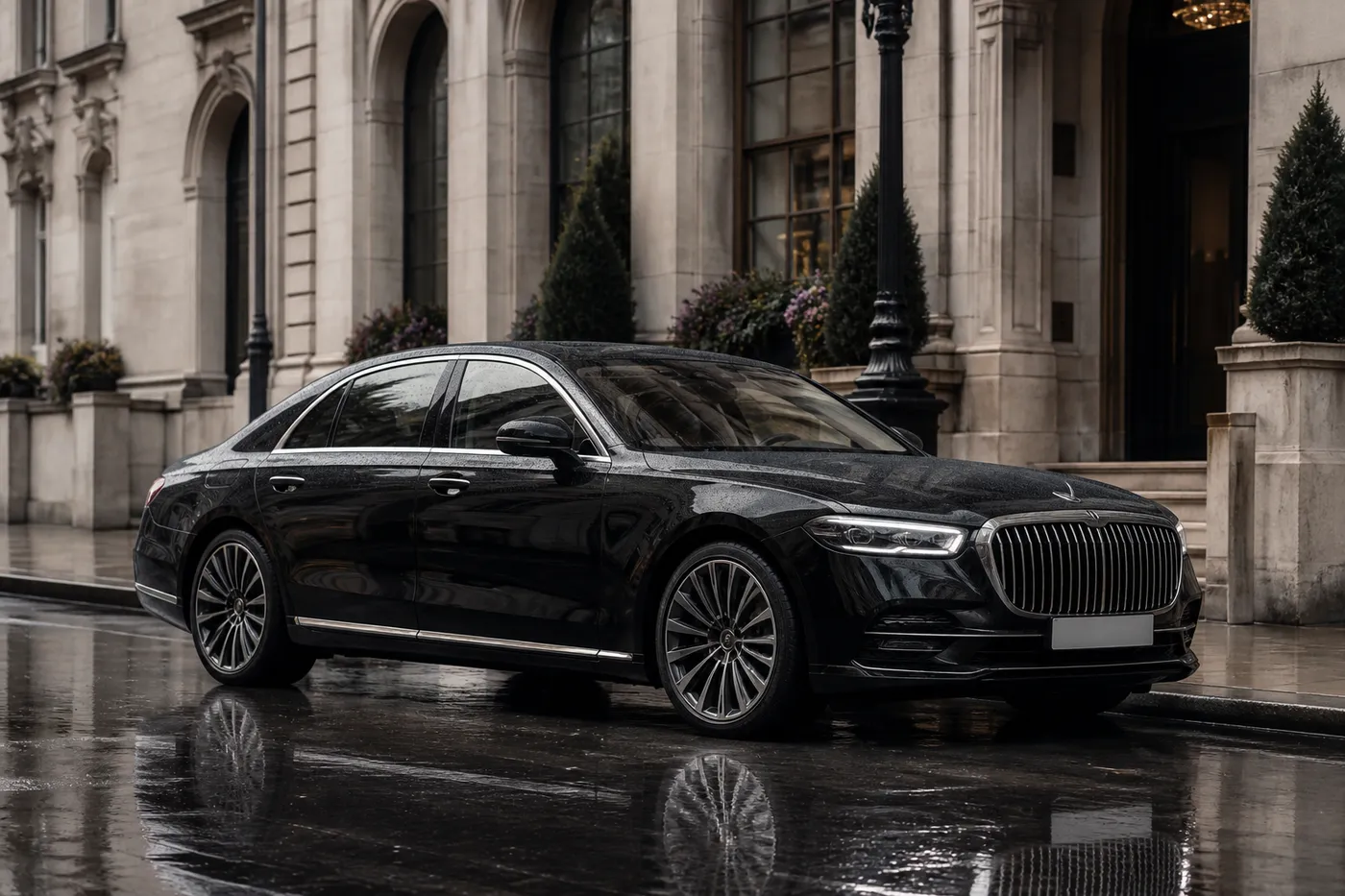




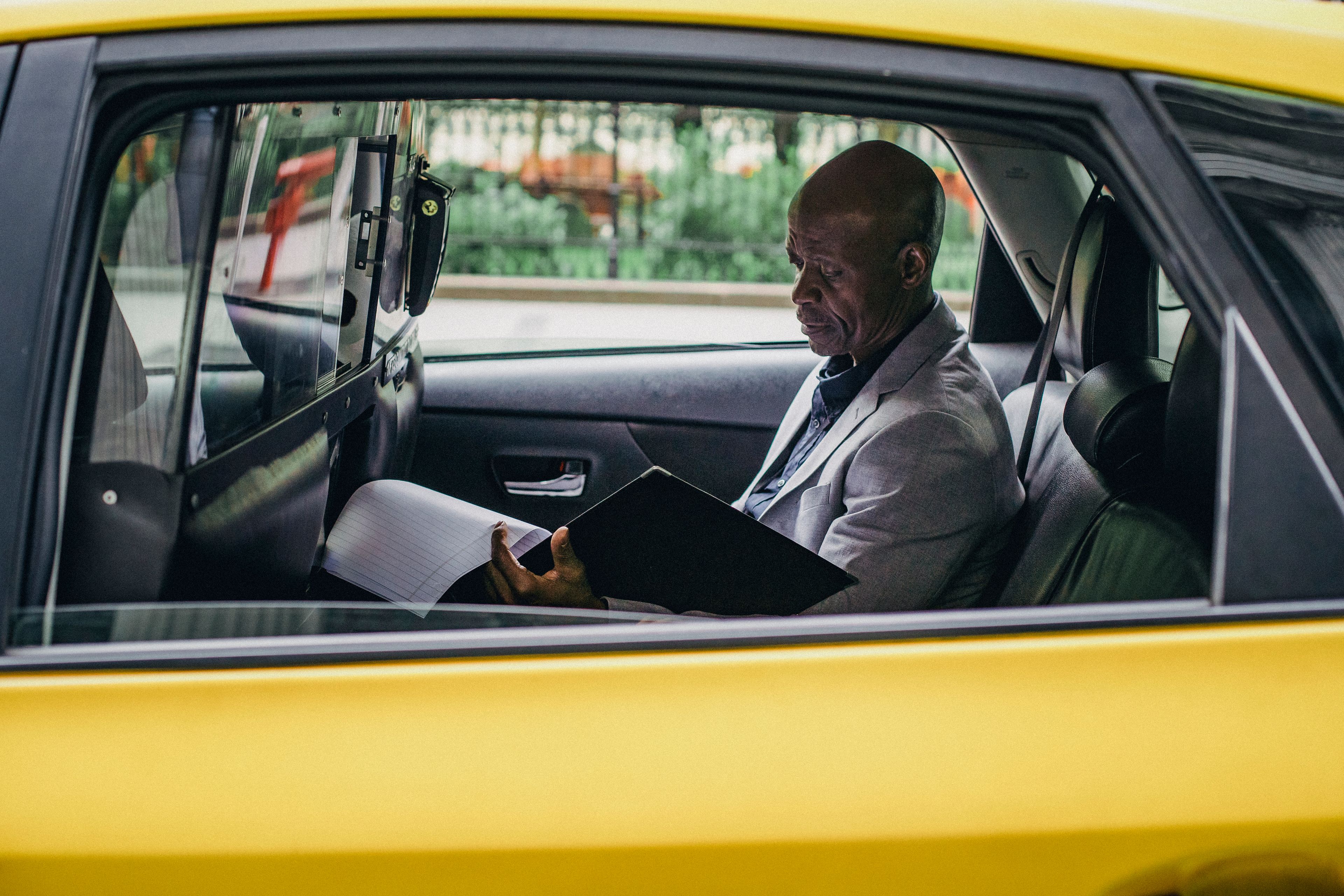
Sit in the back of a long-wheelbase S-Class on a motorway and the case makes itself. The road noise drops away, the seat does something intelligent about your lower back, and two hours becomes usable time rather than lost time. That experience is the product, and it is expensive to provide for reasons that have nothing to do with the badge on the bonnet.
This page explains those reasons without quoting anything, because the number for your particular day depends entirely on your particular day. What it should give you is a clear sense of why this car sits where it does in a range, which occasions genuinely justify it, and the specific circumstances in which a smaller saloon would have delivered the same journey just as well.
A flagship costs money standing still
Before an S-Class turns a wheel it has consumed more capital than anything else in a mainstream chauffeur fleet, and it loses value fastest in exactly the years an operator is running it. That depreciation is the single largest component of what the car costs its owner, and it does not care whether the vehicle is working or parked. Every idle day is a day it has cost somebody something.
Insurance for a high-value saloon in professional hire and reward follows the same logic, as does the cost of holding one available at all. An operator who keeps a flagship must find enough work to justify it, which means the car has to earn across the whole year rather than only during the fortnight when everyone wants it. That arithmetic sits underneath every S-Class quotation you will receive.
Long wheelbase and the rear cabin
The version that matters for chauffeur work is the long-wheelbase car, where the additional length goes entirely to the rear passengers. Reclining rear seats, separate climate control, proper legroom for a tall passenger and glass that keeps the outside world outside are what people are actually buying. The shorter car is a fine motorcar and a quite different proposition in the back.
Long-wheelbase cars are also rarer on the used market, more expensive to acquire and slower to replace when one goes off the road. If your journey depends on the rear cabin specifically, say so at the enquiry stage, because it narrows the pool considerably and it is far better established at the outset than discovered when a standard car pulls up at the door.

Fewer cars, and the weeks they vanish
Every operator runs more executive saloons than flagships, and that ratio explains most of what happens to availability. On an average Wednesday there is usually a car. During the periods when boards, visiting delegations, awards dinners and the summer social calendar collide, there is often not, and the ones that remain are further away from you than you would like them to be.
The pattern repeats reliably enough to plan around. If your date falls inside one of these windows and the car genuinely matters to the occasion, treat the booking as something to settle weeks ahead rather than days. Availability is the binding constraint far more often than anything else, and no amount of flexibility on the day unpicks a diary that filled in the spring.
- London evening event season through May, June and early July
- Ascot, Wimbledon and the summer calendar around them
- Party conference season and the major political weeks
- Awards dinners and gala evenings from October onwards
- The two weeks before Christmas, in every city at once
- Visiting delegations, which absorb cars at very short notice
Running a flagship properly
The presentation standard for a car like this is higher than for the rest of a fleet, and meeting it takes time that has to come from somewhere. Air suspension components, larger wheels and the tyres that go on them, and the electronics that make the rear cabin what it is are all more expensive to maintain than the equivalents on a smaller saloon. A flagship that is not immaculate is not doing its job.
There is also the question of who drives it. Operators tend to put their most experienced chauffeurs in the flagship, because the passengers in the back are frequently the reason the whole arrangement exists in the first place. That allocation is deliberate rather than accidental, it costs the operator something in the way the rest of the week has to be scheduled, and it is part of what the car represents alongside the vehicle itself.
Model, colour and specification remain subject to availability and are confirmed at the same moment your booking is. We draw on our own cars and on a vetted network of professional chauffeur operators, which is how a flagship can be arranged in Leeds or Bristol as well as in London, and we will always tell you what has actually been secured for your date.
When an E-Class would have done
The honest test is how long anyone will sit in the back in one stretch. Under half an hour, in city traffic, with a passenger who spends the journey on a telephone, the flagship's advantages barely have room to appear. The executive saloon delivers the same arrival at the same door in the same condition, and the difference is felt mostly by the person settling the account.
Where it does earn its place is on long legs, on days with several hours of cumulative travel, when a passenger needs to work or rest properly, and on occasions where the car forms part of how a client or a guest is received. Those are real reasons and worth paying for. Choosing it out of habit for a short hop across town is not one of them.
- Short city transfers where nobody sits down for long
- Journeys where luggage volume matters more than rear space
- Parties of three or more, better served by an MPV
- Days where the car waits considerably more than it drives
- Peak weeks where the flagship simply is not available anyway
Asking for an S-Class well
Give as much notice as you honestly can, specify long wheelbase if the rear cabin is the point, and tell us what the day is for. An operator who understands that the passenger is arriving to speak at a conference and needs quiet on the way will make different decisions from one handed nothing but a pair of postcodes and a time.
We do not publish a figure for this or any other car, and we would be misleading you if we did. Send the date, the timings, the addresses, the passenger and luggage count and anything that shapes the occasion, over WhatsApp or by email, and you will get an individual written quotation with the vehicle and the terms confirmed before anything is reserved in the diary.