




Passengers leave an airfield the moment the aircraft stops. Crew do not. There is shutdown, paperwork, a handover with the handler and often a wait for a decision about the next day, and only then does anybody think about a hotel. Booking crew into the passenger vehicle assumes those two schedules coincide, which they almost never do, and the result is a car idling while a first officer completes a technical log.
This page is written for flight departments, operators and crew themselves rather than for passengers. It sets out how we handle crew movements and what makes them run cleanly. As always, we are an independent chauffeur company with no affiliation to any airfield, terminal operator or handling agent, and access is whatever the handler permits on the day.
Crew move on a different clock
The gap between passengers leaving and crew leaving varies from a quarter of an hour to considerably more, and it is not reliably predictable in advance. Duty limits, the state of the aircraft and the next day's plan all bear on it. A separate vehicle on its own timing solves this completely and costs less friction than any attempt to co-ordinate a single car around two departures.
In the other direction, crew often need to be at the aircraft well before the passengers arrive, sometimes by a substantial margin. A pre-flight arrangement that collects the crew from a hotel first and then returns for the principals is common and works well. It only requires that both legs are known at the point of booking rather than discovered on the morning.
Hotel positioning and the airfield
Crew hotels are usually chosen for proximity and rest quality rather than for atmosphere, and they are frequently not where the passengers are staying. That means two quite different road journeys from the same airfield, and it is worth telling us both when the booking is made rather than treating the crew leg as an afterthought to be arranged later in the evening.
Where a crew stays for several days between legs, a standing arrangement is usually calmer than repeated ad hoc bookings. It also lets the same chauffeur carry the context, which matters more than it sounds: knowing which entrance the hotel uses at night and which door the handler prefers saves several minutes on every movement of a multi-day stay. Across a week those minutes are the difference between a rested crew and a hurried one.

What crew luggage actually is
It is not passenger luggage and it should not be estimated as though it were. A crew of two or three travelling for several nights will have overnight bags, flight bags, uniform carriers and sometimes equipment or catering items being returned to base. It is rarely voluminous but it is awkwardly shaped, and it usually needs to be accessible rather than buried.
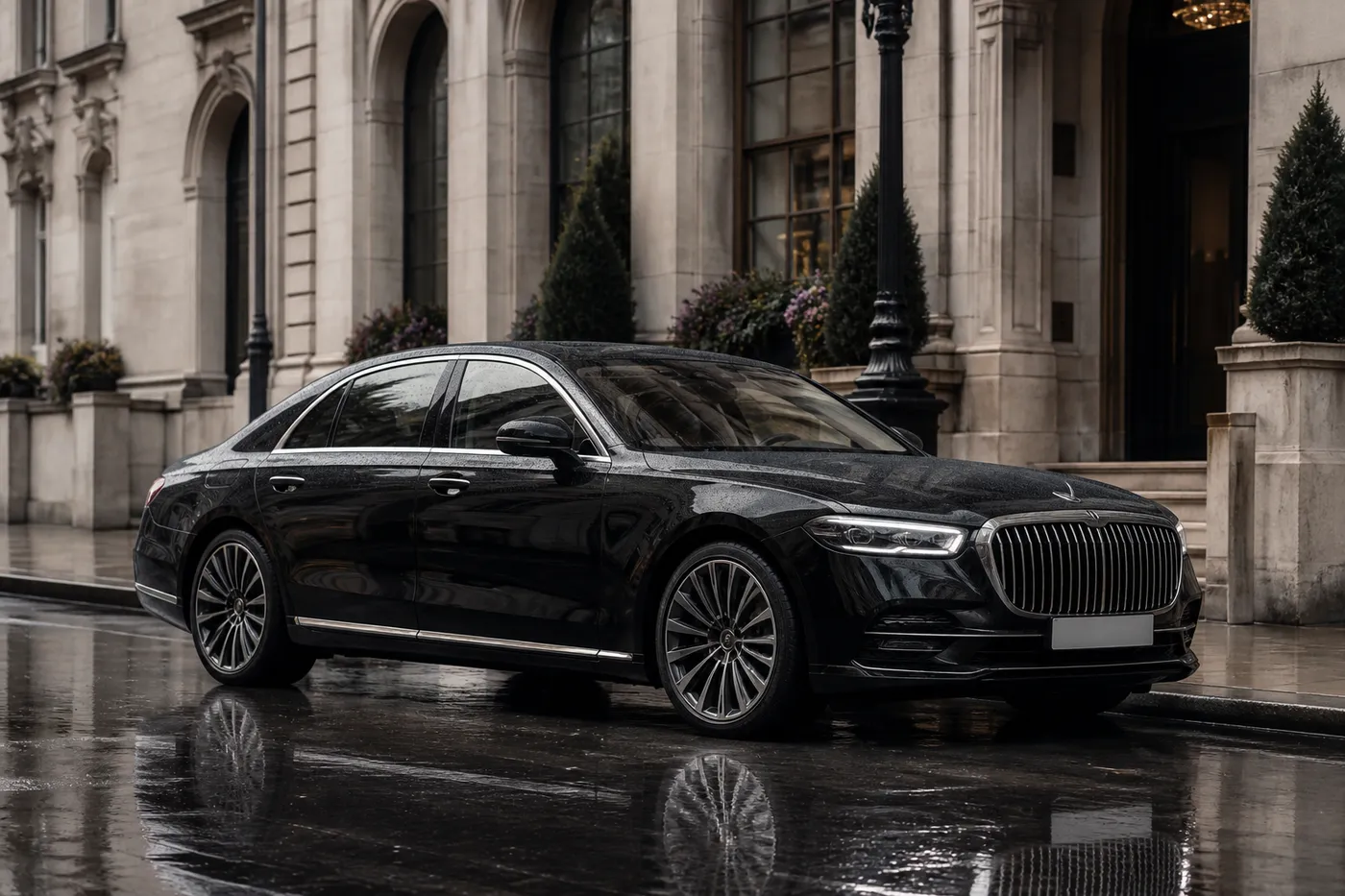
Where cabin crew are part of the movement, there may also be items belonging to the aircraft that travel with them. None of this is a problem provided the vehicle is sized for it. Telling us the crew number and whether anything unusual is travelling is enough; a saloon is often perfectly adequate, and occasionally something larger is the obvious answer.
- Overnight bags for each crew member
- Flight bags and documentation cases
- Uniform carriers, which need hanging space rather than boot space
- Aircraft items being returned to base or to a supplier
- Catering equipment on some movements
- Anything that must remain accessible during the journey
Discretion as a working requirement
Crew conversations in a car are frequently operational and occasionally sensitive: who was on board, where the aircraft goes next, what went wrong with a system. A professional chauffeur does not join those conversations, repeat them, or indicate any interest in them. That is standard conduct rather than a special provision, but it is worth stating because crew are sometimes more exposed than passengers in this respect.
The same applies to identification. We do not discuss who has travelled, do not confirm movements to anyone who asks, and do not name clients in any context. Vehicles carry no branding. None of this is dramatic, and it is precisely the sort of quiet discipline that makes a flight department comfortable using the same supplier repeatedly rather than shopping around each time.
Short notice and repositioning work
A good proportion of crew movement is arranged at short notice, because a positioning flight is confirmed late, a duty day runs long or an aircraft goes technical somewhere inconvenient. We would rather take that call late than not at all. What we cannot do is guarantee a specific vehicle at very short notice, and we will say so plainly rather than promise and substitute.
Cars come from our own fleet and from a vetted network of professional chauffeur operators, which is what makes short-notice cover practical across the country rather than only around London. A crew stranded at a regional airfield at eleven at night is a solvable problem, and it is solved faster with a message describing the actual situation than with a formal booking request.
Booking crew alongside passengers
The tidiest arrangement is a single booking covering both, with the crew vehicle on its own timings and confirmed against the same flight details. That way a slot change reaches both cars at once, and nobody has to remember to update a second supplier. It also means one written quotation covering every vehicle, the timings and the terms rather than several.
What we ask for is straightforward and mostly comes from the flight department. Send it over WhatsApp or by email and we will come back with the arrangement in writing before anything is confirmed. If the duty day runs long, the crew chauffeur waits; a late finish is expected in this work rather than treated as an exception requiring a fresh conversation.
- Crew numbers, and whether flight deck and cabin travel together
- Hotel address, which is often not the passenger hotel
- Expected finishing time, with an honest range rather than a hope
- Pre-flight timing if crew go out ahead of the passengers
- Any standing requirement across a multi-day stay
- A flight department contact for changes at unsociable hours