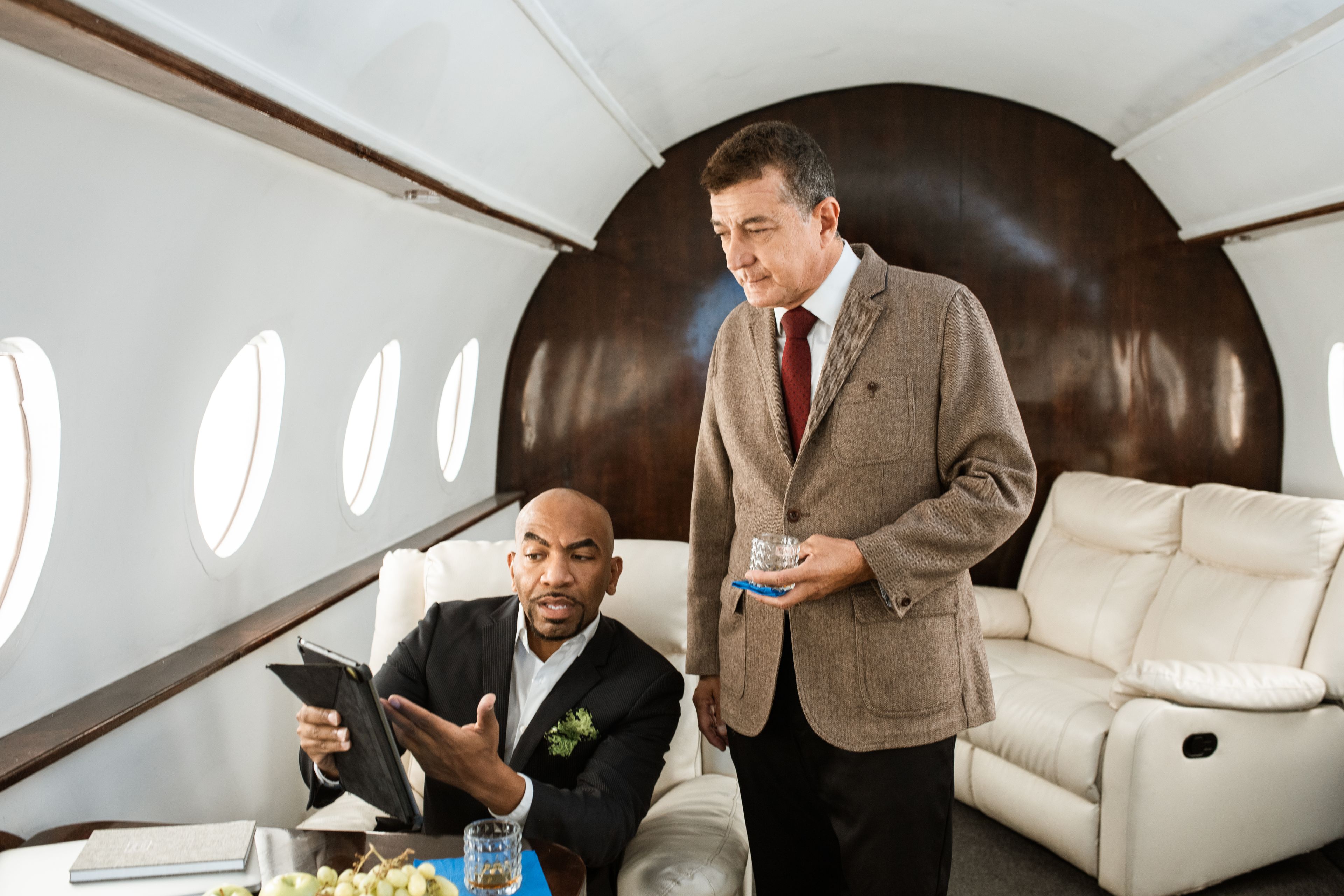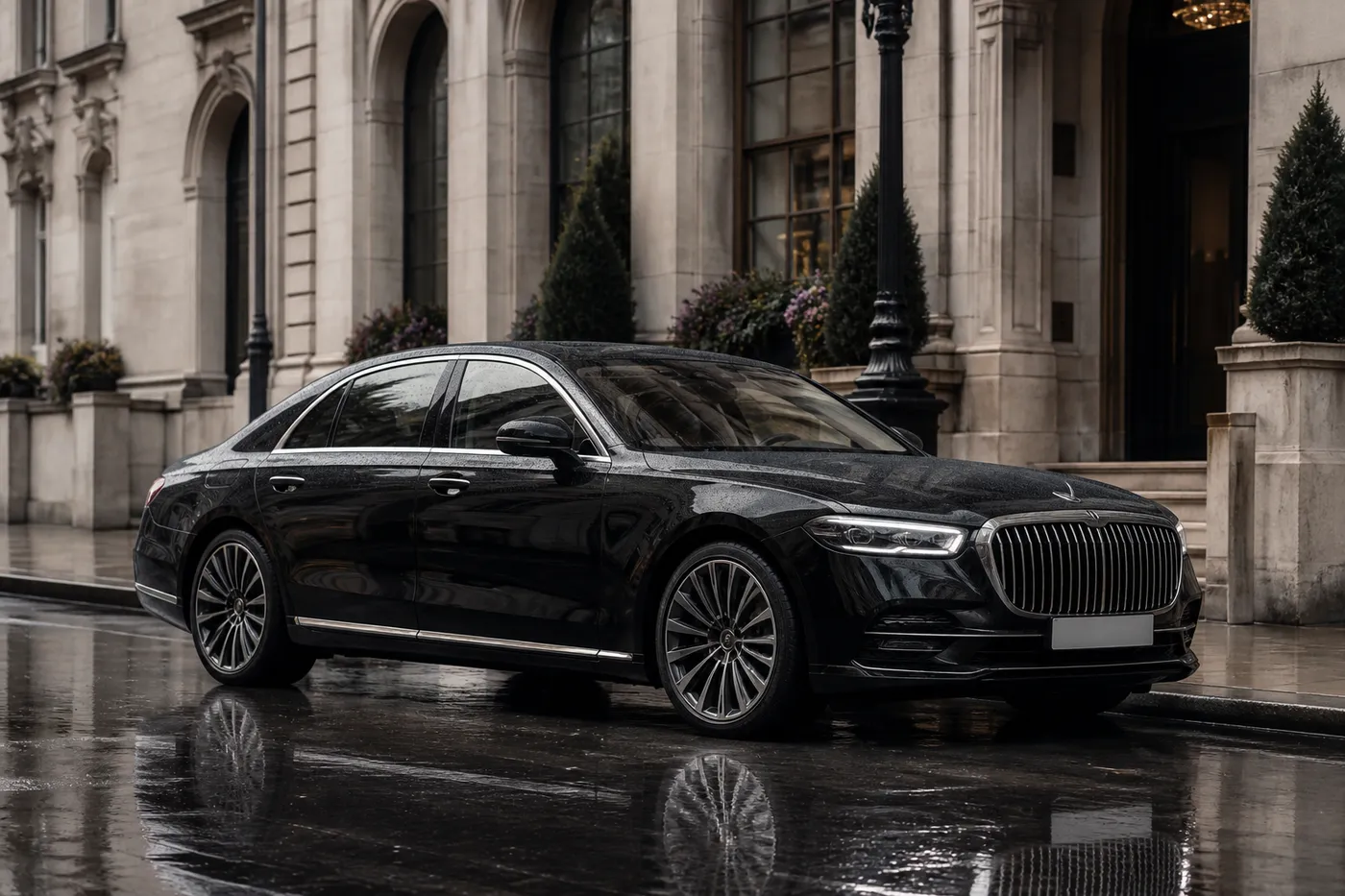






Every other private airfield around London asks you to spend an hour getting there. London City asks for fifteen minutes from the right postcode, and that inversion changes the nature of the problem completely. When a journey is short, a single blockage does not add ten per cent to it; it doubles it. The ground plan here is about variance rather than distance, and it rewards leaving from the correct side of the river.
This page is written for people arranging cars around a private flight from the Royal Docks. We are an independent chauffeur service with no connection to the airport, its terminal operators or any handling agent, and we work strictly to whatever access those parties allow. What we bring is a realistic view of east London traffic and the sense to leave before it is strictly necessary.
A short journey with a wide range
From a desk in the City or at Canary Wharf, the airport is close enough that the drive barely counts as a journey. From Mayfair or Belgravia it is a genuine crossing of London and behaves like one. The two experiences share an airport and almost nothing else, which is why a single published journey time for this airfield would be misleading whichever number was chosen.
What holds true in both cases is that the margin for error is proportionally small. If a run should take twenty minutes and the tunnel is closed, the recovery is not a matter of driving faster. We build the plan around the crossing rather than the mileage, choose a departure time that survives a bad one, and accept a quarter of an hour of waiting as the price of not gambling.
Collections from the office door
A large share of the work here starts at a building rather than a home. That is an easy arrangement to get right and a surprisingly easy one to get wrong, because tall office buildings often have several entrances and only one of them is somewhere a car can legitimately stop. Naming the street and the side entrance at the point of booking removes an irritating five minutes at exactly the wrong moment.
Where a departure follows a meeting that may overrun, tell us. The chauffeur can hold nearby rather than circling, and we would rather sit for twenty minutes than have you come down to an empty kerb. If the meeting overruns badly enough to threaten the slot, that is a conversation to have with your operator early rather than a problem to solve with the accelerator.
The Royal Docks road pattern
The airport sits among the docks with water on both sides, which means the road network around it is linear rather than a grid. There are few useful alternatives once you are committed to an approach, and diverting often means going back the way you came. Local knowledge here consists mainly of knowing which decision to take several miles earlier, before the options run out.
River crossings dominate anything starting south of the water and much of what starts in the centre. Approaches from the east are generally cleaner. From Essex and the M11 corridor the run is straightforward outside the peaks. We route around the known pinch points where the traffic warrants it and otherwise take the direct approach, because a clever detour that saves nothing costs confidence.
- Water on both sides means few genuine alternative routes nearby
- River crossings decide most journeys starting in the centre or south
- Approaches from the east and from Essex are usually the cleanest
- Diverting late often means retracing rather than going around
- Peak-hour flows through east London are directional and worth timing
- Weekend engineering works can close a crossing without much notice
Event traffic in the Royal Docks
The large exhibition centre a short distance from the airport is capable of reshaping traffic across the whole area for days at a time. On the opening morning of a major show, roads that are normally quiet carry a queue, and the effect reaches well beyond the immediate streets. It is entirely predictable if you know the calendar and completely baffling if you do not.
We check what is on in the area when we plan a Royal Docks journey, in the same way we would check a match at a stadium or a state occasion in the centre. If a show is running, the departure time moves earlier and we say why. This is the sort of detail that makes the difference between a transfer that feels effortless and one that feels lucky.
What the handler decides here
Private movements at London City are handled separately from the scheduled operation, and the arrangements for vehicles, including where they present and whether a chauffeur may step inside, belong to the operator handling your flight. We ask what applies, confirm it in writing before the day, and instruct the chauffeur to follow it precisely rather than to negotiate at a barrier with a passenger waiting.
There is no apron access, no airside driving and no escort through security on offer from us, because none of that is within our gift. Nor do we watch aircraft move. We plan around the time your operator gives you, keep a sensible buffer, and rely on a message from you or the crew when the schedule shifts. On a journey this short, that message is worth a great deal.
Timing a same-day return
The airport exists largely to make a European day trip practical, and the ground arrangement should support that rather than undermine it. A morning departure and an evening return are two quite different traffic problems on the same route, and treating them as one plan is the usual mistake. The outbound often runs against the flow; the inbound rarely does.
For that reason we quote and plan the two legs separately, even when they are booked together. Where a return time is uncertain, holding the same chauffeur for the day is often the calmer arrangement, and it removes the small anxiety of wondering whether a car will be there. Cars come from our own fleet and a vetted network of professional chauffeur operators, so continuity across a long day is straightforward to arrange.
- Treat the outbound and return as separate traffic problems
- Confirm the office or hotel entrance the car should use
- Say whether the return time is fixed or likely to move
- Consider holding one chauffeur across the whole day
- Check what is running at the nearby exhibition centre
- Give us a contact who can message when you are on the ground