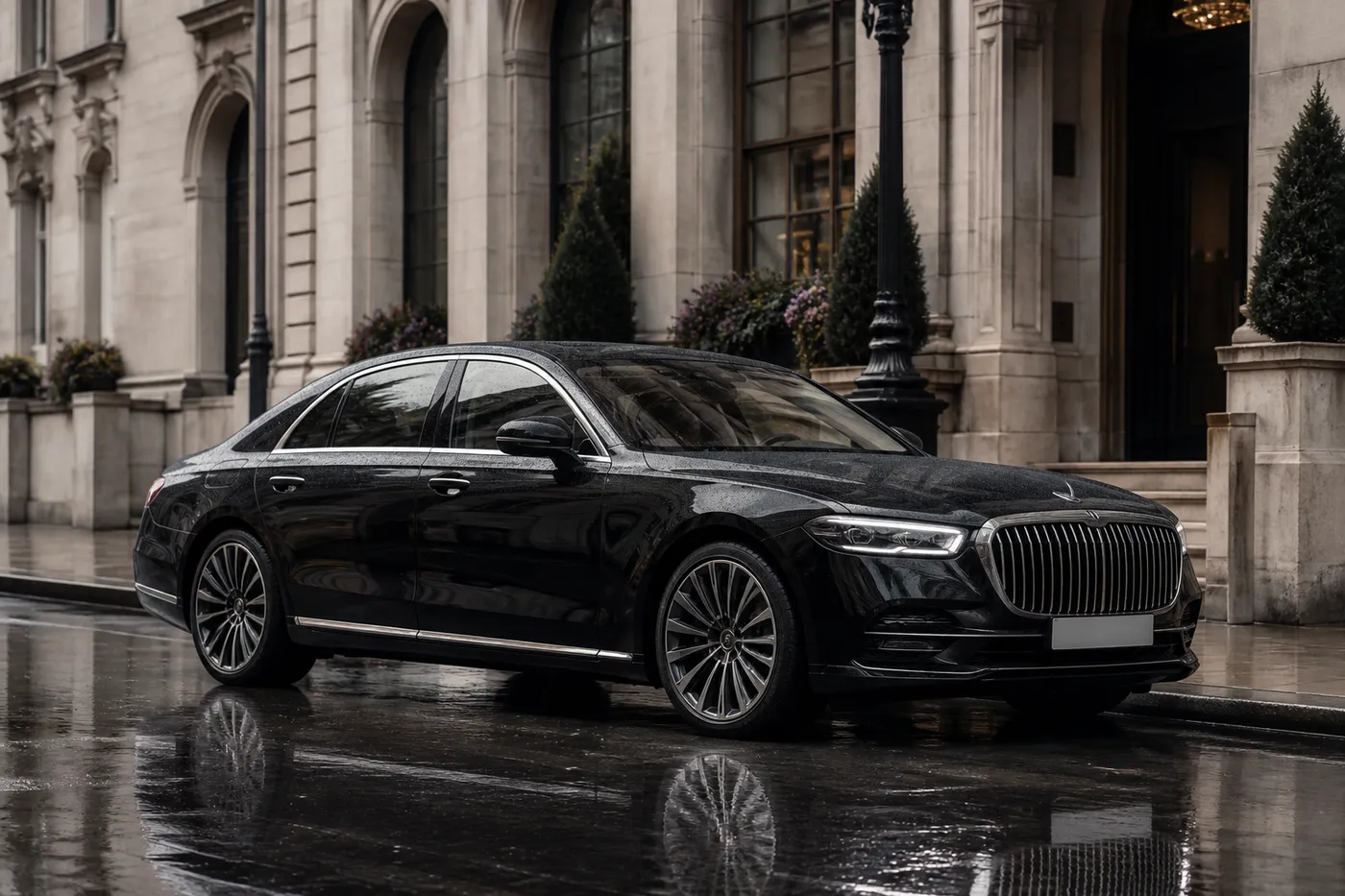

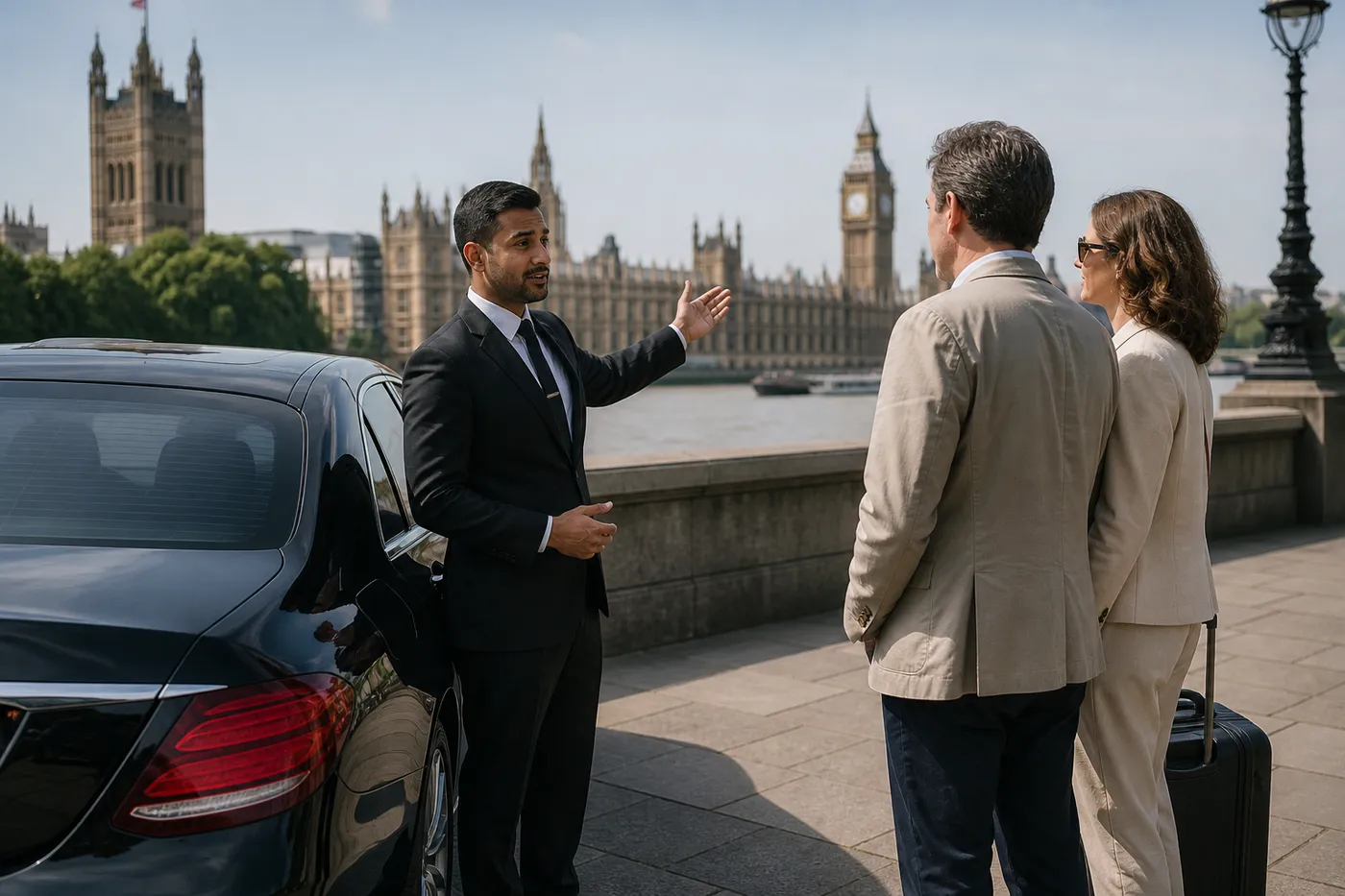



An arrival at a premiere or an awards evening is a piece of stage management, and the car is part of it for about eight seconds. Everything else about the night, which is to say the long wait either side, happens entirely out of view. Planning the evening means getting those eight seconds right and making the rest of it bearable for the people in the back.
The organisers control the arrival completely. They set the running order, the mark the car stops on, how long you have before the next vehicle is waved forward, and where the press are standing. Our part is putting the vehicle in the right place at the right moment and being somewhere sensible for the remainder of the night. Accreditation, invitations and passes are yours to arrange.
How an arrival is actually run
Most events of this kind operate an arrival window with a running order, and vehicles are held in a queue then released onto the carpet a few at a time. A marshal directs the car to a mark, the doors are opened, the guests step out and the vehicle moves on almost immediately. There is no lingering, and no opportunity to fetch a forgotten bag from the boot.
The consequences are practical rather than glamorous. Everything you want with you has to be in the cabin rather than the boot before you join the queue. Any adjustment to a dress or a tie happens before the mark, not on it. And whoever opens the door needs to know which side the photographers are standing, which the organisers confirm rather than anybody guessing.
Timings for that window come from the event and are frequently issued close to the day. Ask for them, send them to us, and the departure is built backwards from the moment you are expected in the queue rather than the moment you are expected on the carpet. Those are two different times, and the gap between them can be substantial.
The queue before the carpet
The queue is where most of the evening's waiting happens, and it runs longer than anybody expects at the front of a busy premiere. Cars edge forward over a period that can stretch to half an hour or more, and once you are in it there is no getting out. Arriving at the back of the queue late is not the same as arriving late; it can mean missing the window entirely.
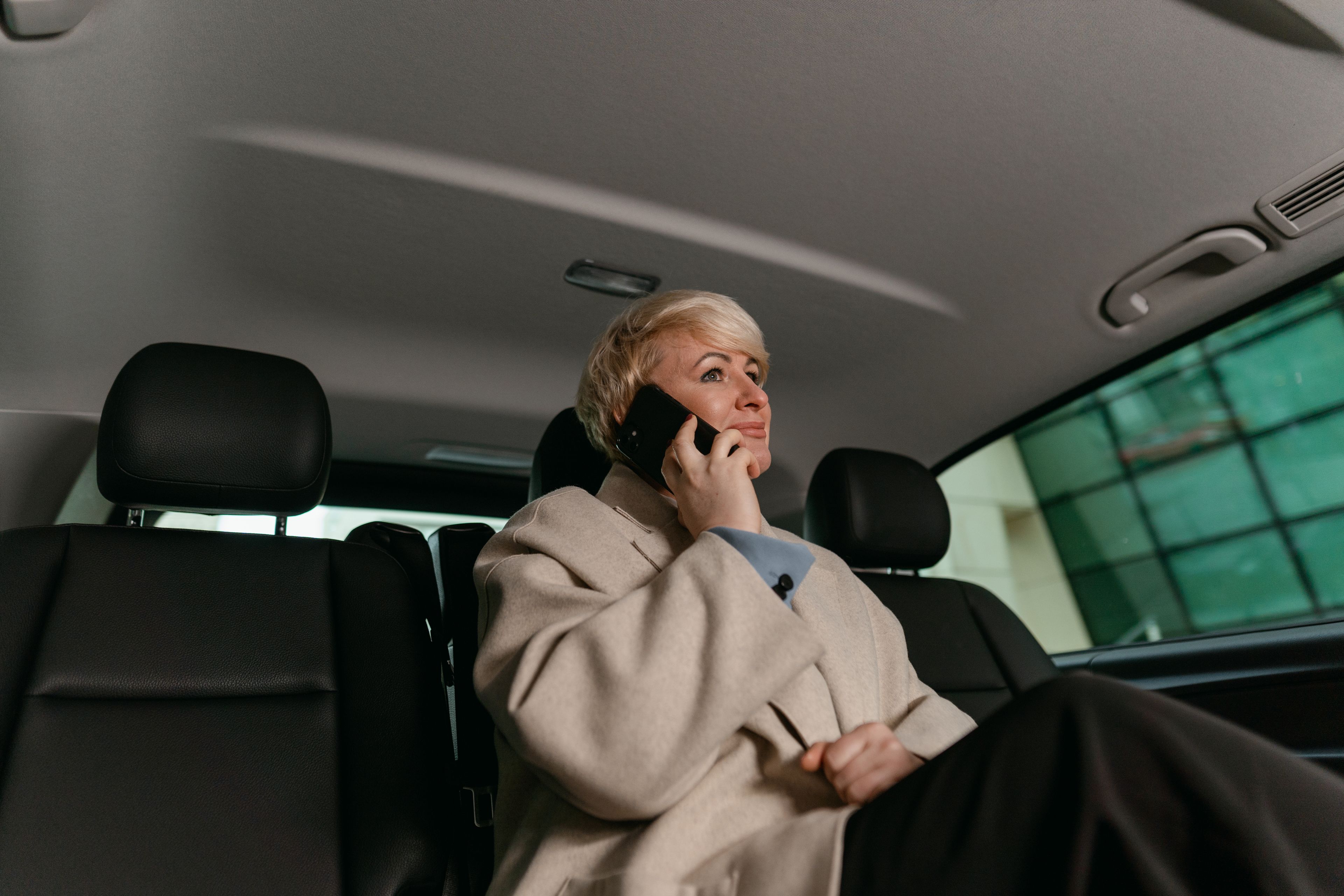
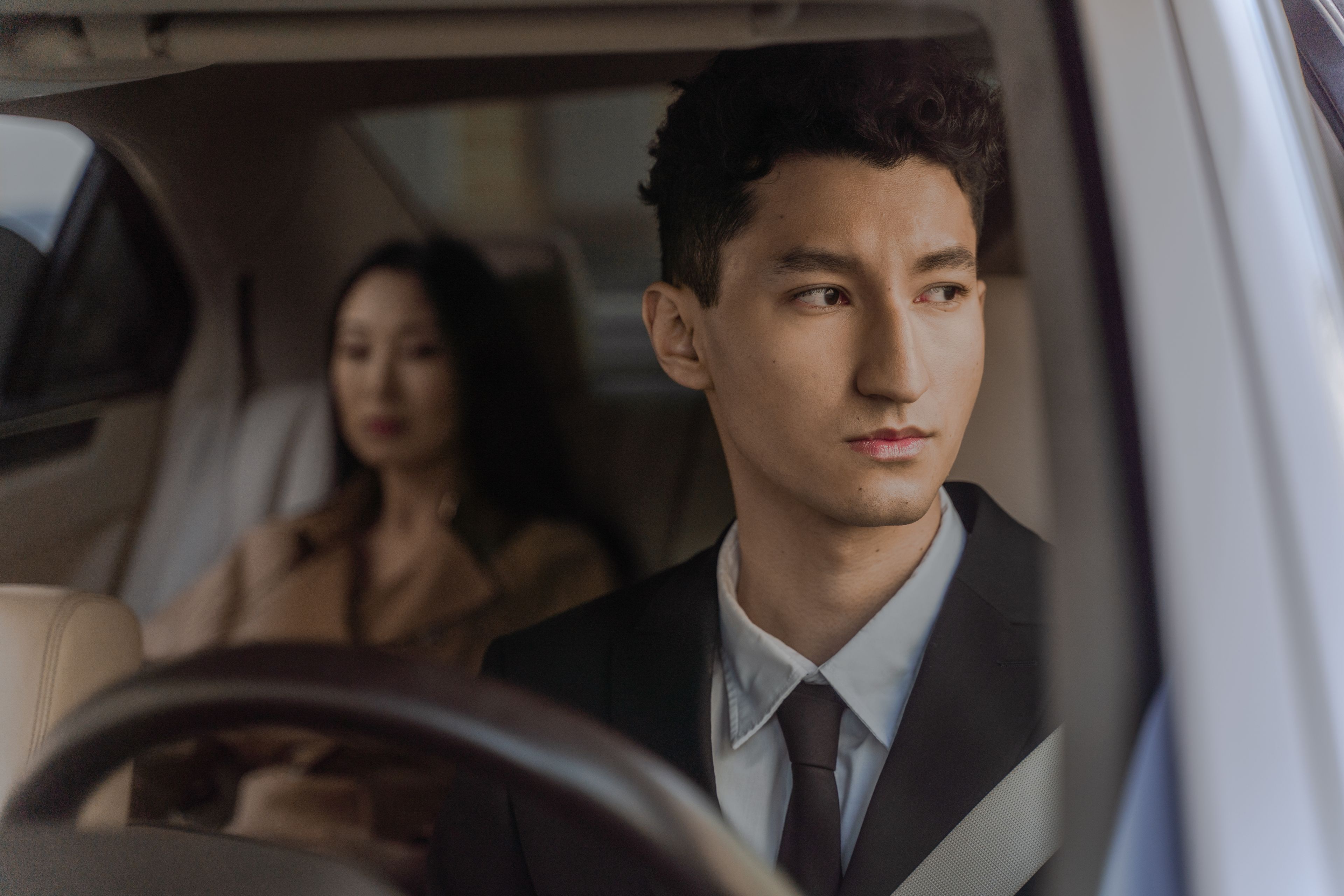
Comfort during that period matters more than it sounds. A cabin at the right temperature, water that will not be spilled, and a chauffeur who understands that the passengers are working rather than travelling. Anything that needs doing to hair, a jacket or a hem happens here, in the last quiet ten minutes anybody is going to get.
- A confirmed arrival window and running order from the organisers
- Which side of the vehicle the photographers are standing
- Everything needed on the carpet already in the cabin
- A stop before the queue if anyone wants to change or check
- A realistic wait once you have joined the line
- One person who can speak to the marshals if asked

Dressing, and what the car must accommodate
Long gowns, structured shoulders, trains and anything beaded travel badly in a low cabin with a raked roofline. The problem is not the sitting but the getting out, which is done in front of a camera and cannot be rehearsed. A high door aperture and a flat, generous seat base make the difference between stepping out and climbing out.
Say what is being worn when you book, in whatever detail you are comfortable giving. It changes the vehicle recommendation more than the number of passengers does, and it is the single thing most often left unmentioned. Cars come from our own fleet and a vetted network of professional chauffeur operators, so model and specification depend on availability and are confirmed to you in writing beforehand.
Where the vehicle goes afterwards
Once the car has left the mark it has to go somewhere, and the streets around a premiere are usually closed, coned or full of other vehicles doing exactly the same thing. Your chauffeur takes it to a holding point agreed in advance and waits there, out of the way, rather than circling a cordon for three hours to no purpose.
That holding point matters at the end of the night, because it determines how quickly the car can reach you. Somewhere within a few minutes of an exit that is not the main one is ideal. Your chauffeur identifies it on the evening once the actual closures are visible, and confirms it to whoever is holding the arrangement for your party.
Teams, second cars and everyone else
Very often the person on the carpet is not travelling alone. A publicist, an assistant, a stylist with a repair kit and a second pair of shoes all need to be at the venue, and none of them wants to arrive through the front. A second vehicle running to a different entrance solves that neatly and keeps the first car uncluttered.
Where two or three cars are involved, keep them on one set of instructions and one point of contact. It is the same discipline that makes any group arrangement work, and it matters more here because the timings are set by somebody else entirely and cannot be renegotiated on the night.
Leaving quietly
The exit receives less thought than the arrival and causes more difficulty. Everybody leaves at once, the road layout is still restricted, and the crowd outside has not gone home. Walking out of a main entrance to look for a car is precisely the situation the evening was arranged to avoid in the first place.
Agree the exit and the collection point before you go in, with an alternative in case the first is blocked. Treat the departure as a window, message when you begin moving, and let the car come to you rather than the other way round. Everything is arranged over WhatsApp or email, with the timings confirmed in writing before the night.
- An agreed exit, and a second one in reserve
- A collection point away from the main frontage
- A message when you start moving rather than a fixed time
- Somewhere for the car to wait within a few minutes
- A plan for anyone leaving separately or later