



Ground transport is the part of an event that nobody notices when it works and everybody discusses when it does not. Delegates judge the whole programme by the first ten minutes and the last ten. The good news is that almost all of it is solvable on a spreadsheet weeks ahead, provided somebody owns the detail and the venue has been asked the right questions.
This checklist is written for the person coordinating rather than the person travelling. It covers building a manifest, spreading arrivals so a driveway does not seize, looking after the small number of guests who need particular care, and closing the loop afterwards so finance receives something they can reconcile. It applies equally to a board dinner and a three-day conference; only the scale changes.
Build the manifest before anything else
Everything downstream depends on a clean list. One row per passenger movement, not per person: someone arriving on Tuesday and leaving on Thursday is two rows. Each row needs a name, a time, an origin, a destination and a contact. Half-finished manifests are the single biggest cause of trouble on event days, and they are always fixable a fortnight out.
Collect the information from delegates in one structured request rather than in a thread of replies. People answer forms; they do not reliably answer questions buried in paragraph three of an email. Once you have the list, send it to us in one piece and we will come back with the vehicle plan, the chauffeur allocation and anything that does not add up.
- Passenger name as it should appear on any meeting board
- Date, time and direction of each movement
- Origin and destination in full, with terminal or building entrance
- Luggage volume, especially for anyone arriving straight from a flight
- A mobile contact reachable by message on the day
- Cost centre or department, if transport is recharged internally
Spread the arrivals
Fifty delegates invited for the same hour will arrive within the same fifteen minutes, and most venue driveways can absorb perhaps three cars at once. The result is a queue on the approach road and a set of guests who begin the day irritated. Staggering invitations by even twenty minutes across arrival groups removes the problem almost entirely, at no real cost to anyone's schedule.
Departures are harder, because everybody leaves when the last speech ends. The workable answer is a marshalled rank with a named person calling cars forward in order, rather than sixty people trying to identify their own vehicle in the dark. Agree that arrangement with the venue in advance and it is a non-event; leave it to chance and it defines the evening.
- Arrival windows staggered across delegate groups rather than one start time
- A holding area where cars can wait off the main approach
- The venue's stated limit on vehicles at the entrance at one time
- A marshalled departure rank with someone calling cars forward
- A quieter set-down point for anyone who would rather avoid the main door
- Contingency for the session overrunning, which it usually will

Principals, speakers and guests needing care
Most delegates need a car and a clear instruction. A smaller number need more: a keynote speaker arriving between two other commitments, a board member who dislikes waiting in public, a guest travelling with a mobility aid. Identify that group early and plan their movements individually rather than folding them into the general schedule. It is usually a handful of people, and they are the ones most likely to remember.
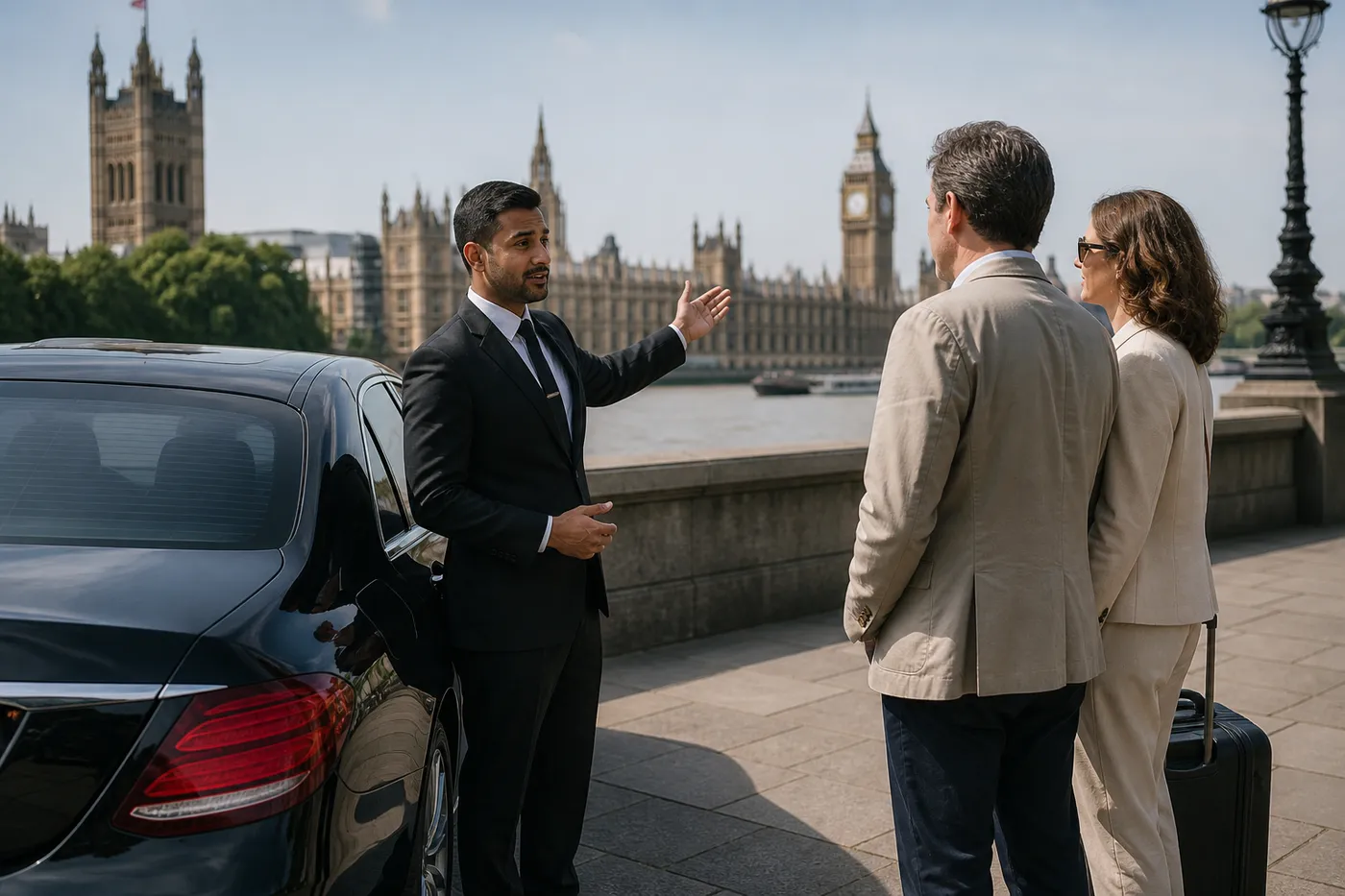
For those movements, dedicate a vehicle and a chauffeur rather than sharing across the wider pool. The car waits, so there is no gap between the end of one commitment and the start of the next. Brief the chauffeur on the building, the entrance and the person meeting them, so the guest is handed over rather than pointed in a direction and left to find their way.
- A named list of guests who need a dedicated vehicle rather than the pool
- Green room or side entrance access for speakers arriving close to their slot
- Wheelchair, walking aid or step height requirements confirmed in writing
- Who meets each principal at the door and where they take them
- A quiet route out at the end of the evening
Where cars go and who directs them
Venues rarely volunteer their traffic arrangements, so ask. Most have a preferred set-down point that is not the front door, a service entrance for luggage, a parking area for waiting vehicles and a rule about how long anything may stand at the entrance. Getting these in writing from the venue's own operations team saves a great deal of improvisation on the night.
Then decide who is directing traffic. On smaller events the organiser can do it from a phone. Above roughly twenty vehicles it needs a person outside with a list, because nobody inside can see what is happening at the gate. That role is worth assigning by name in the run sheet. It is the least glamorous job at any event and the most useful.
- Confirmed set-down and pick-up points, with a map or photograph
- The vehicle waiting area, and whether it has a height barrier
- Access codes, gate contacts or security passes needed by drivers
- The maximum time a vehicle may stand at the entrance
- The named person marshalling vehicles, and how to reach them
- A fallback plan if the primary entrance is closed on the day
Communication on the day
One channel, one owner. Transport queries scattered across three inboxes and a group chat will not be answered quickly enough to matter. Nominate a single coordinator on your side, agree with us how they reach the chauffeurs, and tell delegates to use that route rather than contacting drivers individually with changes. Everything we arrange runs through WhatsApp and email, so the thread stays in one readable place.
Give delegates something short and useful the day before: their collection time, the vehicle description, where to stand and how to message if plans change. Four lines is enough. Most of the questions asked on an event morning are answered by information the organiser already has but has not yet shared. Sending it out early removes most of the noise before it starts.