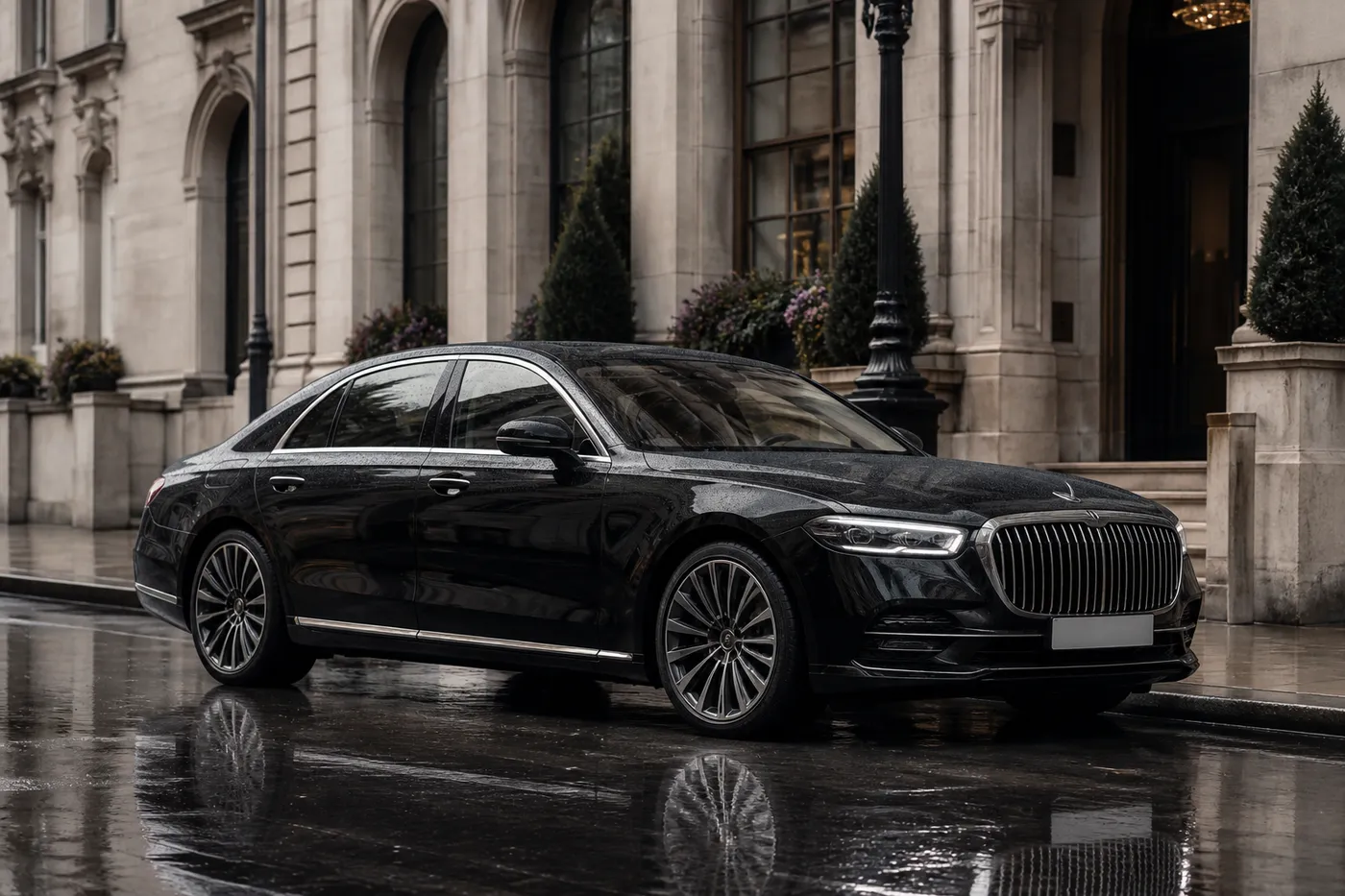


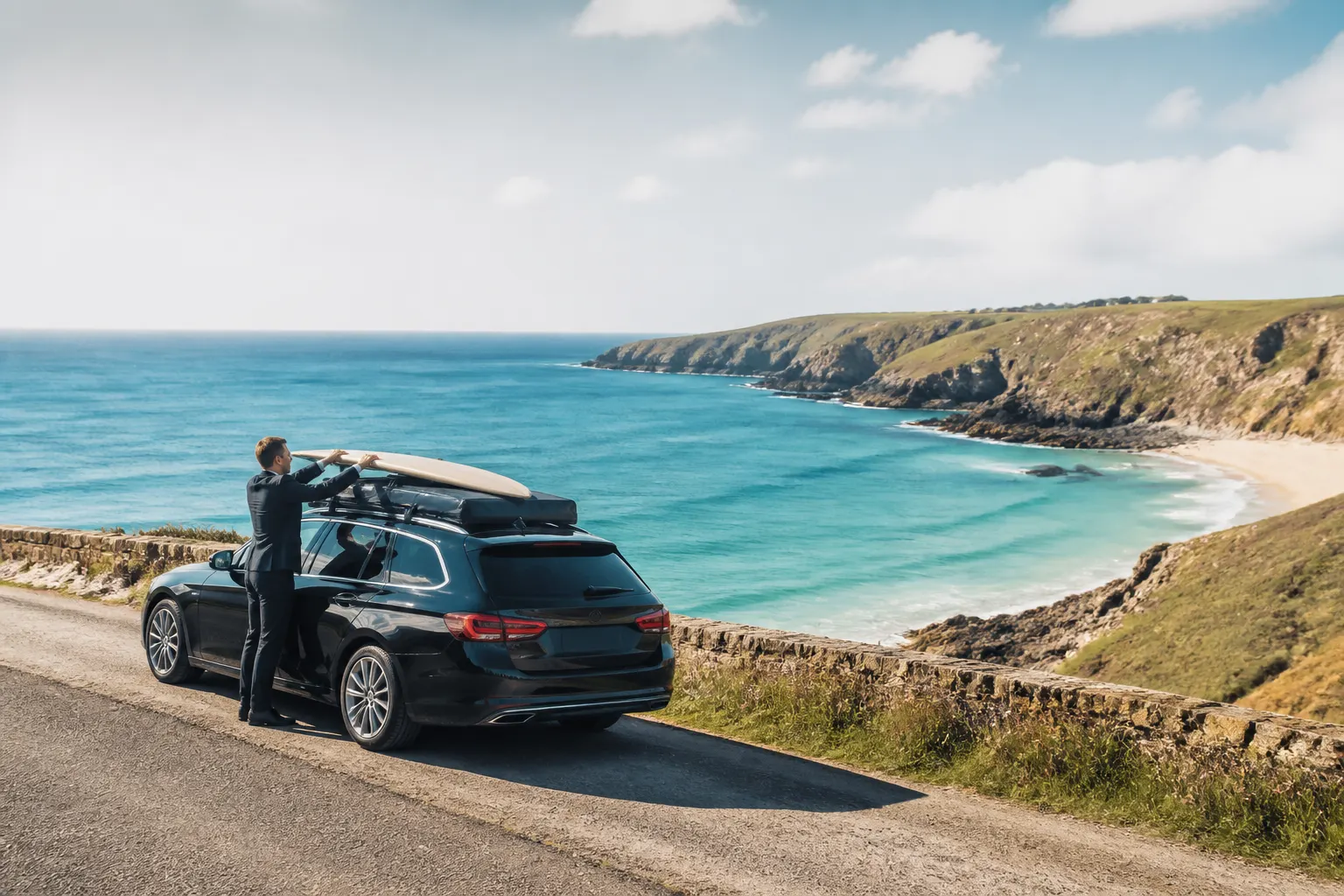



The i7 gave chauffeur fleets something they did not previously have: a full-size electric limousine that behaves like a flagship rather than like a statement. In the back it is remarkably quiet, which is most of the argument, and in a city it passes through emissions zones without anybody having to think about it. What it does to the economics of a working day is the more interesting question.
Electric cars do not simply substitute electricity for fuel. They redistribute where the cost sits, and in chauffeur work that redistribution lands on the one thing that matters most, which is the chauffeur's time. Understanding this explains why an i7 suits some days beautifully and makes others harder work, and it lets you judge in advance which of yours is which.
An electric flagship in professional service
Bought new, an i7 sits at the top of its maker's range, and the acquisition and insurance costs follow accordingly. The residual value picture for premium electric saloons has been considerably less settled than for their combustion equivalents, and operators price with that uncertainty in mind. Battery health across a high-mileage professional life is still a live question rather than a solved one, and honest operators account for it.
Against that, the daily energy cost of moving the car is lower and servicing is simpler: no oil, no exhaust, far less brake wear thanks to regeneration. Those savings are genuine. They are also smaller than most people expect relative to the fixed cost of putting a flagship and a professional chauffeur on the road for a day, which is where the real money has always sat.
Charging is time, and time is the unit
This is the point that changes everything else. A combustion car refuels in the gaps between jobs. An electric one, on a long day, needs a meaningful stop at a charger that is working, available and roughly on the route. During that stop the chauffeur is being paid and the car is earning nothing, and that is a real cost belonging to your booking rather than to somebody else's.
It follows that i7 days have a shape. City work, where the car returns to a base and charges overnight, costs the operator almost nothing in lost time. A long cross-country day with waiting at both ends is a different exercise, requiring a planned charging stop and a chauffeur who knows which sites are dependable. The car will do it comfortably; the day simply has to be designed for it.
The practical advice is to describe the whole day rather than only the first leg you have in mind. If we know the car finishes near a reliable charger or returns to base, the arrangement is straightforward. If it ends at a rural house at eleven at night with nothing for miles around, that is worth establishing before the booking rather than discovering it afterwards.

Clean air zones and city-day economics
Britain's cities have been steadily adding emissions-based charging, and the rules differ between London, Birmingham, Bristol, Bath, Glasgow and the rest of them. A zero-emission car answers all of these at once, which removes a whole category of daily charge from a city itinerary and removes the risk of a boundary being crossed inadvertently by a driver unfamiliar with where it actually runs.
On a day spent moving between meetings inside a charged zone, this is a genuine advantage and one of the clearest cases for choosing an i7. On a day spent almost entirely on motorways it is worth nothing at all. The car is at its strongest exactly where cities are strictest, which is a neat alignment rather than a coincidence, and it is the reason most i7 work is urban.
- Dense city days with several stops inside a charging zone
- Corporate travel where emissions reporting forms part of the brief
- Evening events where the near-silent cabin is genuinely noticeable
- Short repeated legs with the car returning to base between them
- Journeys where a quiet arrival matters more than luggage volume
Scarcity, and who actually runs one
Very few operators keep an electric flagship, and those that do keep one or two rather than a row of them. That makes the i7 among the harder cars in any range to secure at short notice, particularly outside London, and it means a specific request may have to be met from considerably further away than the equivalent request for a combustion saloon.
Model, colour and specification are subject to availability and are therefore confirmed at booking rather than promised in advance. We arrange these cars through our own fleet and a vetted network of professional chauffeur operators, and where an i7 genuinely cannot be sourced for your date we will say so directly and propose the closest sensible alternative instead of substituting something else without telling you.
Where an i7 is the wrong choice
Luggage is the first honest limit. It is a saloon, with a saloon's boot, and a family of four heading to an airport with full-size cases will be better served elsewhere however much they like the idea of arriving electrically. The second is a long multi-stop rural day, where charging infrastructure thins out and the plan begins to depend on a single site being free when you reach it.
The third is anywhere the arrangement is genuinely price-sensitive. If the priority is a competent, comfortable, unremarkable journey between two addresses, an executive saloon does that job for less and there is nothing wrong with choosing it. The i7 earns its place when the silence, the environmental position or the impression made on arrival is part of what you are actually buying.
- Four passengers with full-size suitcases: choose an MPV
- Long rural days with unreliable charging along the route
- Straightforward city transfers where budget leads the decision
- Very short-notice bookings outside the major cities
- Days finishing late somewhere with no charging nearby
Booking an i7 sensibly
Give notice, describe the whole day including where it ends, and say plainly whether the electric specification is essential or merely preferred. That distinction is genuinely useful to us: if it is essential we will search harder and wider; if it is a preference we can offer a strong alternative the moment availability tightens, rather than leaving you without a car while we look.
As with every vehicle in the range, there is no published figure and each journey is quoted on its own facts in writing. Send the date, the timings, the addresses, the passenger and luggage count, and anything about the day that matters, by WhatsApp or email, and the quotation comes back with the vehicle and the terms set out before anything is confirmed.