



There are two kinds of appointment in a lawyer's diary: the ones that can be rearranged and the ones that cannot. A hearing listed for half past ten belongs firmly in the second category, and no amount of goodwill afterwards repairs the damage of arriving at eleven. That single fact shapes how the profession thinks about travel more than anything else, and it explains why so many firms hold a car rather than take their chances.
The second factor is quieter but adds up to more across a year. An hour spent driving is an hour lost; an hour spent being driven is an hour of reading, drafting or preparing a witness. For a practice that measures its day in six-minute units, the argument for a chauffeur on a long journey stops being about comfort and becomes a straightforward question of what that hour is worth.
Court mornings and immovable listings
Court travel has a particular quality: the destination is fixed, the time is fixed, and the consequences of lateness fall on somebody with no interest in your traffic. The Rolls Building, the Royal Courts of Justice and the regional civil justice centres all sit in places where parking is difficult and set-down is constrained, and counsel arriving hot and flustered is not a good beginning to a day of advocacy.
The sensible arrangement is an earlier departure than feels necessary, a set-down point agreed in advance rather than improvised, and a chauffeur who waits nearby rather than disappearing. Hearings finish unpredictably. A car that can be at the door within a few minutes of a message is worth considerably more than one summoned from somewhere else in the city while a client stands on the pavement in the rain.
For multi-day trials, keeping the same vehicle and chauffeur across the run turns a daily logistical question into a routine. The boot becomes where the bundles live overnight, the route is known, and nobody spends the morning explaining anything to anyone.
Bundles, cases and the boot
Legal travel involves more physical material than almost any comparable profession. Lever-arch files, trolley cases, document boxes and the occasional exhibit all have to arrive with the people. This is the single most common cause of the wrong vehicle turning up: a booking made for three passengers duly arrives for three passengers, and is then asked to swallow a wheeled case each and six boxes of disclosure.
The fix is dull and effective. Count the boxes as well as the people when you book. A saloon takes a modest amount; an estate or MPV takes a great deal more and lets material travel upright rather than stacked. If a trolley needs to come out at the far end and be wheeled into a building, say so, because it changes where the chauffeur positions the car and whether he needs to be out and ready before the doors open.
Client meetings and the arrival
Professional services firms sell judgement, and clients read the surrounding signals whether or not they mean to. Collecting a client from a hotel in a clean, unbranded car with a chauffeur who knows their name and needs no directions is a small courtesy that sets a tone before anyone has said anything substantive. It is noticed most reliably when it is absent.
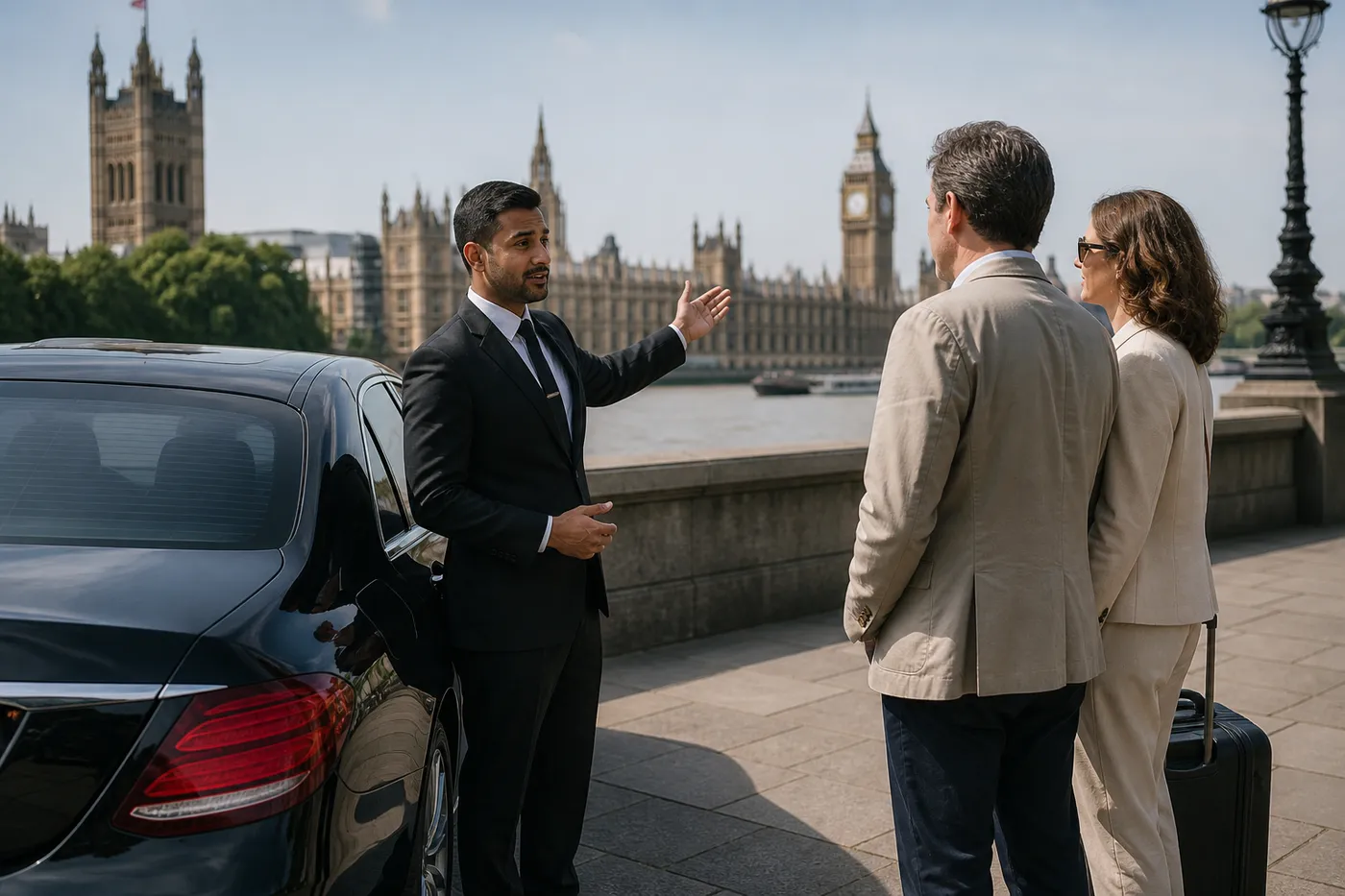
For overseas clients arriving for a completion, a mediation or a due diligence week, arranging the ground transport centrally removes a whole category of small anxieties. They do not have to work out how British taxis behave, whether their card will be accepted, or which entrance of a Holborn office block they should be walking towards. A named chauffeur meeting them on arrival, and again each morning, turns an unfamiliar city into a manageable one.
Working properly in the car
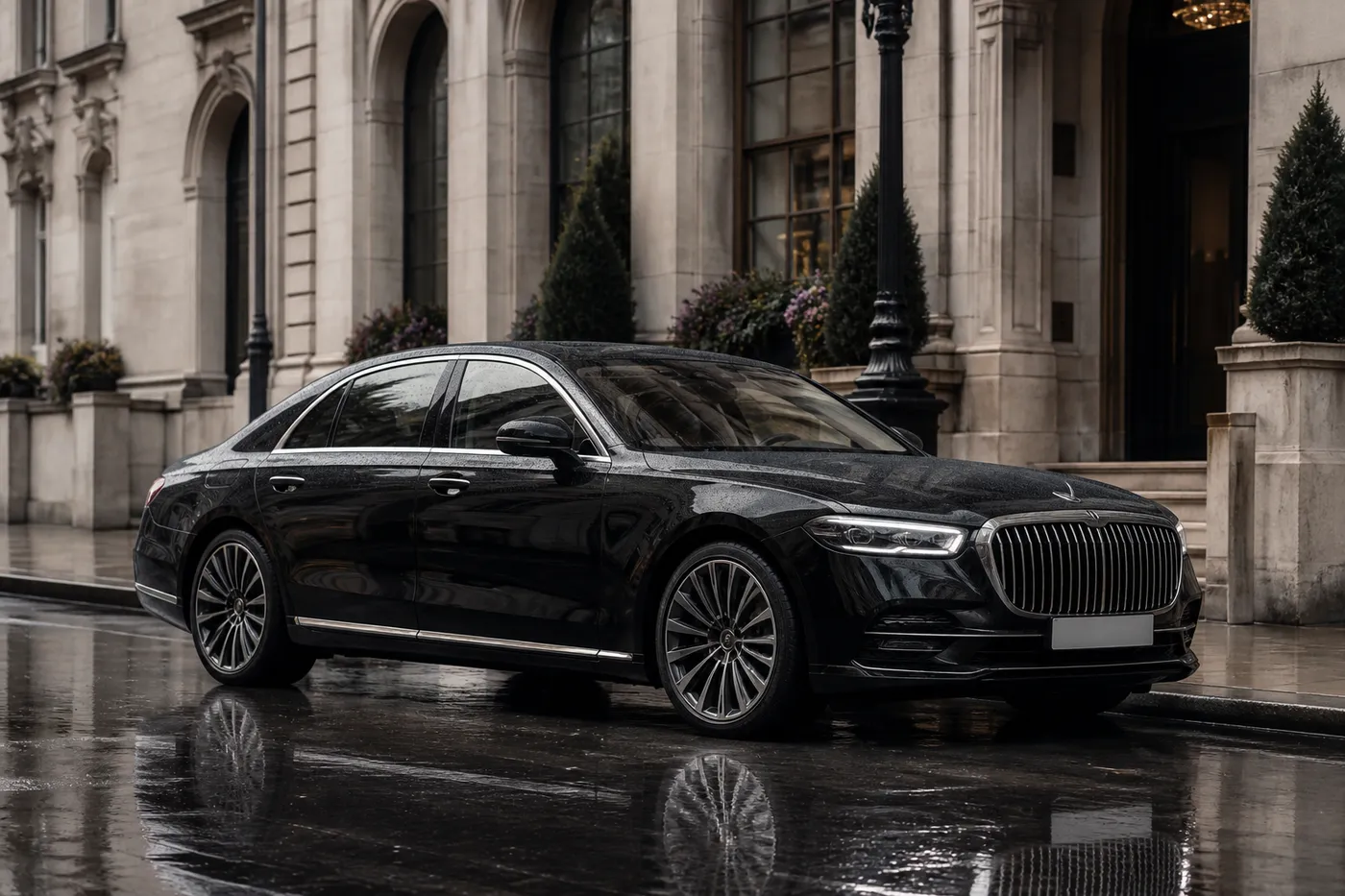
Reading in a moving vehicle is a skill and a tolerance, and it depends heavily on the car. Firm suspension and a busy ride make paperwork unpleasant within twenty minutes. Flagship saloons and the larger MPVs are noticeably better, with rear reading lights, a stable platform and enough space to open a file without folding it in half. If the journey exists so somebody can work, say so at the point of booking and the vehicle recommendation changes.
The other half is behaviour. A chauffeur working with legal clients does not make conversation with someone who is reading, does not take a scenic route to be helpful, and does not react to a phone call that has clearly become sensitive. Confidential material is discussed in cars constantly. The professional response is to be uninterested in it at the time and to say nothing about it afterwards to anybody at all.
Regional circuits and the long day
Much professional services work is not London-based at all. A partner may have a client in Birmingham, a site in Warwickshire and a hearing in Manchester across two days, and the rail connections between the second and third of those are poor enough to make the car the obvious answer. Cross-country journeys, particularly anything not running directly into or out of London, are where road travel quietly wins on both time and usefulness.
For genuinely long days, plan the driving hours rather than assuming them. A chauffeur is subject to fatigue like anyone else, and a day involving several hundred miles plus long waiting periods may be better served by a second chauffeur, an overnight stay or a revised itinerary. We would far rather raise that when the booking is made than have somebody discover it at nine in the evening on the M6.
Setting up firm-wide arrangements
Most firms begin with individual bookings made by secretaries and assistants, and at some point somebody notices the same journeys being arranged five different ways. Consolidating onto a single supplier gives consistent standards, one point of contact and a single view of what is being spent and by whom, which is generally what finance and the practice managers actually want.
Bookings are made over WhatsApp or email, and every journey is quoted in writing before it is confirmed. Where a firm wants an account arrangement so individual fee earners can book without a separate quotation each time, that is straightforward to set up, and the terms of the arrangement are agreed and confirmed in writing when the account is opened.