





Financial and corporate travel uses the word constantly, and it means something quite specific: not a series of transfers but a held resource moving through a fixed itinerary that will almost certainly change during the day. That combination of fixed and fluid is what makes the arrangement distinctive.
This entry explains the origin, the shape of a typical day, and the information an operator needs to run one properly. It also covers the related uses of the word in other industries, which occasionally appear on the same itinerary and mean something different.
Where the term originates
Investor relations gave the word its current sense. Ahead of a listing or a major fundraising, a management team travels to meet institutional investors in their own offices, presenting the same material many times over across several days. Because the team goes to the money rather than the other way round, the travel becomes a serious logistical exercise.
The word has since spread well beyond finance. Sales teams run product roadshows, publishers run author tours, and agencies run press days on exactly the same pattern. What all versions share is a party moving continuously between appointments on a schedule too tight to absorb any wasted movement.
How a roadshow day is built
The itinerary usually arrives as a list of times and addresses with very little slack between them. The chauffeur's job is to make that list survive contact with the city, which means knowing where each building actually admits a car, where legal waiting exists nearby, and which pairs of appointments are genuinely achievable in the gap allowed.
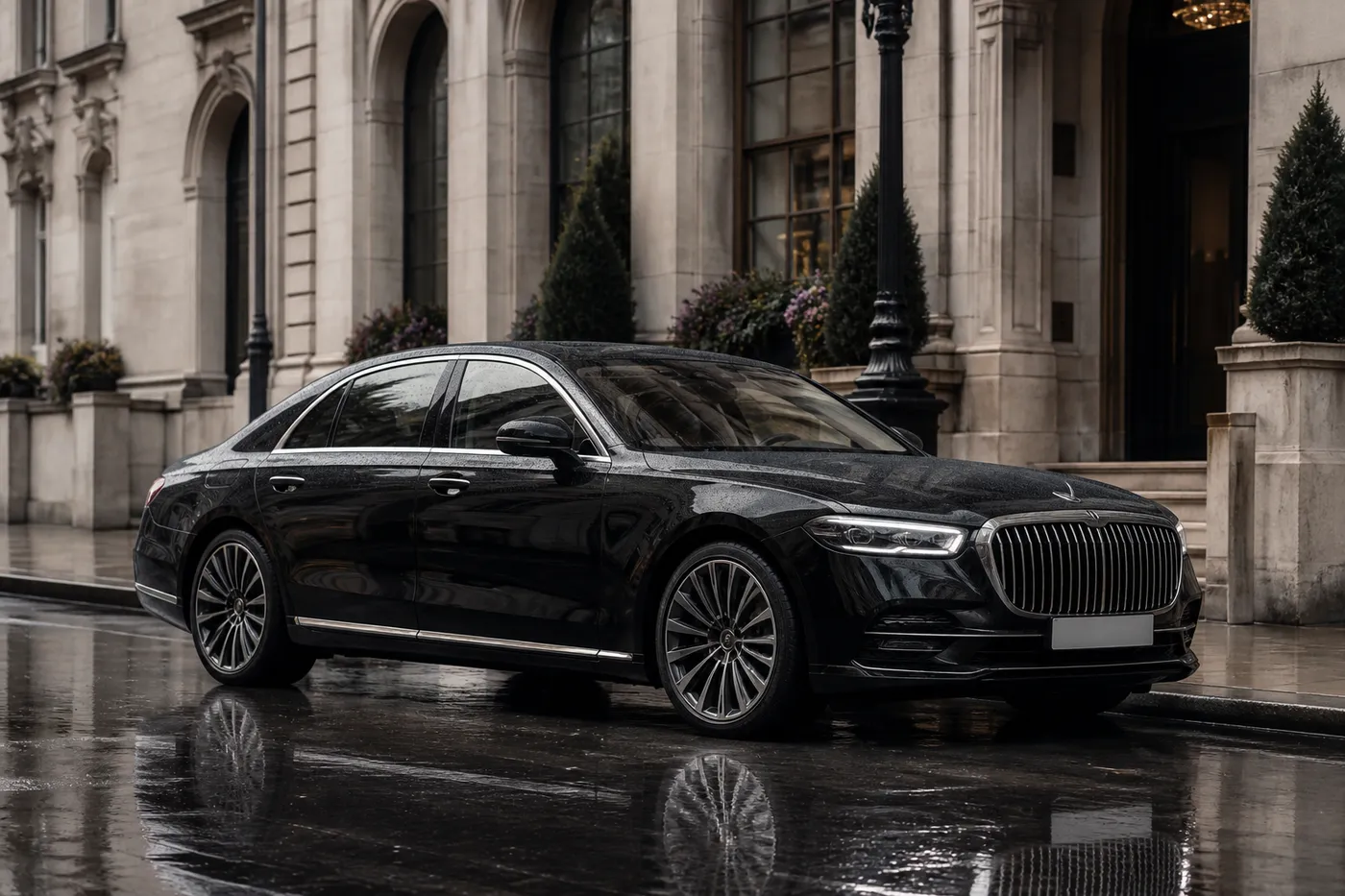
The car stays with the party for the duration. Papers, coats and equipment remain aboard between meetings, and the vehicle is at the door as each meeting breaks rather than summoned afterwards. Where a schedule runs across several days or cities, the same chauffeur usually continues, which removes the daily explanation of how the group works.

What we need to know in advance
A roadshow is planned rather than dispatched, and the planning happens before the first morning rather than during it. Sending the itinerary early gives us time to check the practical detail at each address, and to tell you honestly where the schedule is optimistic before anybody has committed to it.
- The full itinerary, with addresses rather than company names alone
- Passenger numbers, which may differ from meeting to meeting
- Which appointments are immovable and which can flex
- Luggage and equipment carried between stops
- Whether the party splits at any point and needs a second vehicle
- Hotel, station or airport bookends at each end of the day
Other meanings of the word
In the music industry a roadshow is a touring performance, which is a logistics job of an entirely different kind. In broadcasting it can mean a travelling programme, and in retail a series of promotional events at different venues. None of these describes what a chauffeur company means by the term.
Within corporate travel itself, roadshow is sometimes used loosely for any busy day of meetings. The distinction worth holding is that a roadshow keeps one car and chauffeur committed throughout, which is what allows the schedule to compress. A day of separate transfers between the same addresses is a different, and slower, arrangement.