
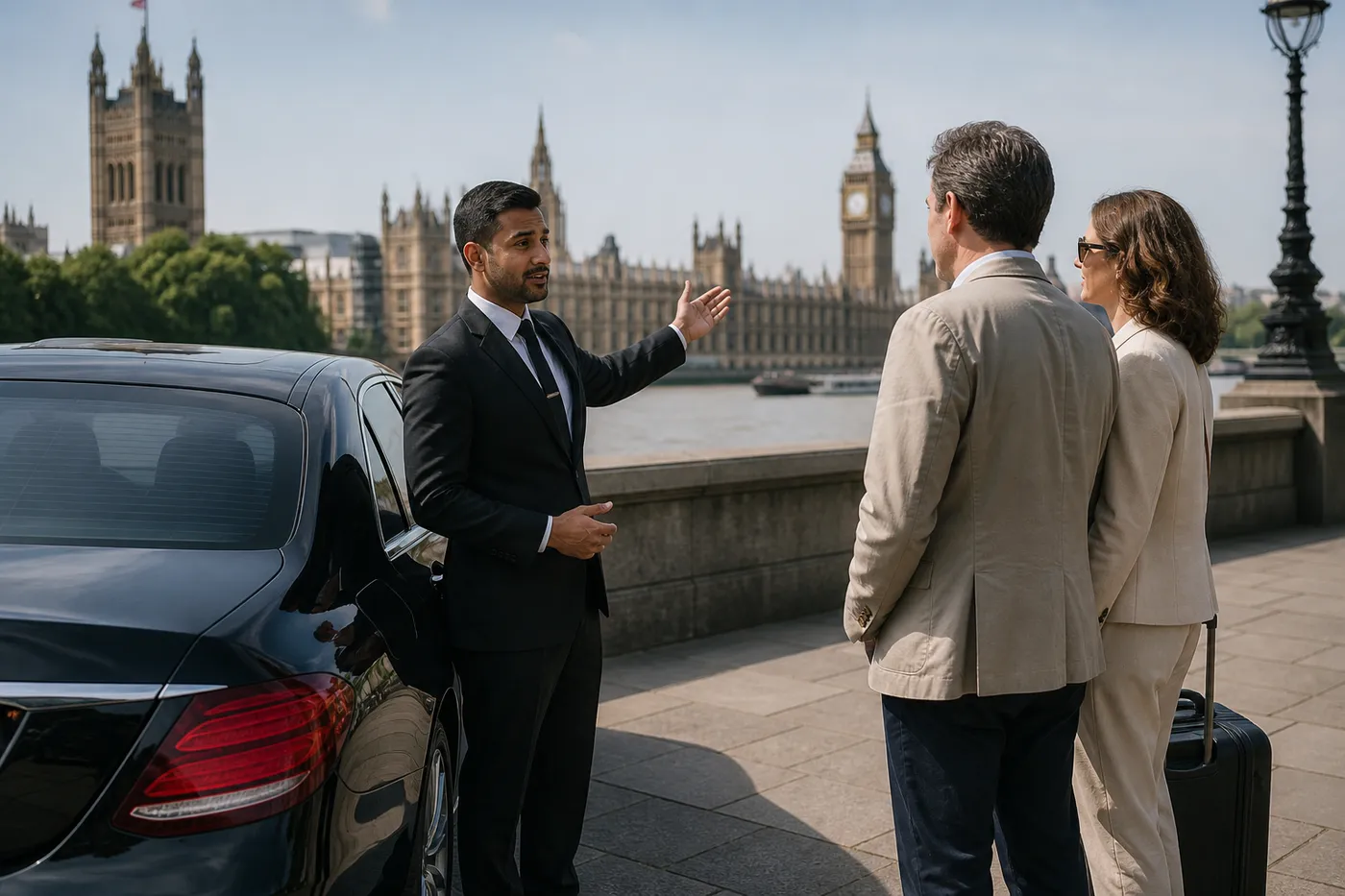



The phrase appears in enquiries more often than the requirement genuinely exists, which is understandable - it sounds like a superior grade of chauffeur. It is not. It is a different profession that happens to involve a steering wheel, drawn from a security background rather than a hospitality one, and specified against a risk assessment rather than a preference for comfort.
Understanding the distinction saves time and money in both directions. A client with a real protective requirement should not be sold a chauffeur with a smart suit. A client who simply wants discretion, punctuality and a quiet car does not need a licensed protection operative, and would find the experience less relaxed than the one they were imagining.
What the role actually involves
Driving is only part of it. A close protection driver works to a plan: routes reviewed in advance with alternatives identified, arrival and departure points assessed, vehicle positioned for a prompt exit rather than for convenience, and awareness maintained of what is happening around the car at every stop. The driving itself emphasises space, observation and the ability to leave a situation rather than progress through it.
The protective element extends beyond the vehicle. Depending on the brief, the operative may accompany the principal between the car and the door, manage the immediate reception area, or coordinate with venue security and any wider protection team. The scope is set by the assessment, not by the vehicle class, and it is written down before anyone is deployed.
- Advance review of routes, venues and arrival points
- Vehicle positioning that allows a prompt, unobstructed departure
- Continuous situational awareness at stops and set-down points
- Escorting between the vehicle and the door where briefed
- Liaison with venue security and any wider protection team
- A written brief defining scope, limits and escalation
The UK regulatory position
Close protection in the United Kingdom is a licensable activity under the Private Security Industry Act, administered by the Security Industry Authority. An individual carrying out close protection work is required to hold the relevant SIA licence, obtained after approved training and background checks, and that is a legal requirement rather than a professional courtesy.
Separately, the driving side is governed by private hire licensing where passengers are carried for hire and reward. The two frameworks are distinct, which is why a genuine close protection driver is licensed twice over. If you are specifying this kind of work, ask what licences the individual holds and confirm the answer rather than assuming that a security title implies them.

Where a chauffeur is the better answer
Most clients who ask about close protection actually want discretion. They want a chauffeur who does not talk about who was in the car, who does not photograph the vehicle outside a private address, who knows which entrance avoids the front of the building, and who is unremarkable in every respect. That is standard professional chauffeuring and it does not require a security licence.
The threshold for protective work is a genuine, assessable risk: a public profile that attracts attention, a specific concern, a jurisdiction or an event where the exposure is real. If that describes your situation, say so plainly when you enquire and the requirement will be specified properly with the appropriate providers. If it does not, a professional chauffeur will serve you better and more comfortably.