


For most of the last thirty years this comparison would have been a narrow one between two similar saloons. It is not any longer, because one of them is electric and that changes more than the fuel. It alters how the car sounds, how it pulls away, how it is planned around on a long journey, and how it is treated by the emissions rules that now cover most British cities.
Both are exceptional rear compartments and either will serve almost any journey well. The genuinely useful discussion is about the differences a passenger actually experiences and the differences a chauffeur has to plan around, since those are not the same set. What follows covers both, and is clear about the days on which each is the better booking.
Two flagships, one of them electric
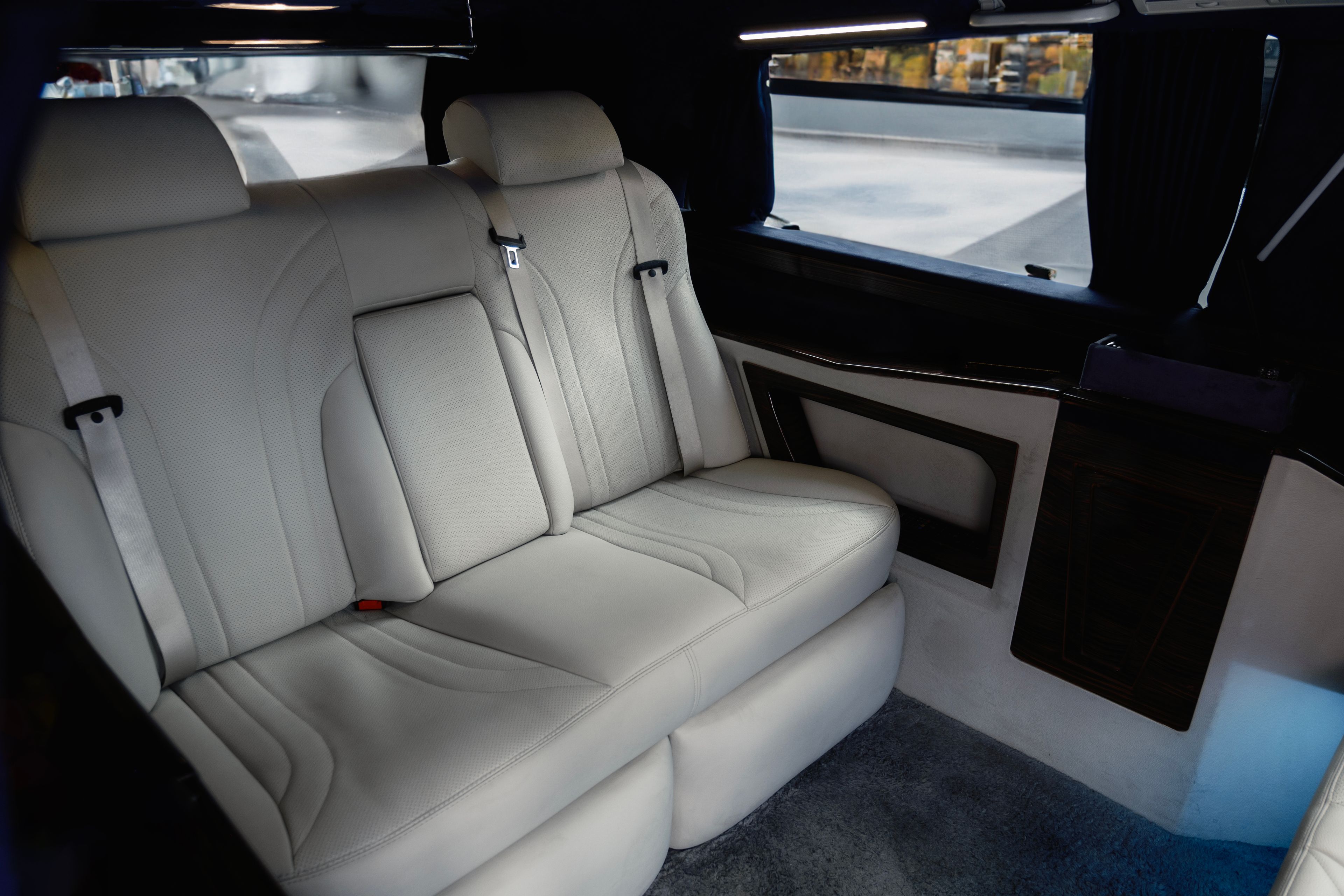
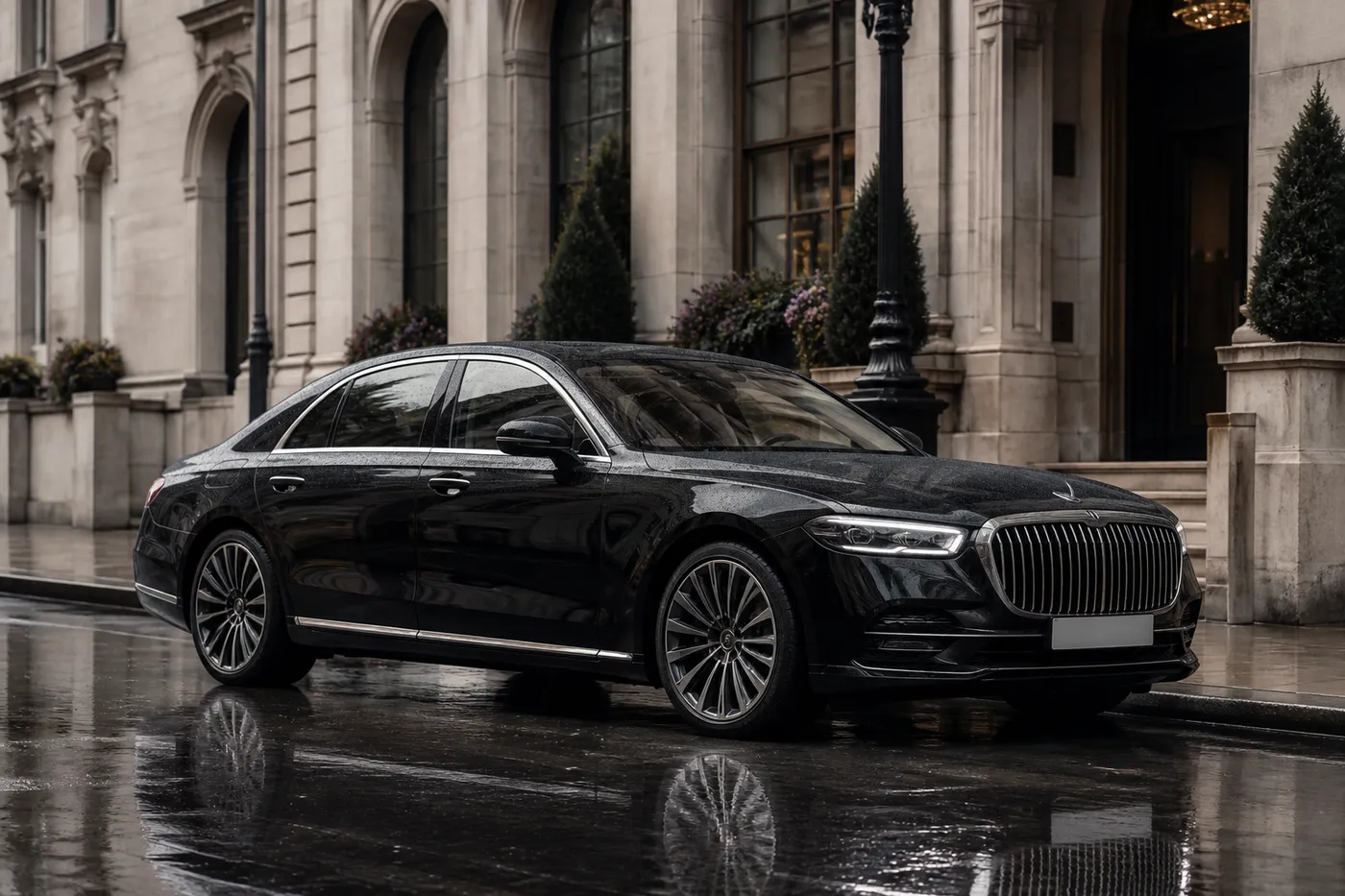
The S-Class is the reference point that other luxury saloons are measured against, and its virtues are the product of long refinement: an exceptionally quiet cabin, a rear seat engineered for long journeys, and behaviour that is entirely predictable in every condition. Nothing about it is experimental, which for a chauffeur car is a compliment rather than a criticism. Predictability is a virtue here.
The i7 approaches the same brief from a different direction. It is a large luxury saloon designed around an electric drivetrain, with the packaging advantages that brings: a flat floor, generous rear space, and instant, seamless acceleration with no gearchange at all. Depending on specification it may also carry a large rear screen and elaborate door controls, which some passengers love and others find beside the point.
Silence, and two ways of achieving it
Both cars are very quiet, but they are quiet differently and passengers notice. The electric car removes engine noise entirely, so at low speed in a city it is close to silent, and pulling away from a kerb happens without any sound or vibration at all. That is genuinely striking the first time and remains pleasant afterwards. Passengers comment on it more than on any other single feature.
At motorway speed the picture converges, because most of the noise in any car at seventy is wind and tyres rather than the engine. The S-Class has decades of acoustic engineering behind it and is superb there. The i7 is also excellent, and which you prefer depends largely on whether the absence of a distant engine note reads to you as refinement or as slight strangeness.

Long journeys and the charging question
This is the real operational difference and it is only fair to be direct about it. A long-distance journey in an electric car requires planning: a route that passes reliable charging, a stop of meaningful length if the distance exceeds the usable range, and a contingency if a charger is occupied or out of service. Good chauffeurs plan all of this invisibly, and on most British routes it now works well.
But it is still a constraint rather than a non-issue. Cold weather reduces range, motorway charging can be busy at peak periods, and some rural destinations have thin provision. For a long journey with a hard deadline at the far end, or for a full day of unpredictable mileage across several counties, the combustion car removes a variable that has to be managed.
For city work and shorter transfers the constraint disappears entirely, and the electric car's advantages come forward: no emissions charges, silence in traffic, and no idling while waiting outside a building. On an ordinary London day the i7 is arguably the more suitable vehicle rather than merely the more modern one. The constraint belongs to long journeys rather than to the technology itself, and it disappears entirely below about a hundred miles.
Compared on what a passenger notices
Set out plainly, the differences fall into a short list, and only two or three of them are likely to decide your booking. Both cars are excellent and neither will disappoint anybody, so treat the list as a way of matching a vehicle to a day rather than as a ranking. The line that matters most is usually the one about distance and charging.
- Silence at city speed: the i7, noticeably
- Acoustic refinement at motorway speed: very close, with a slight edge to the S-Class
- Rear legroom and flat floor: the i7 benefits from electric packaging
- Long journeys without a planned stop: the S-Class removes the variable
- Emissions and clean air zone charges: the electric car avoids them
- Rear entertainment and screens: the i7, in cars specified with them
- Boot space: the S-Class is slightly more conventional in shape
- Availability at short notice across the country: broader for the S-Class
When the S-Class remains the better booking
For long-distance work with a fixed arrival time, it is the safer choice. A journey from London to the north of England with a meeting at the far end has enough variables already, and removing the charging question is worth more than the marginal benefits of the electric car. This is not a reservation about electric vehicles in general; it is about which risks belong in a day that cannot slip.
It is also the better answer for a long day of unpredictable mileage. If the plan is a full day covering several counties with the itinerary changing as it goes, the combustion car simply absorbs that. Refuelling takes minutes and can be done anywhere, which is a real advantage when nobody knows at nine in the morning where the car will be at four.
And for passengers who dislike novelty, it is the right recommendation. A great many people want a quiet car, a comfortable seat and no interaction with anything at all. If large screens and unfamiliar controls would be a distraction rather than a pleasure, the more conventional car is the better experience and there is nothing conservative about saying so. Preference is a legitimate reason.
What we can and cannot promise
If an electric vehicle is important to you, whether for environmental reasons, for a corporate travel policy, or simply because you prefer them, tell us at the enquiry stage rather than as a preference at the end. Electric flagship availability is thinner than combustion availability, particularly outside major cities and at short notice, and it is better to know that before the day than on it.
As with every vehicle we arrange, cars come from our own fleet and from a vetted network of professional chauffeur operators, so we quote a class of vehicle and confirm the specifics against availability. Model year, colour and equipment are not guaranteed. Send the route, the timings and your priorities over WhatsApp or by email, and we will say which of the two suits the journey and why.