


Leeds has an unusual arrangement at its heart. A short motorway, the M621, runs from the M1 and M62 right into the southern edge of the city, and around the centre sits a loop road that operates in one direction only. Once you have accepted that you cannot turn back, the system works rather well. Until you have accepted it, it produces some of the most frustrating driving in the north.
The city has also spent years deliberately taking traffic out of its core, closing streets, adding bus gates and reshaping the space around the station. The result is a centre that is pleasant to walk and increasingly awkward to drive across. This guide covers where a car still helps in Leeds, where it does not, and the two journeys visitors most consistently underestimate.
The M621, the loop and the one-way rule
The M621 leaves the M1 south of the city and runs north west into Leeds, meeting the M62 on the way. It is short, it is busy, and its junctions come quickly. For most arrivals from the south or from Manchester it is the natural route, and it deposits you within a few minutes of the centre.
From there the inner ring road takes over, running partly in tunnels beneath the northern side of the city. It is fast, it has few exits, and missing one is expensive in time. The city loop, inside that, is one-way, so the approach to any given building has to be planned from the correct direction. A chauffeur who works here has that mapped; a visitor with a hire car very often does not.
The A1(M) sits east of the city and carries north to south traffic, meeting the M1 near Wetherby. The A64 heads north east towards York and the coast, and the A65 runs north west towards Ilkley and the Dales. Of those, the A64 is the one most likely to disappoint on a summer weekend.
Leeds station and an unexpected walk
Leeds station is one of the busiest outside London, and its main entrance opens onto New Station Street with a taxi rank and very little room for anything else. The southern entrance, over the river, serves a different set of streets and is often the calmer option for a car, particularly at commuter times.
City Square immediately in front of the station has been reworked to remove general traffic, which is excellent for the public realm and removes the obvious place a car used to wait. We agree a collection point on one of the nearby streets, send it to you before you travel, and hold there. For anyone with luggage we will usually recommend the entrance that involves the shorter walk even if the road route is longer.
- New Station Street: taxi rank, no realistic private car waiting
- City Square: general traffic removed, now a public space
- Southern station entrance: often calmer for a car at peak times
- Briggate and the retail core: pedestrian, no vehicle access
- Camera-enforced bus gates on several central approaches
- Wellington Place and Whitehall Road: better stopping than the core
Where the business day actually happens
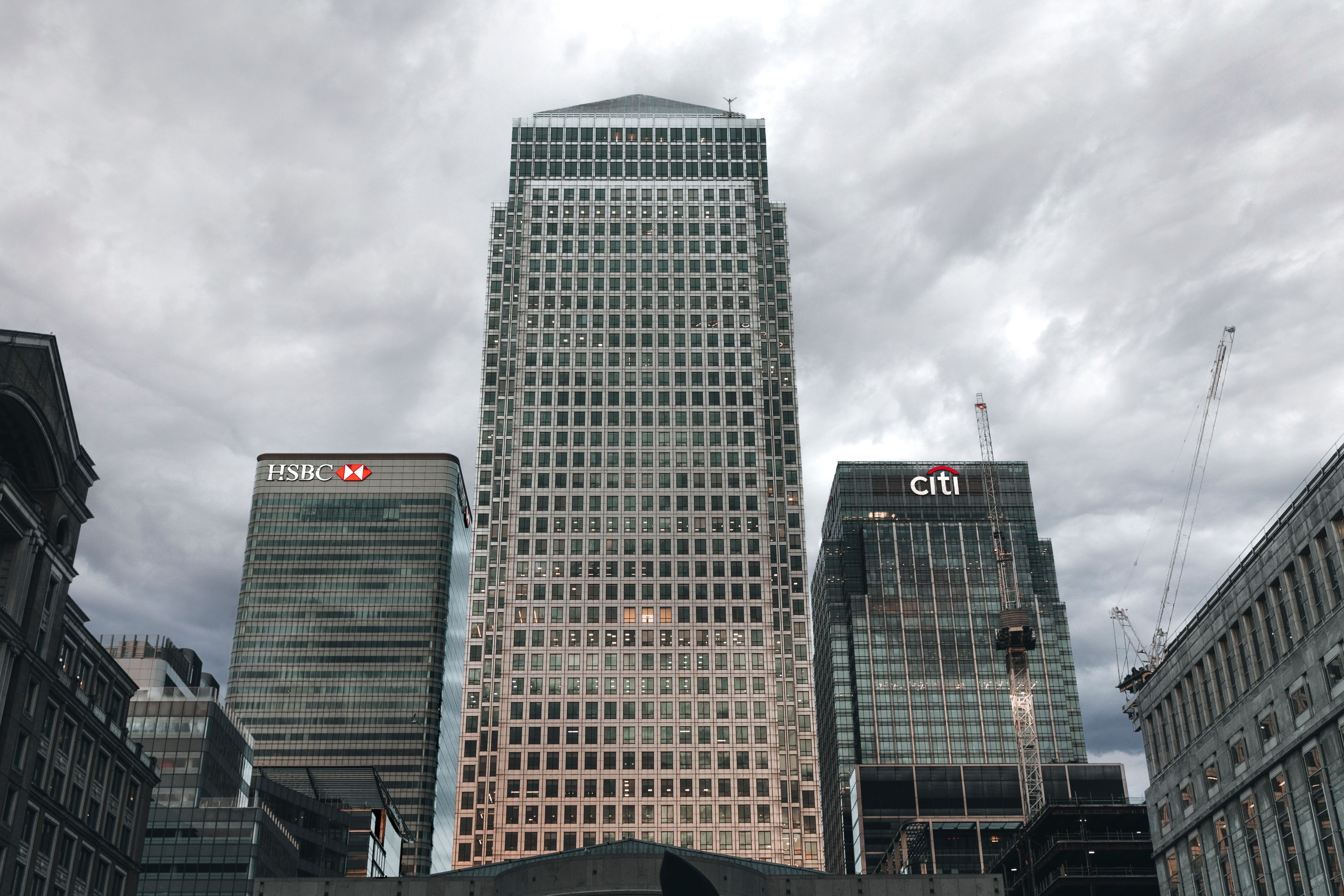
Leeds concentrates its professional life west of the station. Wellington Place, Whitehall Road and Sovereign Square hold much of the newer office space, while Park Row, East Parade and the streets around them carry the older legal and financial firms. The Civic Quarter and the universities sit north, and the teaching hospitals form a substantial destination in their own right.
The useful feature of this geography is that most of it is within a fifteen minute walk. The useful feature for a car is what lies beyond: Thorpe Park to the east off the M1, the White Rose office and retail area to the south, and the corridor of business parks stretching towards Bradford. Those are the destinations where the alternative to a car is a long and uncertain journey.
For a day of mixed appointments, holding the car and chauffeur through the day is almost always the calmer arrangement. Between meetings the car repositions and waits legally rather than hovering, and the papers, coats and cases you would otherwise carry stay where they are.
Elland Road, Headingley and the arena
Elland Road sits south of the centre close to the M621, which means matchday traffic interacts directly with the motorway spur. The stadium car parks fill early and the surrounding roads become one long queue for a considerable period after full time. Setting down on the far side and walking in is invariably faster than trying to arrive at the gate.
Headingley, north west of the centre, presents the opposite problem. The cricket and rugby grounds sit in a dense residential area with narrow streets, heavy permit parking and a single main road running through it. A test match or an international brings that road to a standstill for much of the day, and the surrounding streets offer nowhere to wait.
The arena in the north of the city empties several thousand people into a compact area within minutes of a show finishing. As everywhere, the answer is a fixed collection point agreed in advance and a short walk in the direction the traffic is not going.
The airport run people underestimate
Leeds Bradford Airport sits on high ground north west of the city, and its approach roads are the ordinary sort of Yorkshire A road rather than anything resembling a dual carriageway. The run from the centre is commonly thirty to forty five minutes and can extend well beyond that in the morning peak or in poor weather. Fog and low cloud affect the site more than most, and snow closes the approaches before it closes anything else.
For long-haul travel, Manchester is often the practical choice, usually around an hour and a quarter to an hour and three quarters via the M62, with the Pennine section the variable part. Doncaster no longer offers commercial services, and East Midlands is a longer run south. We will give an honest view on which airport suits your flight rather than defaulting to the nearest.
Whichever airport you use, we work backwards from the check-in time rather than the drive time, and we prefer to meet arrivals inside the terminal. Published arrival information is checked before the chauffeur sets off, and the plan is confirmed in writing beforehand. Where a flight lands early or the baggage hall is slow, the collection moves with it, which is the entire point of arranging the car in advance.
- Centre to Leeds Bradford Airport: usually thirty to forty five minutes
- Centre to Manchester Airport: commonly an hour and a quarter to an hour and three quarters
- Centre to York: generally around forty five minutes to an hour
- Centre to Harrogate: usually thirty to forty five minutes
- Centre to the Yorkshire Dales at Grassington: commonly around an hour