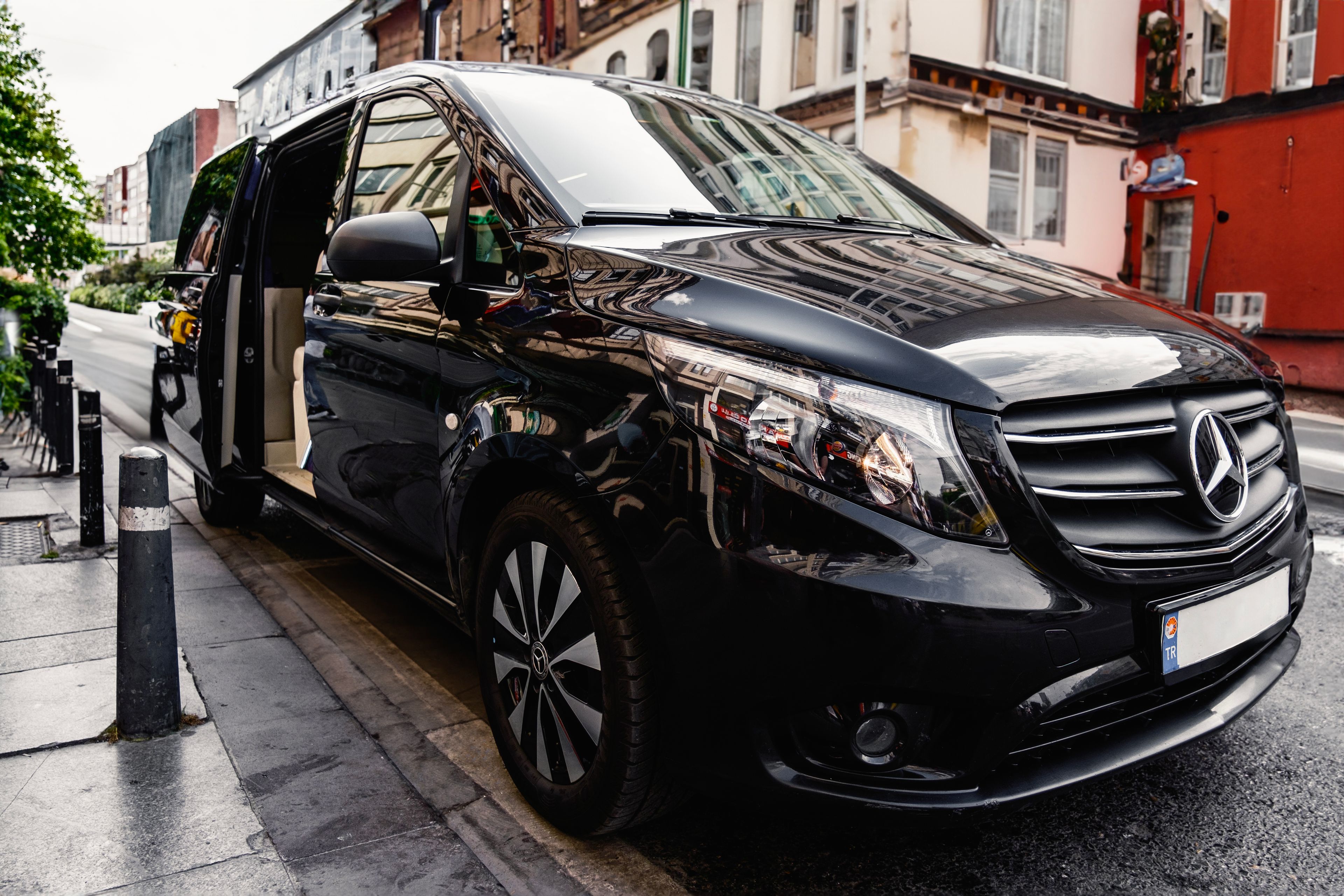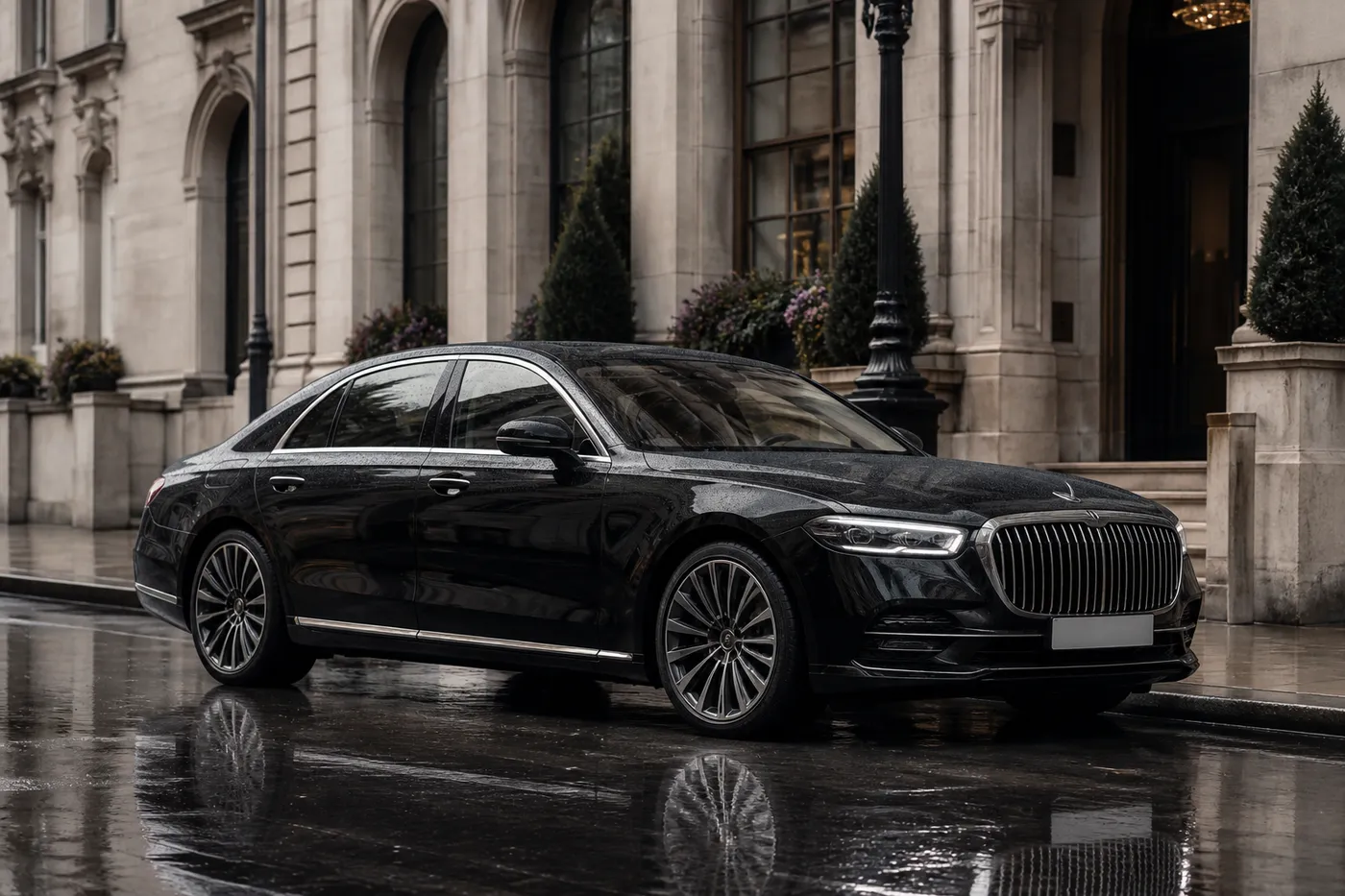






The contents of the rear cabin are one of those details that sound trivial written down and matter enormously at seven in the morning on the way to a flight. A bottle of water when you have run out of the house without breakfast. Something to charge a nearly dead phone when the boarding pass lives on it. An umbrella between the car and a doorway in November.
None of it is extravagant, and none of it should need requesting. What follows sets out what is in the car as a matter of course, what can be arranged with a little notice, and the places where we would rather be specific than make a comfortable-sounding promise that a particular vehicle cannot keep.
What is in the car as standard
Chilled still water sits in the rear door pockets or the centre console of every vehicle, replaced before each journey rather than topped up at the end of a shift. Tissues are within reach. An umbrella lives in the boot, and the chauffeur brings it round rather than leaving you to work out whether it is worth asking for. Hand sanitiser and mints are usual rather than exceptional.
Charging is provided too, in the form of the cables that cover the overwhelming majority of devices. Modern cars carry USB ports front and rear, and many have wireless charging pads in the console. The cabin is climate controlled front and rear in most vehicles, so temperature is a request rather than a compromise, and the chauffeur will set it to whatever you ask for.
Small requests worth making early
Where something genuinely matters to the journey, name it at the booking stage rather than hoping. Sparkling rather than still. A particular connector for an older or unusual device. A mains socket for a laptop on a long motorway run. A blanket for an early winter start. A specific cabin temperature for somebody who feels the cold. All of it is easy with notice and awkward without.
Longer journeys attract more of these requests than city work does, and reasonably so. Four hours on a motorway is a working session or a nap rather than a hop across town, and the difference between a comfortable version and an uncomfortable one is usually two small items mentioned in advance. Tell us on WhatsApp and it goes onto the job with the addresses.
- Sparkling water, or a preference for room temperature rather than chilled
- A specific charging connector for an older or less common device
- A mains socket, where you plan to work on a laptop en route
- A blanket or a set cabin temperature for a cold early start
- Travel sickness provision for a passenger who needs it

Where we will not overpromise
Cable standards change faster than fleets do, and no car carries every connector ever made. A vehicle supplied through one of the operators we work with may be specified differently from our own, particularly on details such as rear mains sockets, wireless pads and screen availability. We will tell you what the allocated vehicle has rather than describing an idealised cabin that may not be the one at your door.
Onboard connectivity is the clearest example. Some vehicles offer it, some do not, and coverage on a rural stretch of road is a matter for the network rather than the car. If working online during the journey is important, say so and we will be straightforward about what can be relied upon. Bringing your own connection remains the sensible plan outside a city.