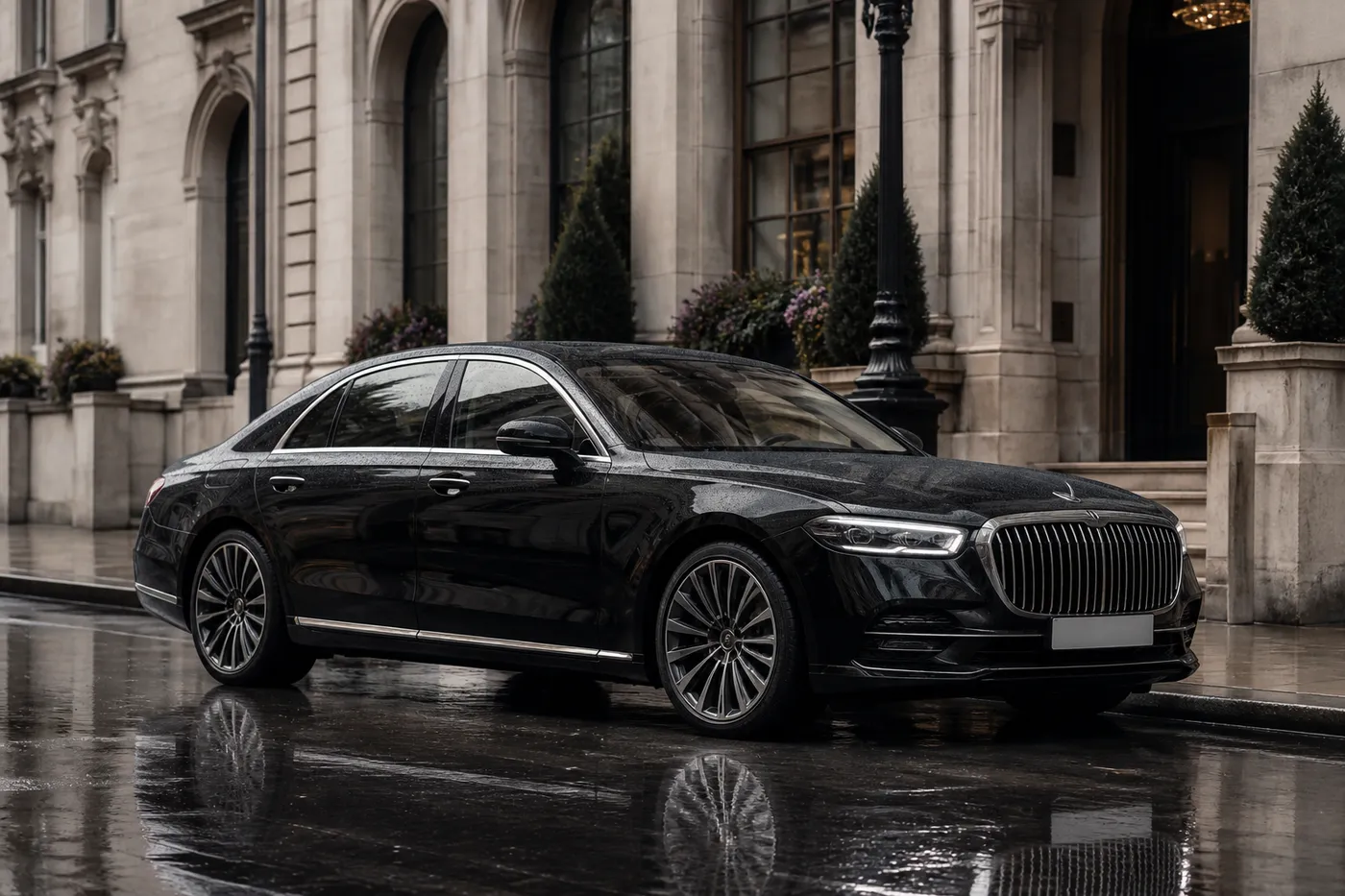


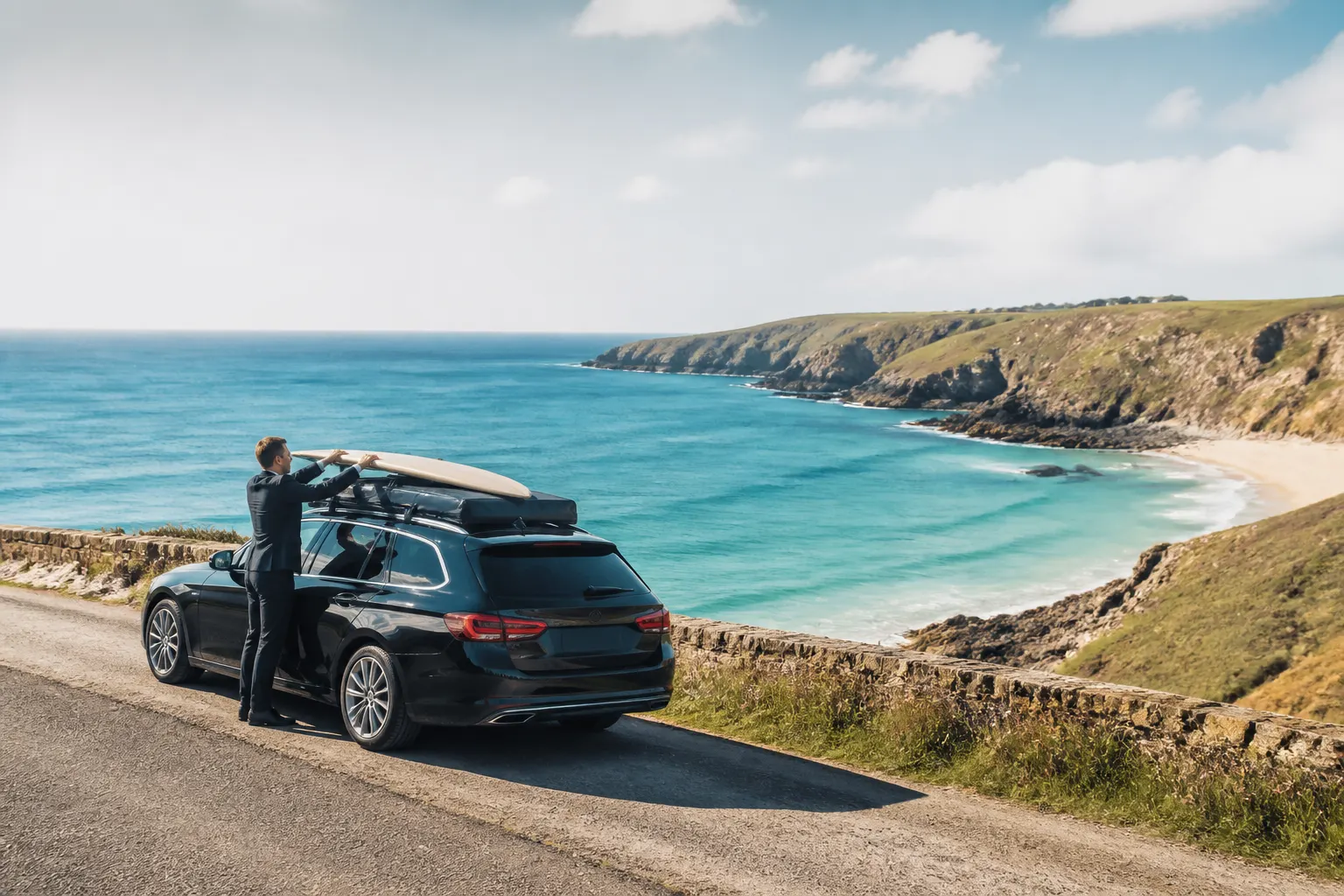



Driving to Europe with a chauffeur is one of the more civilised ways to travel, particularly with luggage, with children, or towards somewhere the airlines serve badly. The Alps, Bordeaux, Tuscany and the Loire are all more pleasant approached at ground level, and you arrive with your own car and driver rather than beginning a second negotiation at a foreign airport.
It is also the arrangement with the most moving parts, and the one where a vague enquiry produces the least useful answer. Documentation, crossings, distances and rest all interact, and a route that looks like two days on a map is often three in reality. What follows is what has to happen before the wheels turn and how the days themselves are put together.
What must be arranged before departure
The vehicle needs paperwork valid for use outside the United Kingdom, and the chauffeur needs their own documentation in order. Neither is exotic, but neither can be assembled the night before, which is the single reason continental trips need more notice than domestic ones. We confirm what is in place for your specific vehicle and chauffeur before the booking is agreed rather than assuming it will sort itself out.
There are practical additions too. Some countries require specific equipment to be carried in the car, and low-emission or access rules apply in a growing number of European city centres, each with its own registration process. These are ordinary parts of preparing for the trip rather than obstacles, but they are jobs with lead times attached, and they are the ones that catch out anybody arranging the journey casually.
- Vehicle documentation valid for use outside the United Kingdom
- Motor insurance confirmed as covering the countries on the route
- The chauffeur's own travel documents, checked well before departure
- A booked Channel crossing by tunnel or ferry, with a fallback
- Any city access or emission registrations the route requires
- Overnight accommodation for the chauffeur on multi-day routes
Crossing the Channel
The tunnel and the ferries both work well and suit different journeys. The shuttle is quicker and you stay with the car, which suits an itinerary trying to reach Paris or Brussels within the day. A ferry takes longer but gives everybody a proper break, a meal and a walk around, which on a long run south is worth rather more than the time it costs on paper.
Border formalities on both sides have changed considerably in recent years and continue to evolve, and queues at peak periods can be substantial. We build sensible margin into the crossing rather than assuming a best case, and we will tell you plainly that the timing of a border is outside anybody's control. That is why continental itineraries carry more slack than a domestic run of similar length.

Distances, rest and realistic days
European motorways are quick, but the distances are genuinely large and a chauffeur is not a machine. A run from Calais to the Alps or down towards the Mediterranean is not a single day for one driver, and pretending otherwise produces a tired chauffeur on an unfamiliar road at night. Where a route demands it, we will propose an overnight stop or a second chauffeur rather than compressing the schedule to look attractive.
The upside is that the days can be genuinely good rather than merely endured. Breaking a long southbound leg with a proper lunch, arriving somewhere in daylight, or building the route to take in a town worth an hour turns the driving into part of the trip. Tell us what the journey is for and the itinerary can be shaped around that rather than purely around minimising hours behind the wheel.