


Landing somewhere for the first time is the one moment of a trip when everything is unfamiliar at once. The signage is new, the queues are an unknown quantity, and the last thing anybody wants after a long flight is a decision to make with luggage in hand. Britain is a straightforward place to arrive in, but it rewards a little preparation, and almost all of that preparation happens before you leave home.
What follows sets out what actually happens between the aircraft door and the car door at a British airport, what the sensible onward options are, and where each of them works well. Nothing is assumed, because none of it is obvious the first time. Where timings appear, read them as typical rather than promised. Airports vary, days vary, and the honest answer is nearly always a range rather than a number.
From the aircraft to the arrivals hall
British airports are large, and the walk from the gate can be long. At Heathrow a satellite terminal may involve a short transit train before you even reach passport control, so allow more time than the terminal map suggests. After passport control comes baggage reclaim, and after that a customs area with different channels depending on what you are carrying and where you have flown from. It is a longer sequence than most visitors picture.
How long the whole thing takes is genuinely unpredictable. On a quiet weekday morning with hand luggage only, some passengers reach the arrivals hall within half an hour of the aircraft door opening. On a busy evening, with several wide-bodied aircraft landing together and hold luggage to wait for, it can be considerably longer than that. We plan around the wider range rather than the optimistic end of it, because the optimistic end is the one that fails.
The arrivals hall itself is public, and this is the fact that shapes every meeting at a British airport. Anyone waiting for you stands on the far side of the customs exit, behind a barrier, and cannot come through to find you. Entry requirements and allowances differ by nationality and by circumstance, so check the official UK government guidance for your own situation well before you travel rather than working it out in the hall.
The realistic ways to travel onward
Britain has good public transport from most of its major airports, and for certain journeys it is genuinely the fastest option available. It is also the least forgiving when you are tired, carrying cases and unfamiliar with the network. The right choice depends far less on the distance involved than on how much of your own attention you are willing to spend on the journey, which after a long flight is usually not very much at all.
Each of the options below exists at every major British airport, and each strikes a different balance between speed, effort and predictability. None is wrong; they simply suit different arrivals, different amounts of luggage and different hours of the day. The choice that works for a business trip with a briefcase rarely works for a family with six cases and a pushchair, so it is worth deciding before you fly rather than in the arrivals hall.
- Express rail services, fast into the city but needing a taxi at the far end
- The underground or local rail network, cheapest and slowest, with steps and interchanges
- The licensed taxi rank, straightforward, with a queue that varies hugely by hour
- Ride-hailing apps, which usually mean walking to a pick-up zone away from the terminal
- Airport coaches, useful for longer regional journeys but tied to a fixed timetable
- A hire car, sensible for a touring holiday and a demanding way to spend hour one
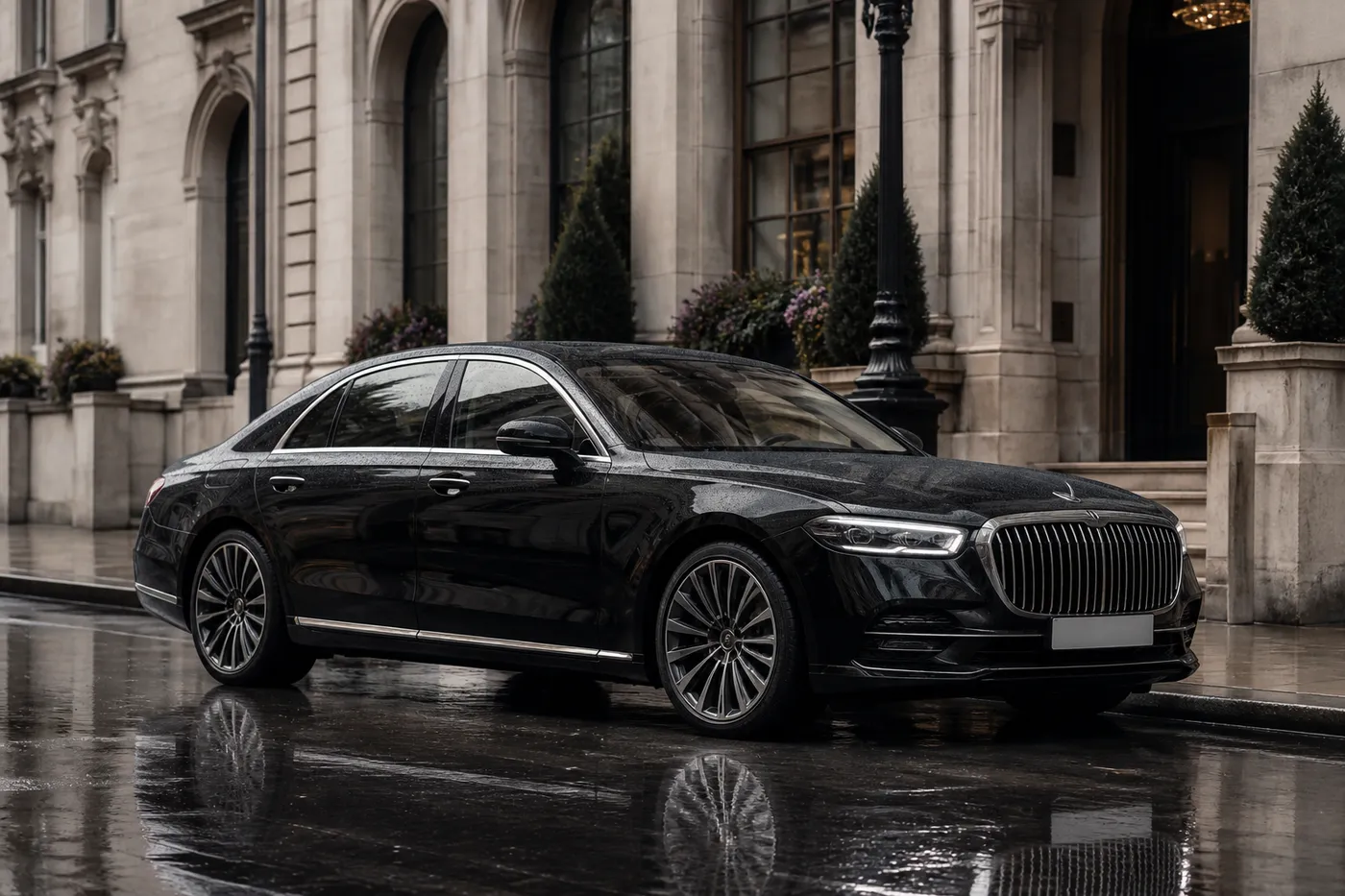
- A pre-booked chauffeur, where car and driver are held for your arrival alone

What a pre-booked car removes
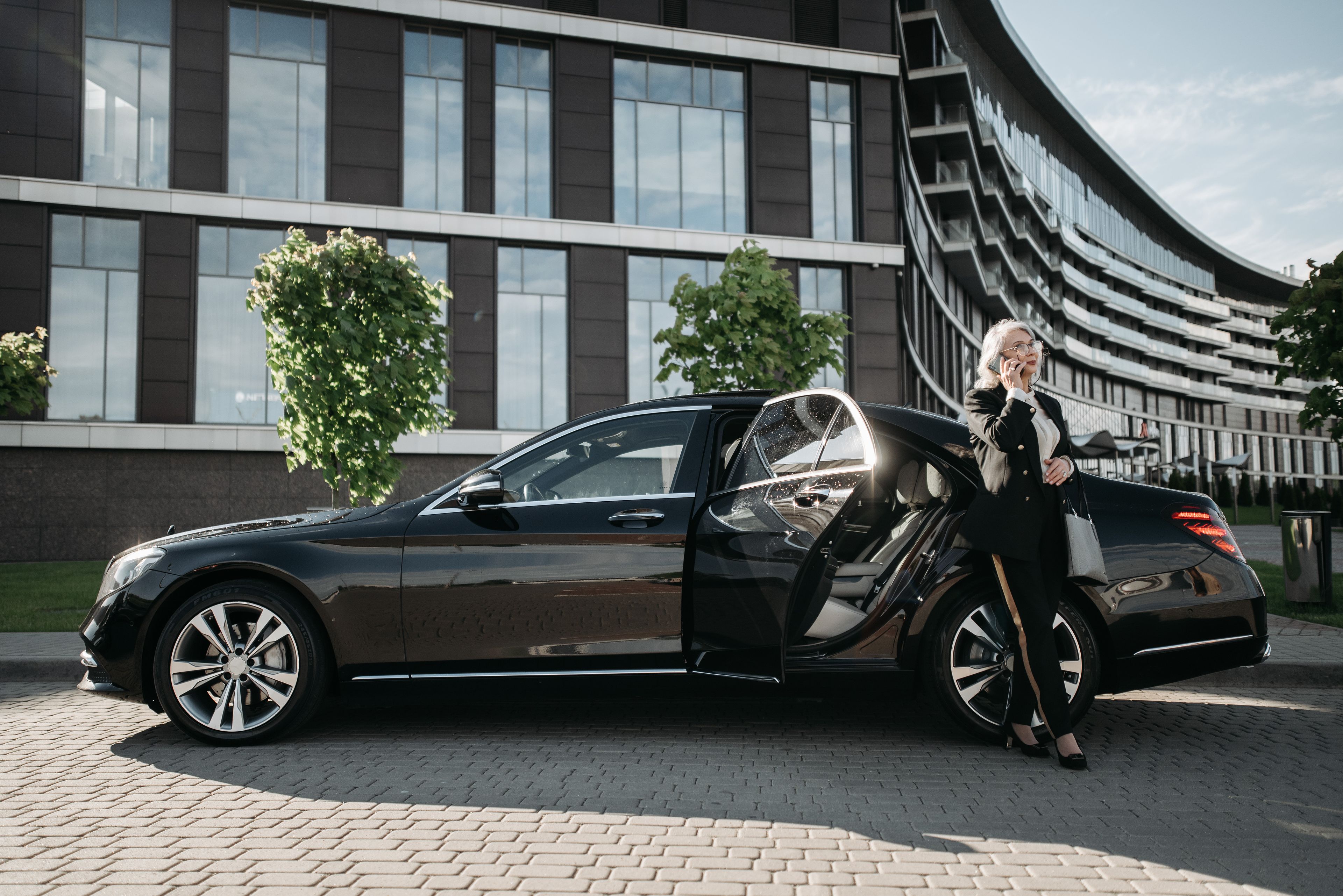
The value of arranging a car in advance is not really the car. It is that the waiting becomes somebody else's problem entirely. If the aircraft lands late, if the queue at passport control is long, if a bag takes forty minutes to appear on the belt, none of that changes the plan, because the chauffeur is already there and stays there. You come out, you are met, and the journey simply begins.
It also removes the small decisions that are hardest to make well when you are tired. You are not comparing apps, working out which exit the pick-up zone sits behind, or explaining an address in an accent the driver is hearing for the first time. The destination is already in the system, the route is already thought through, and the boot is already empty. For a first arrival that combination is worth more than it sounds.
What we ask before the day
Almost every difficulty with an airport collection traces back to a detail nobody thought to mention, and the commonest by a distance is luggage. Three adults with three large cases and three cabin bags will not fit into an executive saloon, and finding that out at the kerb at six in the morning helps nobody. The booking conversation is short, but each question changes something about how the collection is arranged.
Everything is agreed over WhatsApp or by email and confirmed in writing before you travel, including the meeting point, which we restate close to the date because terminal layouts and permitted waiting areas do occasionally change. There is no call centre queue, no form to complete and nothing left to settle at the kerb, because the whole arrangement is fixed long before you board the aircraft. What we need from you is this:
- Flight number, arrival airport and terminal, so the meeting point is right
- The number of passengers and, separately, the number of large cases
- Whether a child seat is needed, with the age and weight of the child
- The full destination address, including postcode, and any access notes
- Whether mobility assistance or a lower step into the car matters
- Whether you would rather be reached by WhatsApp or by email on the day
Meet and greet, and the drive in
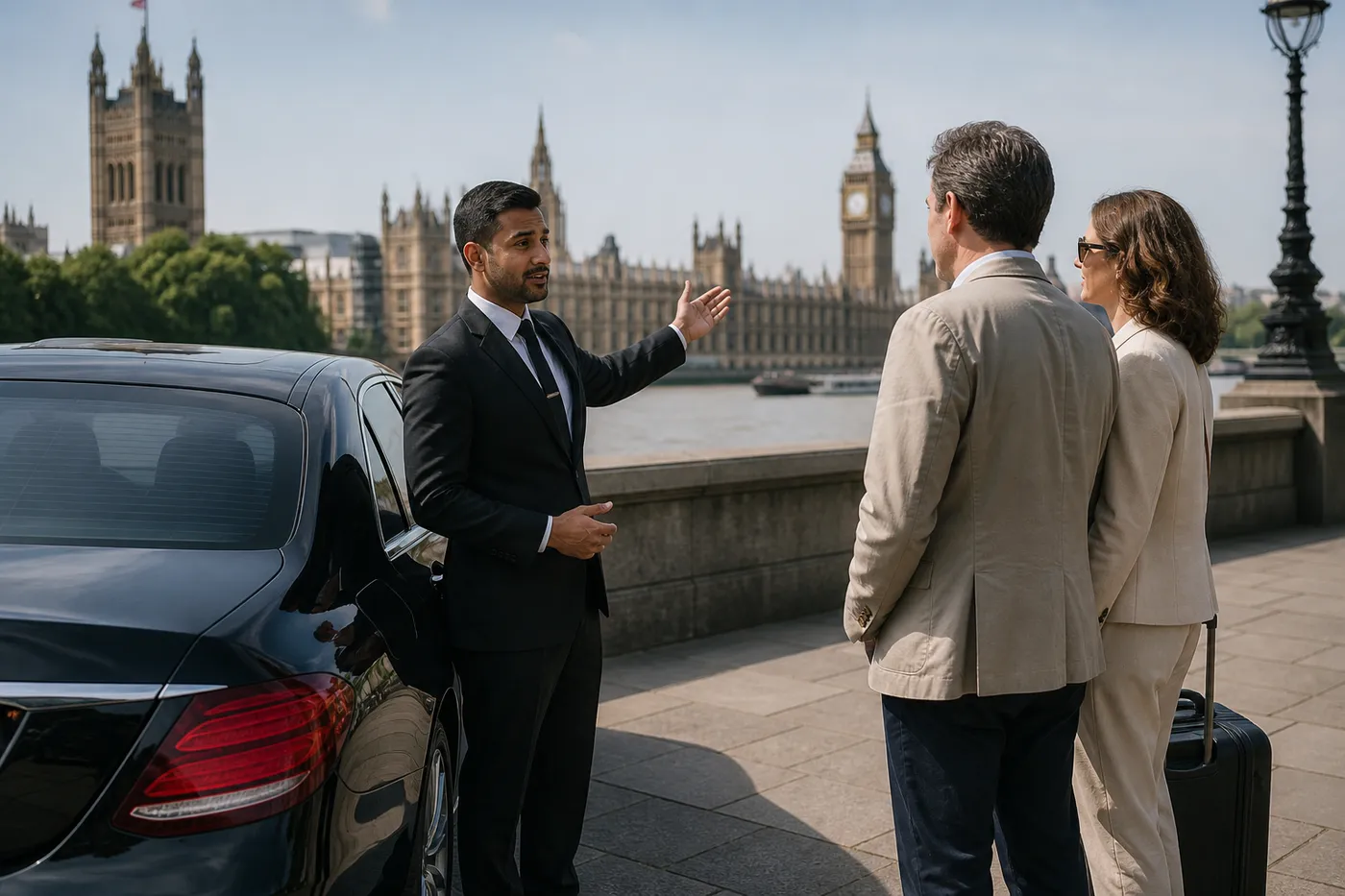
Meet and greet is used loosely across the industry, so it is worth being precise. For us it means your chauffeur waits in the public arrivals hall holding a name board, greets you, helps with the luggage and walks you to the car. It does not mean anything on the secure side of the terminal: nobody outside the airport and border authorities can meet you at the aircraft or move you through a queue, whatever the wording elsewhere suggests.
Once you are in the car the difficult part is behind you, though not necessarily the long part. Roads around the major British airports carry heavy traffic for much of the day, and a run into central London from Heathrow that takes well under an hour at dawn can take considerably longer at five in the afternoon. Our advice for a first day is to keep it deliberately light and let the trip start gently.