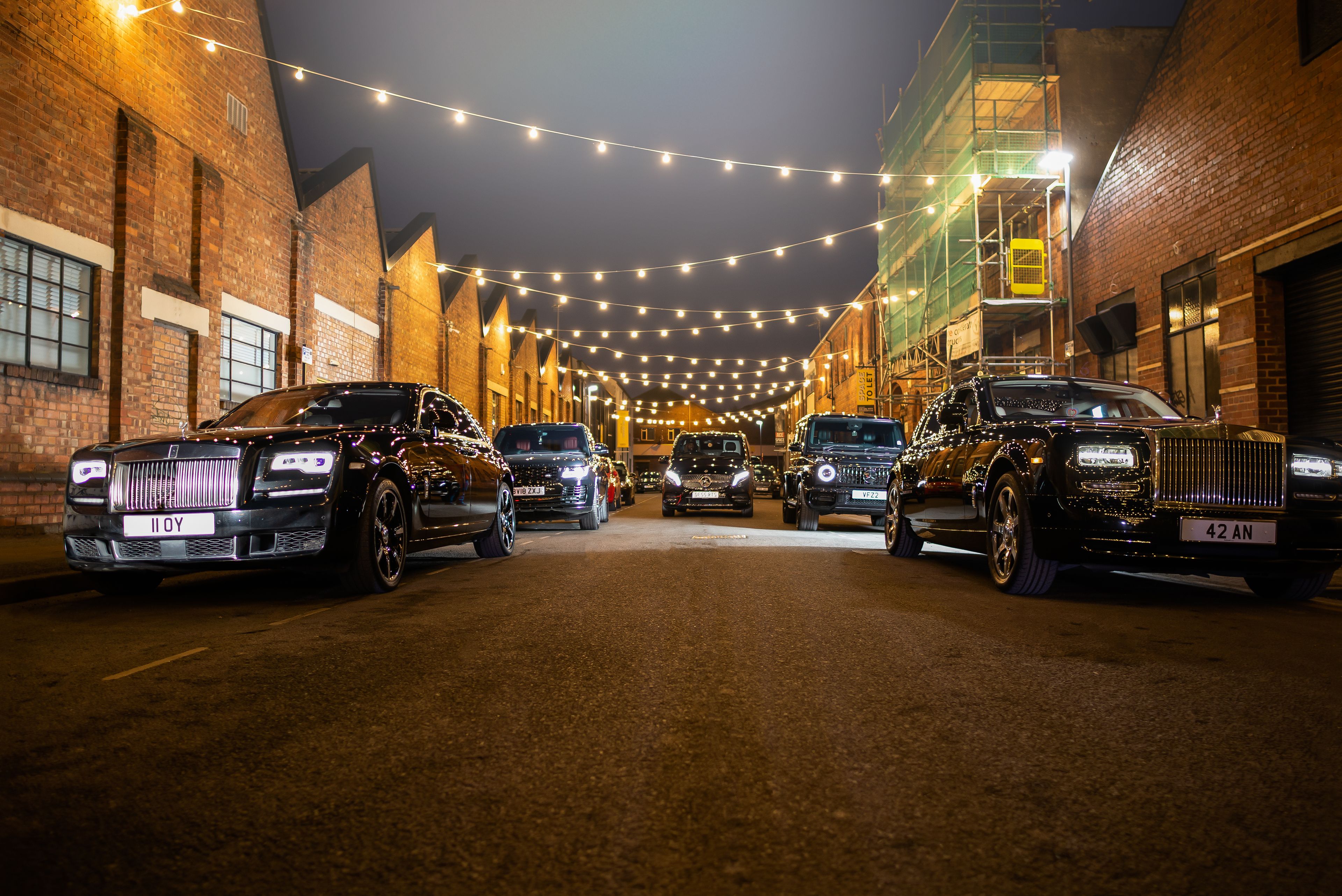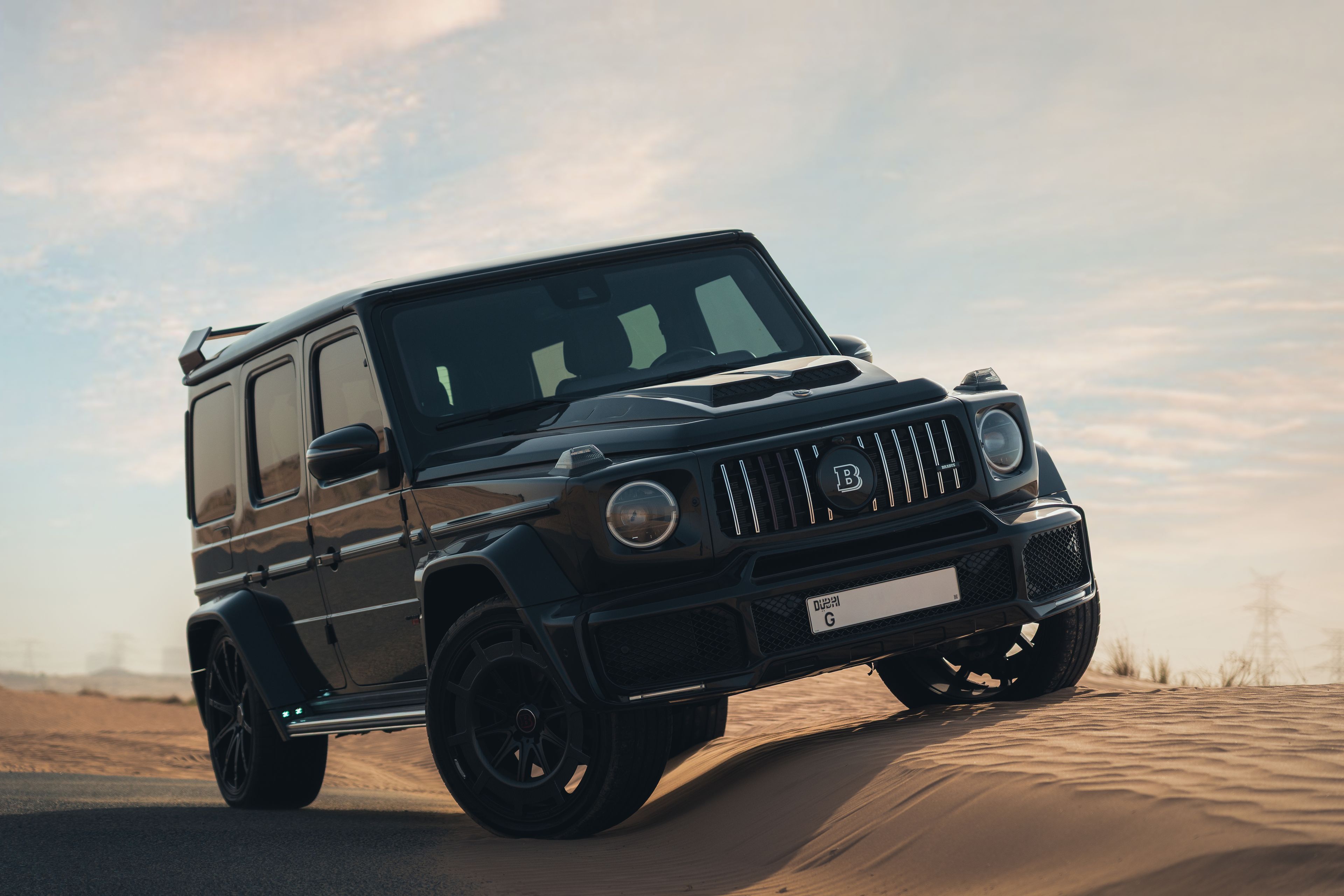




Placed side by side these two look like siblings, and mechanically they share a good deal. As vehicles to be driven in they are not remotely alike. One has spent forty years being refined into a luxury car that happens to be capable; the other is a modern working vehicle that has been made civilised without ever pretending to be quiet.
Chauffeur clients ask for the Defender more often than they used to, usually for a shoot, a Highland trip or a winter journey, and it is a legitimate request rather than an eccentric one. What follows compares the two from the passenger seat and from the load bay, and is honest about the refinement the Defender gives up and the situations in which that trade is entirely worth making.
Two answers to the same brief
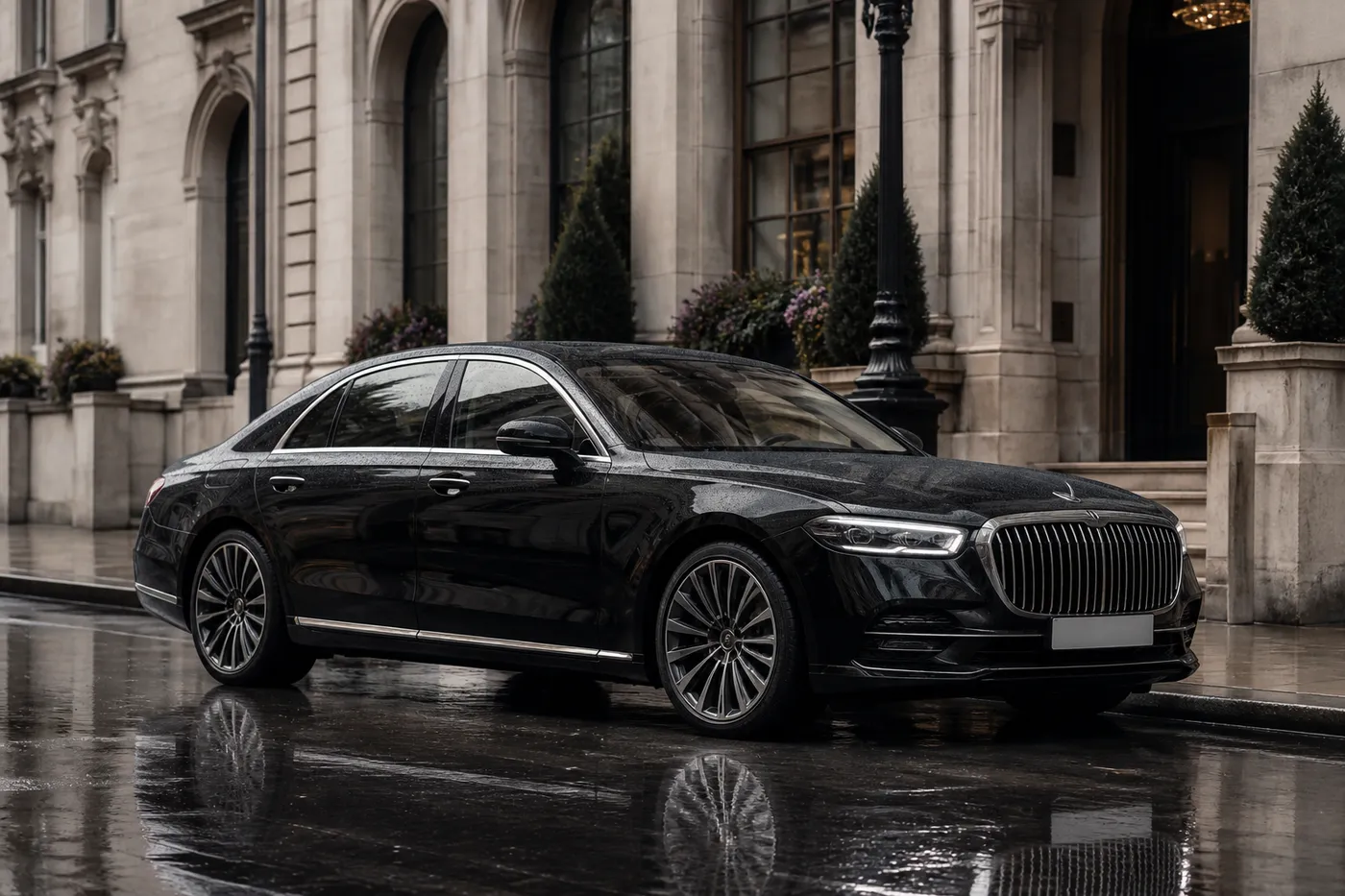
The Range Rover Autobiography is a luxury saloon that happens to have four-wheel drive and a great deal of ground clearance. Everything about the cabin is arranged for the person sitting still in it: air suspension smoothing the surface, thick glass keeping the world out, and seats that would not be out of place in a flagship saloon. Its capability is held in reserve rather than displayed.
The Defender starts from the opposite end. It is engineered first to go where roads stop, with the geometry, articulation and robustness that requires, and then made comfortable within those constraints. The result is a genuinely pleasant vehicle with a commanding view and an honest, purposeful character, which is precisely what its admirers want from it. It has never pretended to be anything else, and that honesty is part of the attraction.
Ride, noise and the long motorway leg
On a motorway the difference is unambiguous. The Range Rover is quieter, settles more completely at speed, and isolates its passengers from surface changes in a way that makes three hours pass easily. It is a comfortable place to sleep, to work, or to take a call without raising your voice, and that is the standard the Defender is measured against.
The Defender is composed and stable but audibly more present. There is more wind and tyre noise, a firmer response to broken surfaces, and a more upright, workmanlike feel to the whole thing. None of this is unpleasant, and many passengers enjoy the character, but nobody would claim it matches the Range Rover for refinement over a long distance. The trade is plain and it is a fair one.
Where the surface deteriorates the ranking changes. On a rutted farm track or a snow-covered lane the Defender's suspension travel and geometry make it the calmer vehicle, and the Range Rover's polish stops being the relevant quality. Refinement is a property of good roads, and the further you get from them the less of it there is to lose. That is the whole basis on which the two should be chosen.
Space, luggage and awkward loads
Both carry a great deal, though differently. The Range Rover's load bay is deep, square and beautifully finished, with a split tailgate that doubles as somewhere to sit, and it will swallow four large suitcases without difficulty. Loading is at waist height, which spares the chauffeur's back and the paintwork alike. For suitcases and soft bags it is close to ideal, and it looks after them properly.
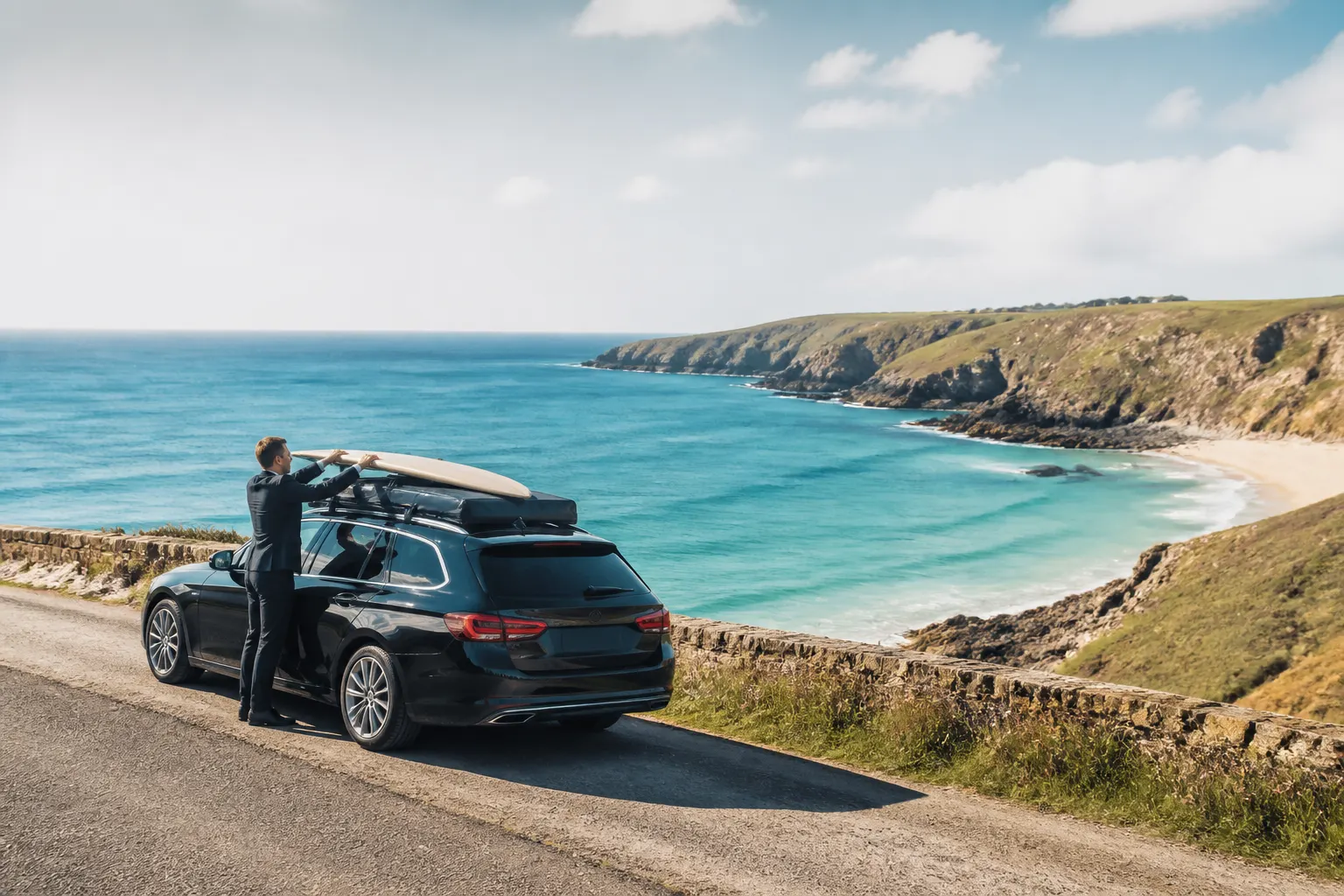
The Defender's rear is more utilitarian and, in some configurations, larger and more forgiving of awkward loads. Wet coats, gun slips, skis, dogs, muddy boots and equipment that would make you wince in a trimmed load bay are all far easier to justify. For a shooting party or a family returning from a beach in February, that matters more than the quality of the carpet.
Compared where it counts
The two rank differently depending entirely on the road and the cargo, which makes them complements rather than rivals in most people's minds. A good many clients who travel regularly in the country use both across a single season, choosing between them by the weather and the destination rather than by preference. The list below is how they tend to decide, and how we would advise.
- Motorway refinement and quiet: the Range Rover, clearly
- Genuinely difficult terrain and deep mud: the Defender
- Formal arrival at a hotel or event: the Range Rover
- Dogs, guns, skis and wet equipment: the Defender, without hesitation
- Rear seat comfort over three hours: the Range Rover
- Seven seats in some configurations: the Defender offers what the other does not
- Ease of entry: both are high, though both can be helped by a step
- Winter roads and estate tracks: the Defender is the more relaxed choice
When the Defender is the right vehicle
For a shoot, a stalking trip, a Highland estate in January or any journey that ends on a track rather than a drive, book the Defender and do not think about it again. It handles the conditions better, carries the equipment more sensibly, and nobody feels obliged to apologise for the state of their boots when they get back in.
It is also the better choice when the party is larger than four. Certain configurations seat more than the Range Rover, and for a family group travelling to a rural destination with equipment that is a decisive practical advantage. A more luxurious vehicle that cannot fit everybody is not the better vehicle. Seats are the least negotiable feature of any vehicle, and no amount of trim compensates for their absence.
And it wins on attitude, which sounds trivial and is not. There are trips where a very polished car is faintly wrong: a working farm, a rural community, a weekend where the point is boots and weather. Arriving in something purposeful reads better than arriving in something immaculate, and choosing accordingly is good manners rather than false modesty. We raise it gently when an itinerary suggests it.
Booking either, and what to tell us
The useful details are about the destination and the load. Tell us where the road ends, what the surface is likely to be in the month you are travelling, whether dogs or equipment are coming, and how many people are in the party. Those four answers will settle the vehicle far more reliably than a preference stated in the abstract.
Both come from our own cars and from a vetted network of professional chauffeur operators, so seat configuration, model year, colour and specification depend on availability and are confirmed when you book. If seven seats or a particular load arrangement is essential, raise it early over WhatsApp or by email, since those variants are less common than the standard ones.