




On the surface the two services look similar. Somebody else drives, the vehicle is comfortable, you arrive without having parked. The premium tiers of the major ride-hailing apps and the better private hire firms have narrowed the visible gap considerably over the past decade, and it is entirely fair to ask what the remaining distinction actually consists of.
The honest answer is that they are different products solving different problems, and that for a large number of journeys the taxi is the better one. What follows is an attempt to set out where they genuinely diverge, without pretending that a chauffeur is the right answer to every question.
The booking model is the real difference
A taxi or ride-hailing journey is allocated. You request a car, a system finds whoever is closest and available, and you receive a vehicle and a driver a few minutes before you travel. It is remarkably efficient, it has transformed urban transport, and it works precisely because the supply is fungible — any car of the right category will do the job equally well.
A chauffeur booking is assigned. A specific vehicle and a specific chauffeur are held for you for a specific window, agreed in writing beforehand, and they are not doing anything else during it. That is why a chauffeur can be outside your house at four in the morning, or waiting in an arrivals hall for ninety minutes, or holding a car outside a restaurant for the duration of dinner. Nothing in the allocation model can produce that reliably.
It also means the arrangement is documented before the day rather than discovered on it. You know the vehicle, the chauffeur, the timings and the terms in advance, in writing, and you can refer back to any of them. With an allocation you find out who is coming five minutes before they arrive, which is entirely fine most of the time and occasionally is not.
The driver is doing a different job
A private hire driver is a licensed professional operating a car safely and efficiently, and the good ones are very good. A chauffeur is doing something adjacent but distinct: presenting the vehicle, opening the door, handling luggage, reading whether you want conversation, holding the route in their head rather than on a screen, and maintaining absolute discretion about who was in the car and what was said in it.
That last point matters more than it sounds. For business travel, for anybody who is recognisable, and for private family matters, the expectation that nothing leaves the vehicle is a substantive part of what is being bought rather than a line in a brochure. It is a professional standard, held consistently, and it is not something an allocation model can meaningfully promise.
There is also continuity, which is underrated until you have had it. On a full-day or multi-day booking you have the same person throughout, and by lunchtime they have learned how you like the temperature, whether you want music, and whether the second half of the afternoon should be silent. None of it needs saying twice, and none of it survives a different driver each time.

The car is specified, not allocated
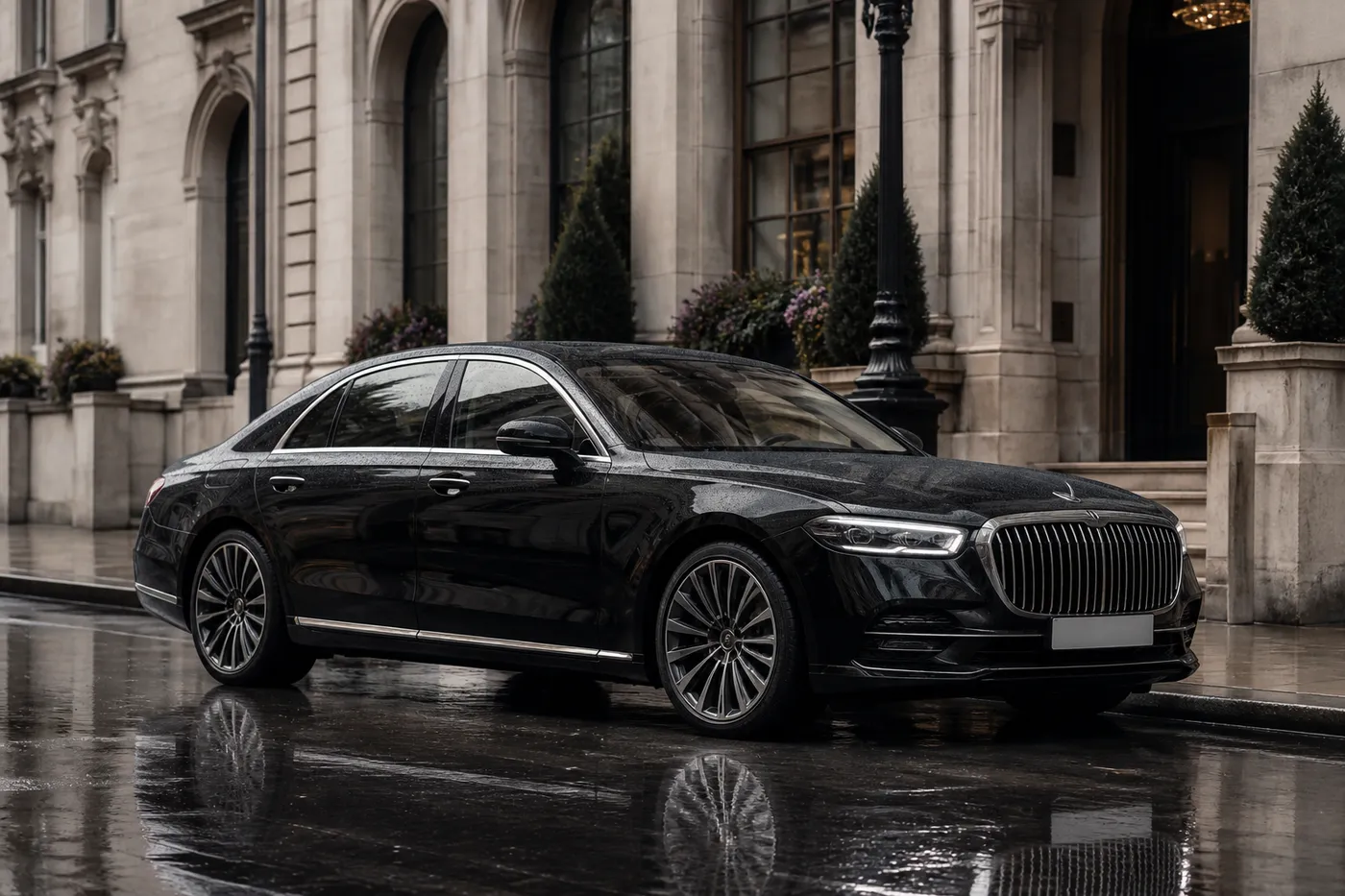
With a taxi you choose a category and receive whichever vehicle in that category happens to be nearby. With a chauffeur you agree the specific model, and the car is prepared for you rather than for the shift: cleaned before your journey rather than at the end of the day, unbranded, with water in the door and the cabin set to the temperature you asked for.
That specificity is why luggage questions can be answered honestly in advance. If we say two large cases and three cabin bags will fit, it is because we know exactly which car is coming. An allocated vehicle in a premium category might be a saloon or an estate or something else entirely, and at five in the morning with a flight to catch, that uncertainty has a cost.
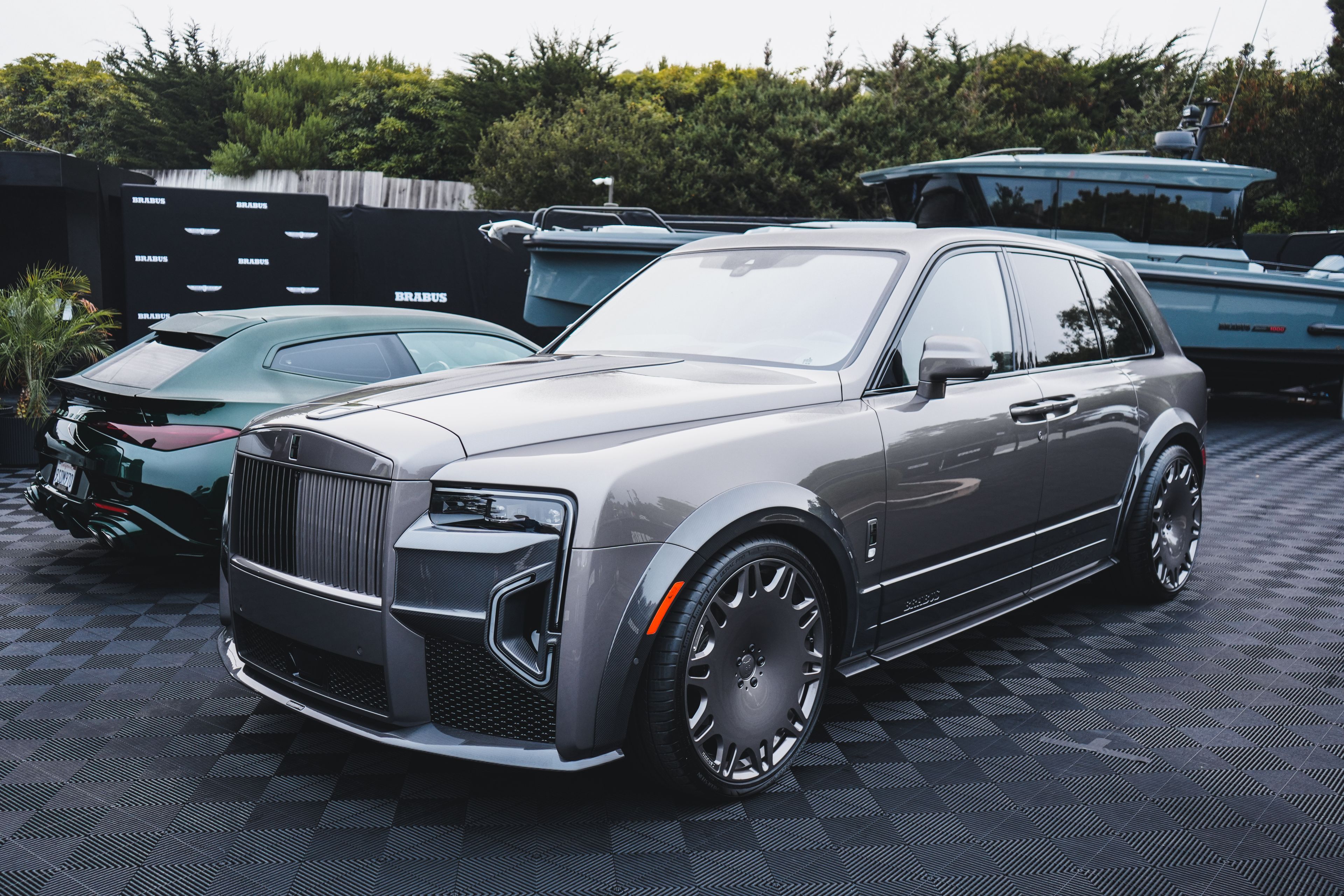
It also matters for occasions. You cannot request a specific Rolls-Royce, in a particular colour, dressed with ribbons to match the bridesmaids, from an allocation system, because the system is not designed to hold a named vehicle for a named morning. That is not a criticism of it. It is simply a description of what the two models are each built to do.
Waiting, and who absorbs the risk
Waiting is where the two models diverge most sharply, and it is the difference clients notice first. A ride-hailing driver is paid to move, and the economics of the platform depend on them completing journeys rather than sitting still with an empty car. A chauffeur is paid for the window, so waiting is not a problem to be minimised — it is the service itself.
In practice this means the risk of a delay sits with us rather than with you. Your flight lands two hours late and somebody is still there. Your meeting overruns by forty minutes and the car has not gone anywhere. Your dinner runs to midnight and nobody is watching the clock. Waiting time terms are set out in your written quotation, so what happens in those situations is agreed before it happens.
The corollary is that a chauffeur costs more, because you are paying for time that could otherwise have been sold to somebody else. That is the trade, stated plainly. Whether it is worth making depends entirely on what a delay would actually cost you — a missed flight, a meeting begun without you, or simply an hour of standing outside in the rain.
When a taxi is genuinely the better answer
For a short journey across a city at an off-peak hour, with no luggage and no fixed deadline, a black cab or a ride-hailing car is faster, cheaper and entirely pleasant. There is no honest argument to be made otherwise, and we would rather tell you so than take a booking that does not actually serve you well and leaves you wondering why you bothered.
The same applies to spontaneous journeys. If you decide at nine in the evening that you would like to be somewhere twenty minutes away, an app will solve that better than we will, because we would need to assign a car and a chauffeur who are not currently assigned to you. Chauffeur travel works best when it is planned, because the value comes from the planning.
Where a chauffeur is genuinely worth it is where waiting, certainty and discretion have real value: early departures, airport arrivals, multi-stop days, evening events, long-distance journeys, weddings, and anything at all where the car being wrong would matter to somebody. If your journey is not one of those, use the app with our blessing, and come back to us for the one that is.