


It is one of the most frequently requested long-distance journeys in the country, and one where the arithmetic of car against train against plane is genuinely close. The train is faster in transit. The plane is not really faster at all once you account for both airports. The car is the only one that starts at your door and finishes at your destination without a change, a barrier or a queue, which for a certain kind of day is the entire argument.
This piece sets out how the journey actually works: the routes and why we sometimes take the longer one, an honest comparison with the alternatives, where to break the drive if you want to, and how same-day returns and overnight arrangements are handled.
Four hours, and what you can do with them
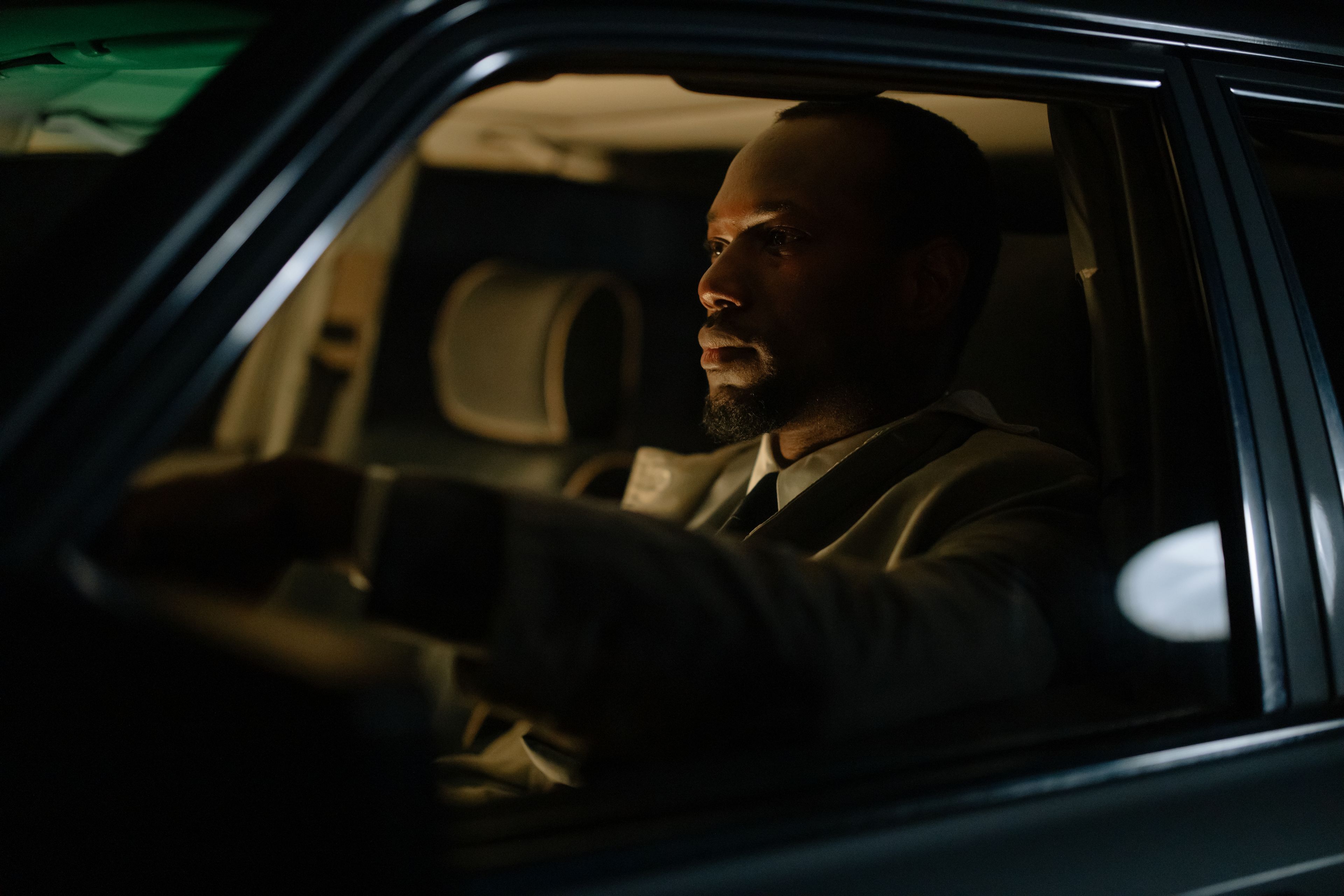
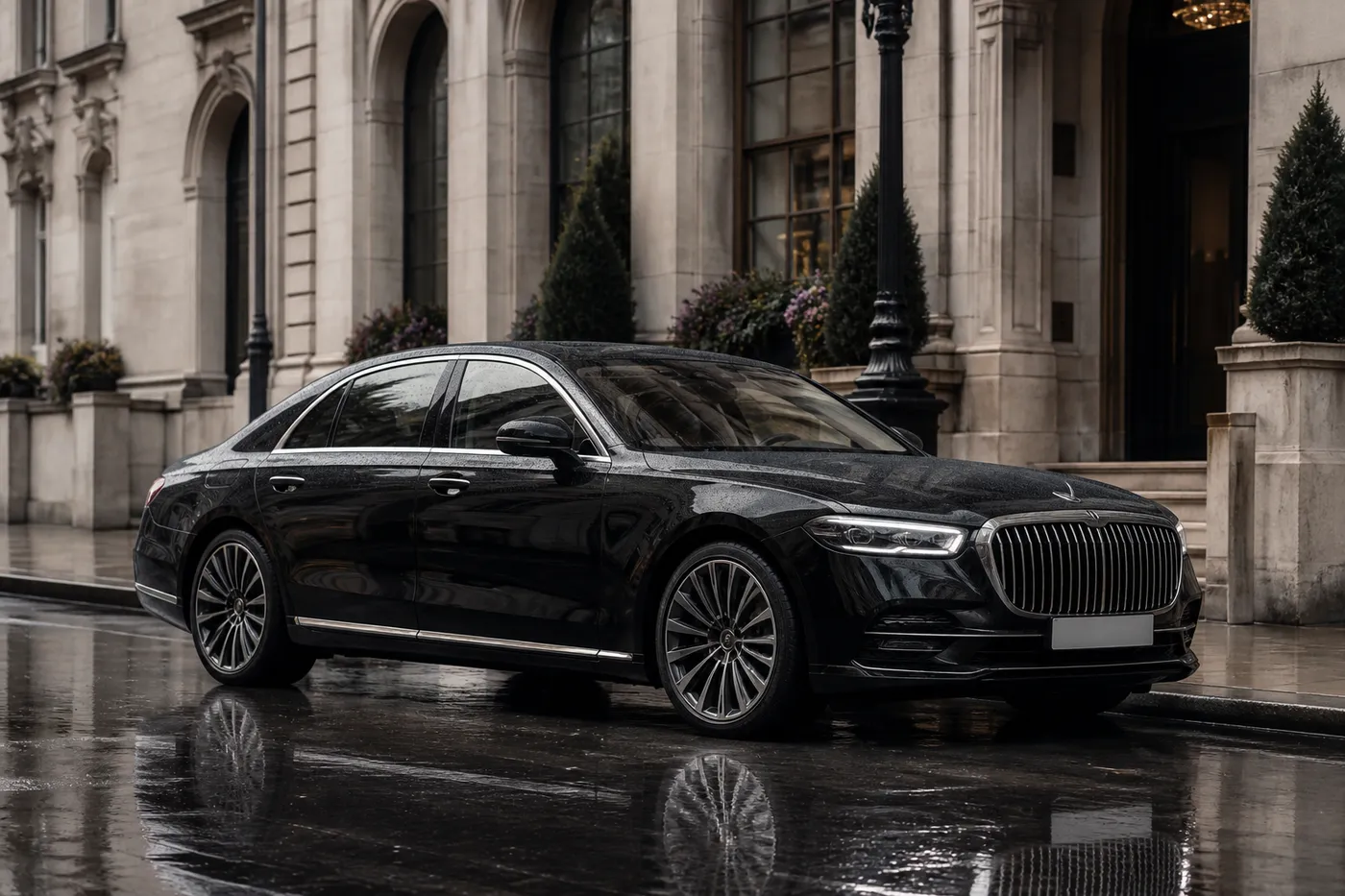
In a well-insulated flagship saloon, four hours on a motorway is not a cost. It is a period of uninterrupted, private, connected time — which is a scarce commodity in a working week. Clients read papers, take calls, hold meetings with a colleague across the rear compartment, or recline the seat and sleep the entire way and arrive genuinely rested.
The practical enablers are unglamorous: rear tables, wireless charging, four-zone climate control and acoustic double glazing quiet enough that a conference call sounds like an office rather than a car. On a long-wheelbase specification, with the offside seat reclined and the calf rest raised, the rear compartment becomes something closer to a small private room than a seat in a vehicle.
It is also completely private. Nobody is sitting opposite you, nobody walks past with a trolley, and confidential conversations can happen at a normal volume without anyone lowering their voice or turning a screen away. For anyone travelling with documents, discussing a transaction, or simply having a difficult conversation with a colleague, that consideration alone very frequently decides the question outright.
The route, and why we sometimes take the other one
The standard route is the M1 north to the M6 and into Manchester, which is the shortest and usually the quickest. The alternative runs the M40 to Birmingham and then the M6 north, which is longer in distance and occasionally shorter in time, particularly when the M1 through the East Midlands is misbehaving or when there are roadworks around the M6 junctions.
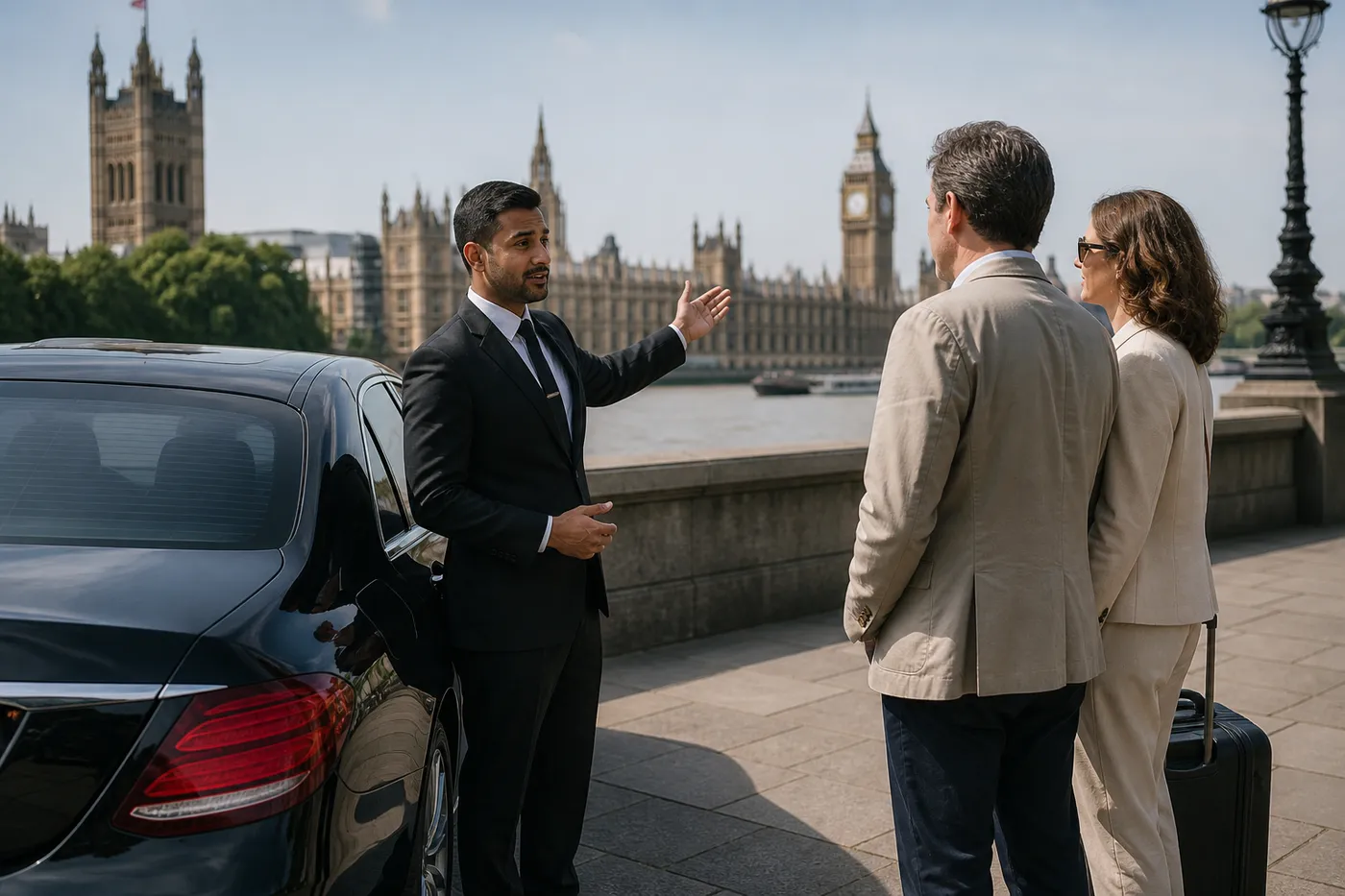
Your chauffeur will make that call on the morning based on conditions rather than habit, and will revise it en route if the situation changes. That flexibility is one of the quiet advantages of the car: a delayed train is simply delayed and there is nothing to be done about it, whereas a blocked road almost always has an alternative running parallel to it.
Timing matters too. Leaving central London before seven in the morning or after ten transforms the first hour, and the same is true of the arrival into Manchester. We will suggest a departure that avoids both cities' peaks where the schedule allows it, because the motorway middle of the journey is the reliable part and the two ends are not.
An honest comparison with the train and the plane
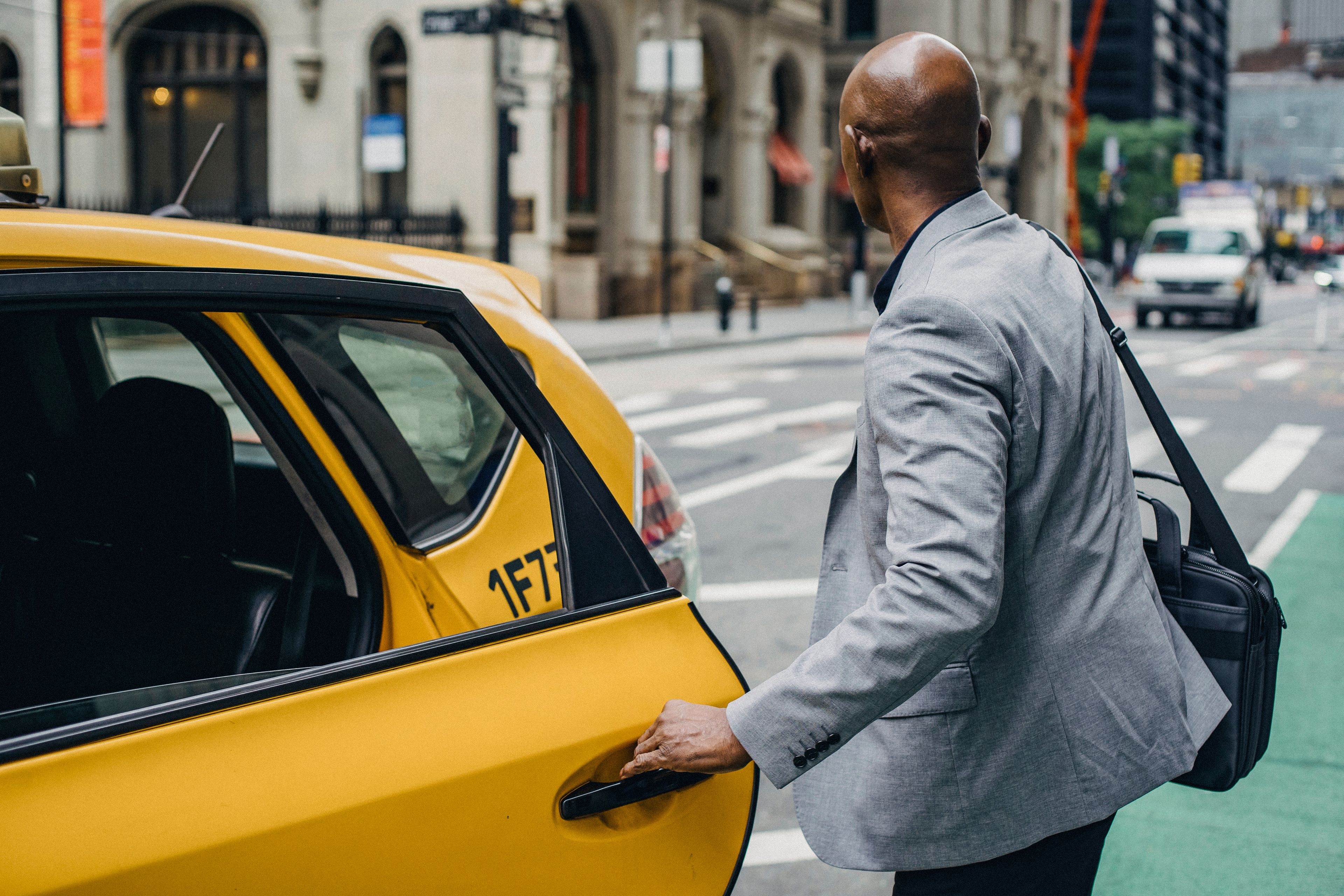
The train is faster in pure transit time and for a single traveller going city centre to city centre it is a very good option. What it does not do is collect you from your door, wait while you finish a call, take your luggage, or deliver you to an address in Cheshire rather than to Piccadilly station. Add a taxi at each end and the door-to-door difference narrows considerably.
Flying is rarely the answer on this route. Once you account for the drive to the airport, security, the walk to the gate, the flight itself and the transfer at the other end, it is competitive at best and frequently slower, with a great many more points at which the whole thing can go wrong and very little you can do when it does.
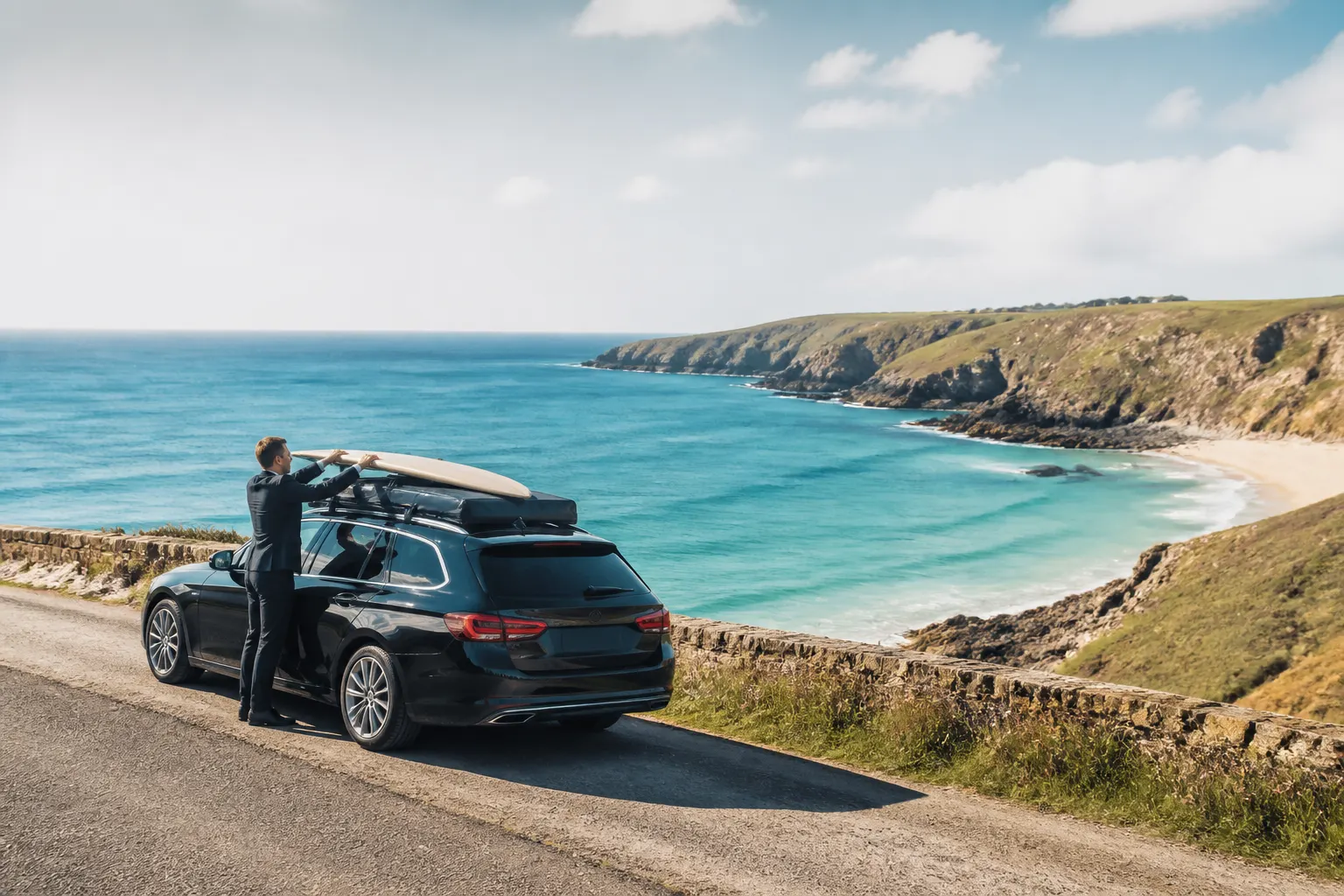
The car wins decisively in three situations: when there are two or more of you travelling together, when you have real luggage, and when either end of the journey is not a city centre. It also wins whenever the day involves several stops, because the vehicle simply stays with you rather than having to be re-arranged, re-booked and re-paid for at each one.
Breaking the journey
Four hours is comfortable without a stop in a car of this kind, and many clients prefer to run it straight through. Others would rather break it, and there are good places to do so that are not motorway services. Warwickshire and the fringes of the Cotswolds sit close to the M40 route; the Peak District is a short detour from the M6 in the north.
If you are travelling for a meeting, a twenty-minute stop an hour out from Manchester is a genuinely useful thing — coffee, a change of clothes, a moment to look over papers, a call taken standing up rather than sitting down. Your chauffeur will build it into the timings so that it costs you nothing at all against the appointment at the other end.
For anyone who is anxious about long journeys, or travelling with young children or elderly passengers, planned stops make a substantial difference to how the day feels. Tell us when you book and we will build them into the schedule properly, at places worth stopping, rather than improvising at a service station when somebody in the back has finally had enough.
Same-day returns and overnight stays
A same-day return is entirely feasible — up in the morning, meetings through the day, back in the evening — and it is one of the most common ways this journey is booked. The car and chauffeur stay with you throughout, which means you can use the car between appointments in Manchester rather than arranging local transport, and the return leg leaves whenever your day actually finishes rather than when a ticket says.
For an overnight stay we can either wait with you or return and collect you the following day, and we will quote both options so that you can see which makes better sense for the length of your trip. On multi-day arrangements your chauffeur's own accommodation is arranged by us and set out clearly in the written quotation, with nothing at all for you to book.
The same principles apply to the other long-distance routes we run regularly, whether that is Birmingham, Leeds, Liverpool, Bristol, Newcastle or Edinburgh, and to trips that cross several of them in a single week. Tell us the shape of the journey rather than a list of postcodes and we will come back with a written quotation covering the vehicle, the timings and the terms.